Verizon API First Hub:
A Centralized Consumer Portal for Enterprise Scale
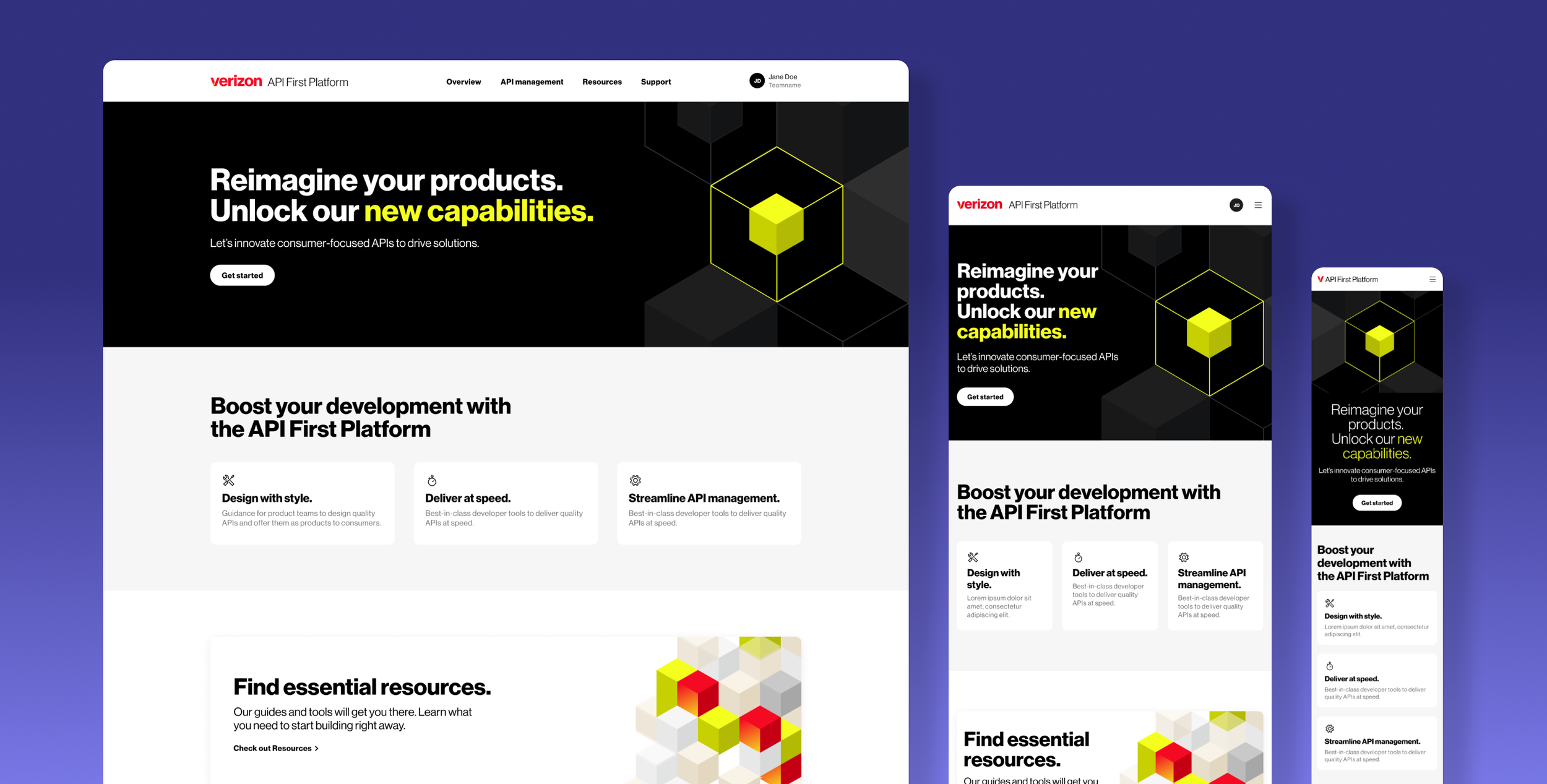
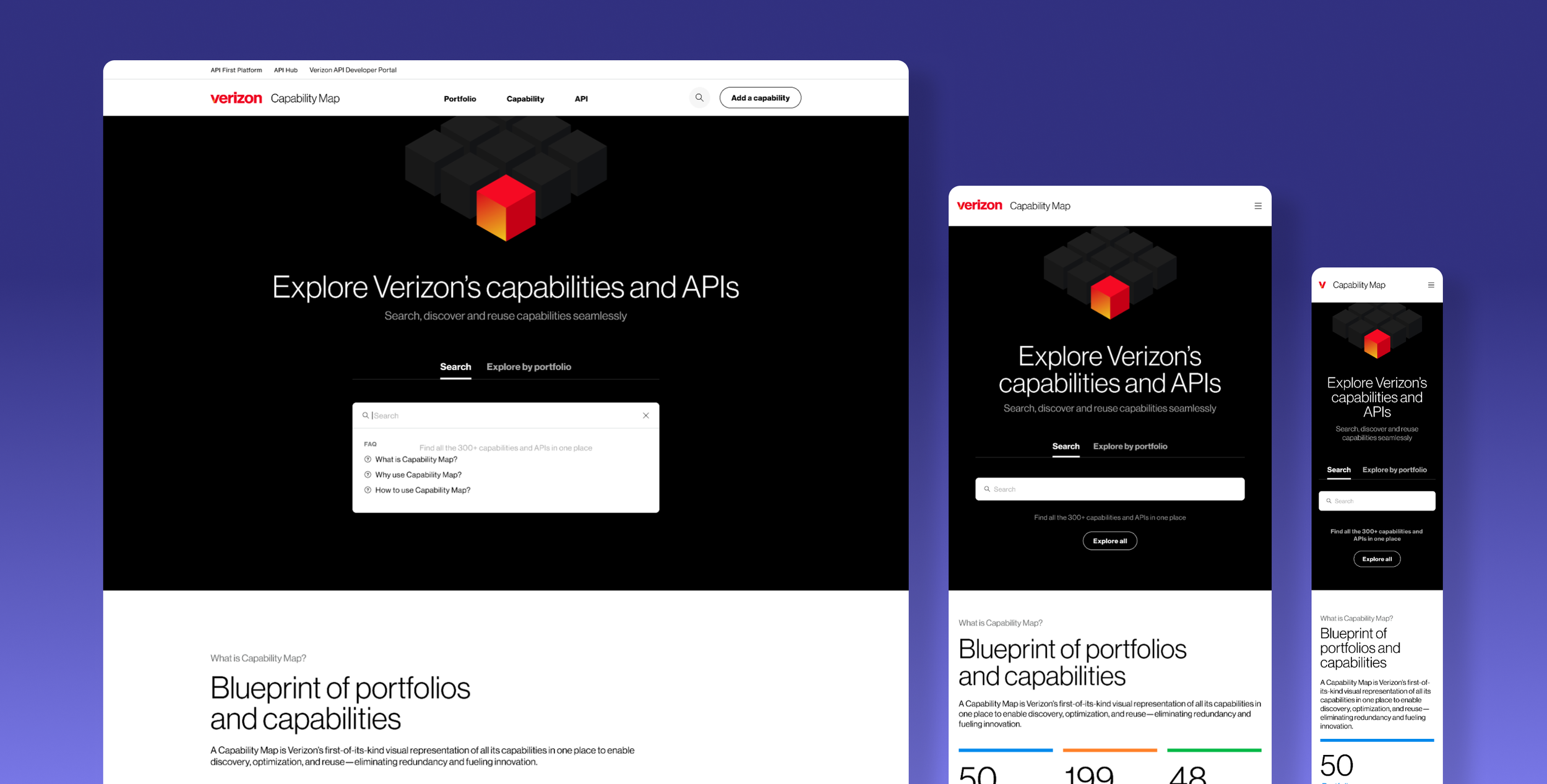
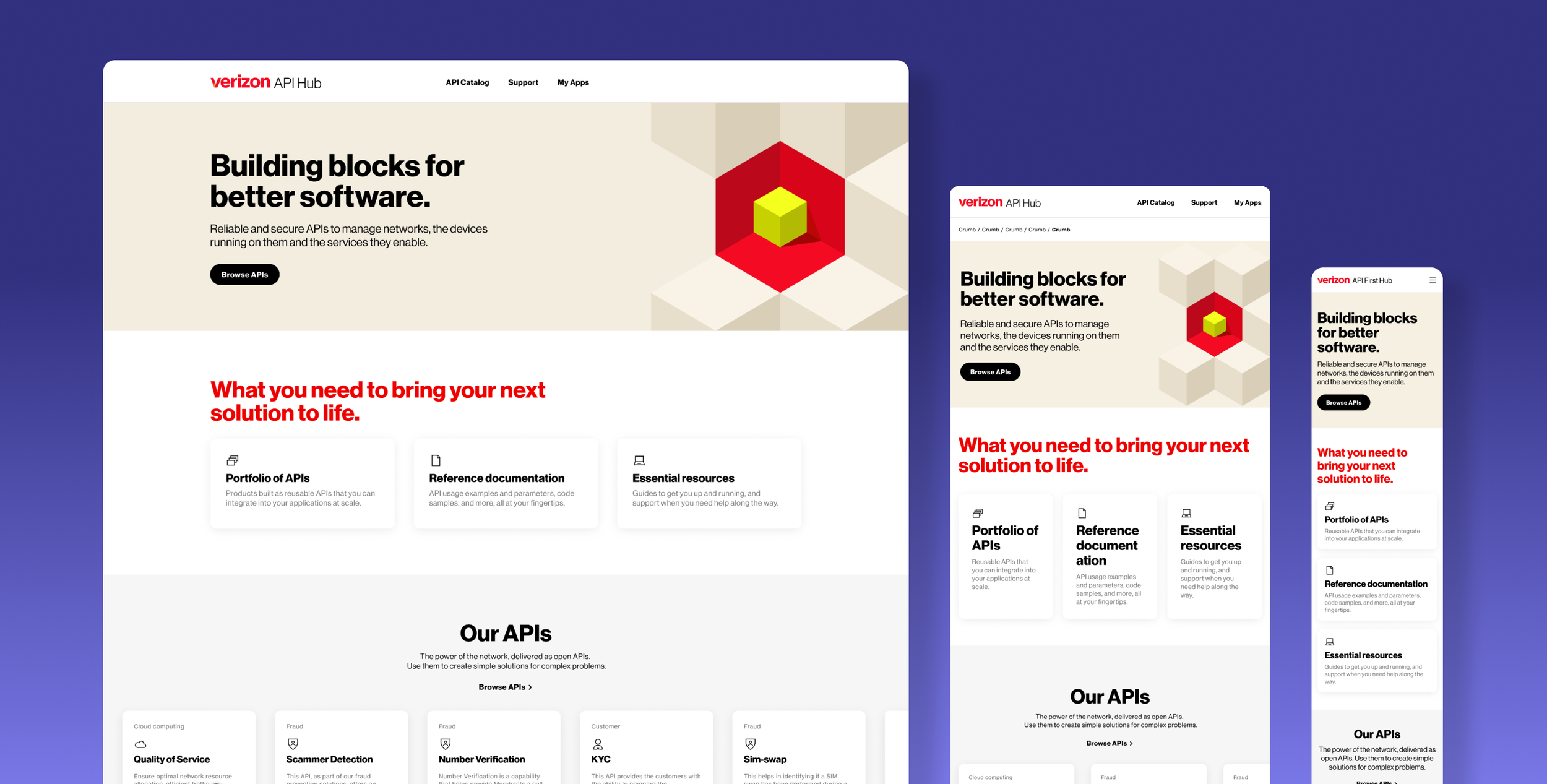
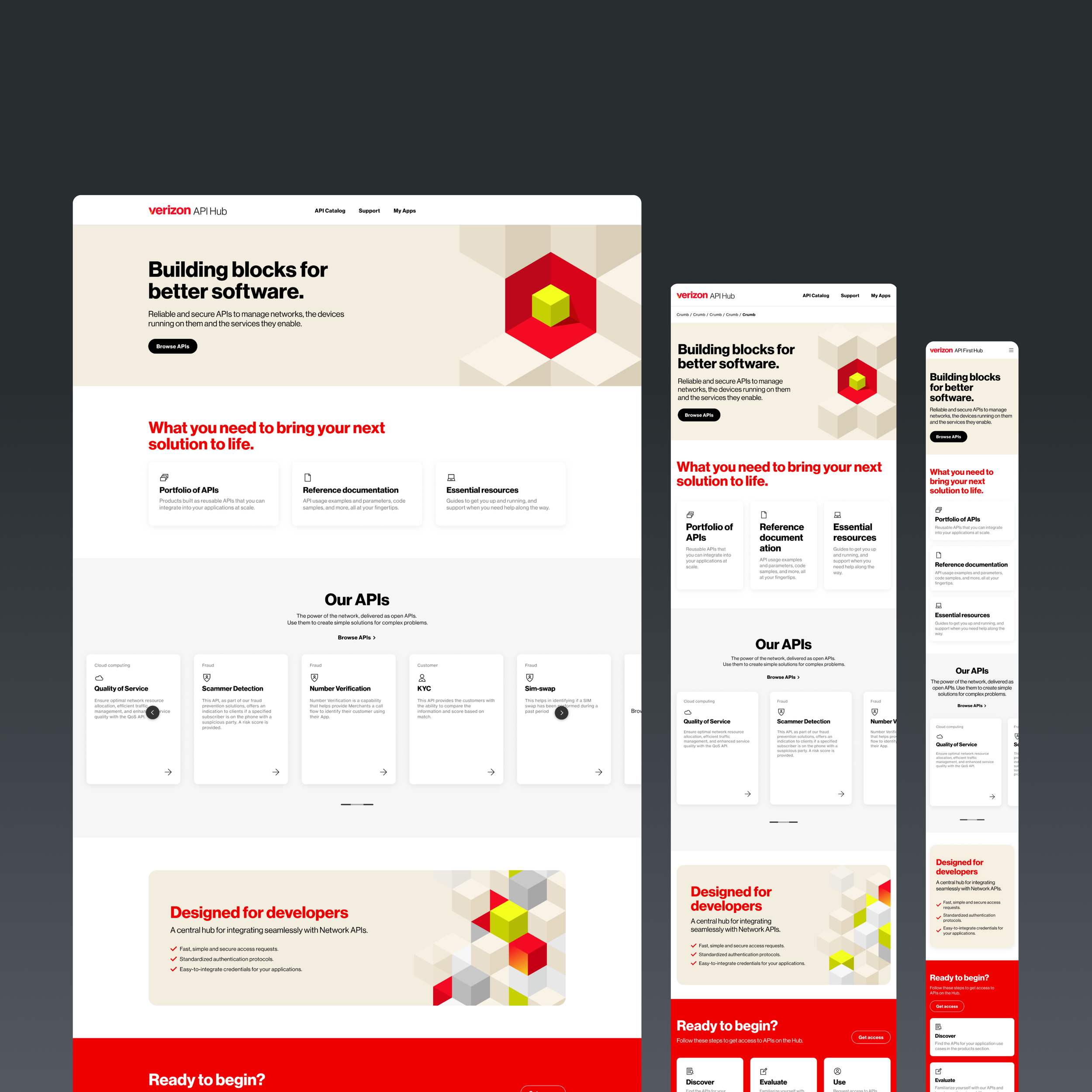
Verizon developers were wasting hours searching for APIs that already existed — and rebuilding ones they couldn't find. I led the UX design of the API First Hub: a self-service Consumer Portal that unified discovery, documentation, testing, and access into one place.
30-second Project summary
Your time is important to me and you look at a million of these every day… So here's a quick summary of the work I did on the API First Hub.
Problem:
Developers navigated five disconnected systems to find, understand, and gain access to a single API — a "swivel-chair" workflow that killed engineering velocity.
Approach:
I consolidated discovery, documentation, in-line testing, and self-service key access into a single scalable portal, validated through persona research and usability testing.
Business Result:
Time to First Call dropped from 12 minutes to 3. The portal served 7 business units on a platform that scaled from 70M to 500M+ API calls per month at 99.5% uptime.
My Leadership contributions:
Product Designer - Owned UI/UX for the Consumer Portal
Information Architecture - Defined content hierarchies and navigation for internal API consumers
Research & Benchmarking - Conducted persona mapping and competitive analysis to drive feature prioritization
UX Writing & Editorial - Directed all platform copy; collaborated with technical writers on complex documentation
Brand Integration - Led portal migration through a company-wide rebrand
Security Alignment - Partnered with back-end teams to integrate authentication and data-protection standards into the UI
The problem:
Verizon's API ecosystem was extensive but invisible. Developers didn't know what existed, couldn't easily access what they found, and had no way to test it without setting up a local environment first. Three friction points drove the design brief:
The Search Gap - Developers context-switched between Wikis, GitHub, and Jira just to locate an API endpoint.
The Access Black Box - Requesting secure keys was a manual, opaque process. Developers waited days with no status updates.
The Verification Barrier - With no integrated testing environment, Time to First Call averaged 12 minutes - just to see if an API worked at all.
The mission:
The mission of the API First Hub (Consumer Portal) is to transform Verizon’s fragmented technical landscape into a single source of truth, enabling developers to move seamlessly from discovery to ingestion by eliminating administrative friction, reducing redundant development, and optimizing the "Time to First Call."
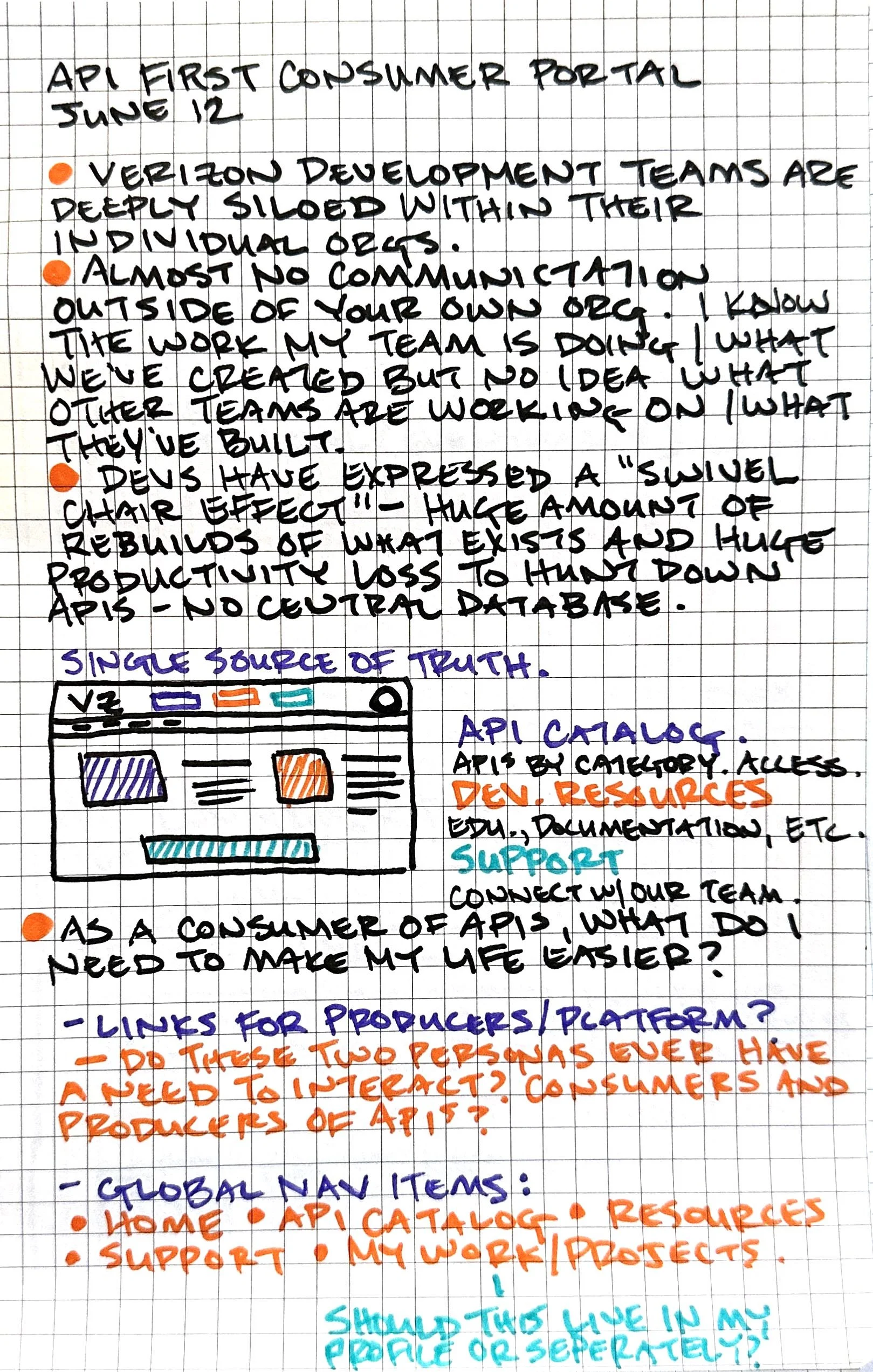
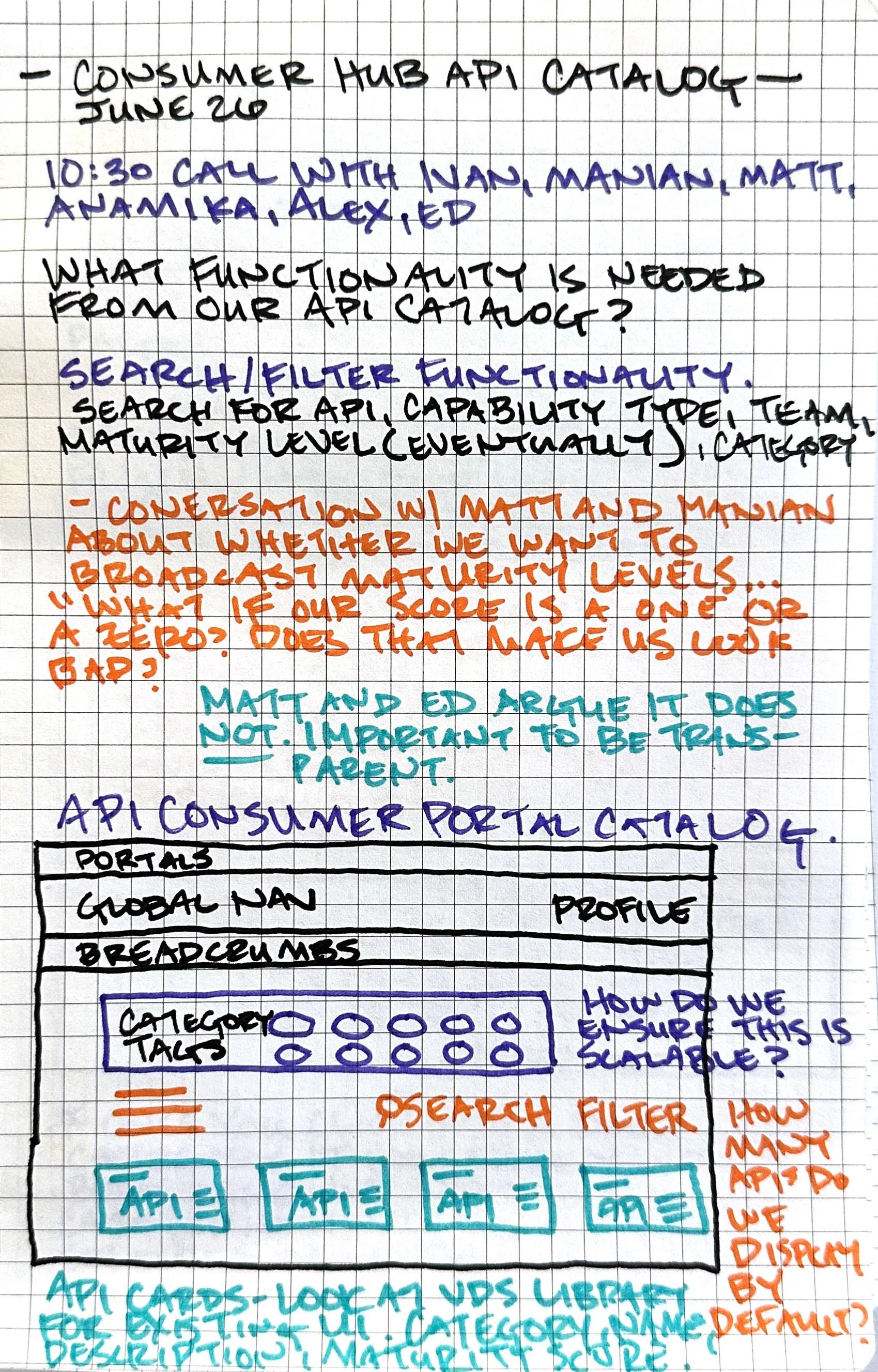
A decline in productivity due to a lack of transparency.
Verizon developer teams were facing a significant drain on resources, budget, and time by inadvertently recreating tools and functions their colleagues had already developed. This redundancy stemmed from the lack of a centralized repository. The API First initiative was established to address this gap, with the objective of building a definitive "single source of truth" where developers could discover existing assets, locate them, and understand how to integrate them into their own projects.
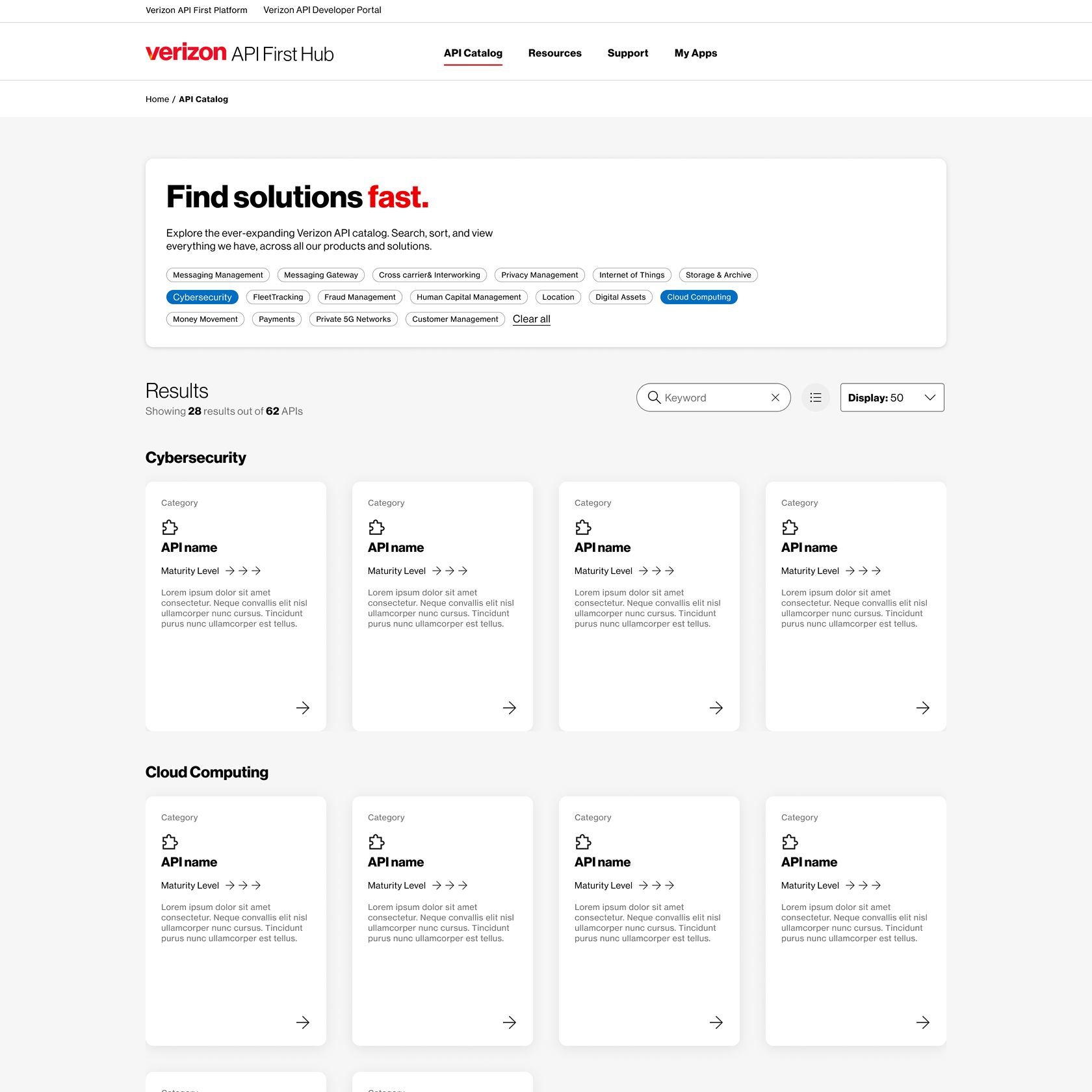
This portal was designed specifically for API consumers, featuring a robust and highly scalable catalog. With a forward-looking approach, we prepared for the future—moving from hundreds of APIs to potentially hundreds of thousands. The goal was to ensure the solution remained intuitive and valuable, providing the immense capacity necessary to grow alongside Verizon.
User research:
I mapped the existing developer journey by shadowing engineers as they searched for and integrated APIs in real conditions - not hypotheticals. The pattern was consistent: every workflow had at least three context switches before a developer could even confirm an API existed.
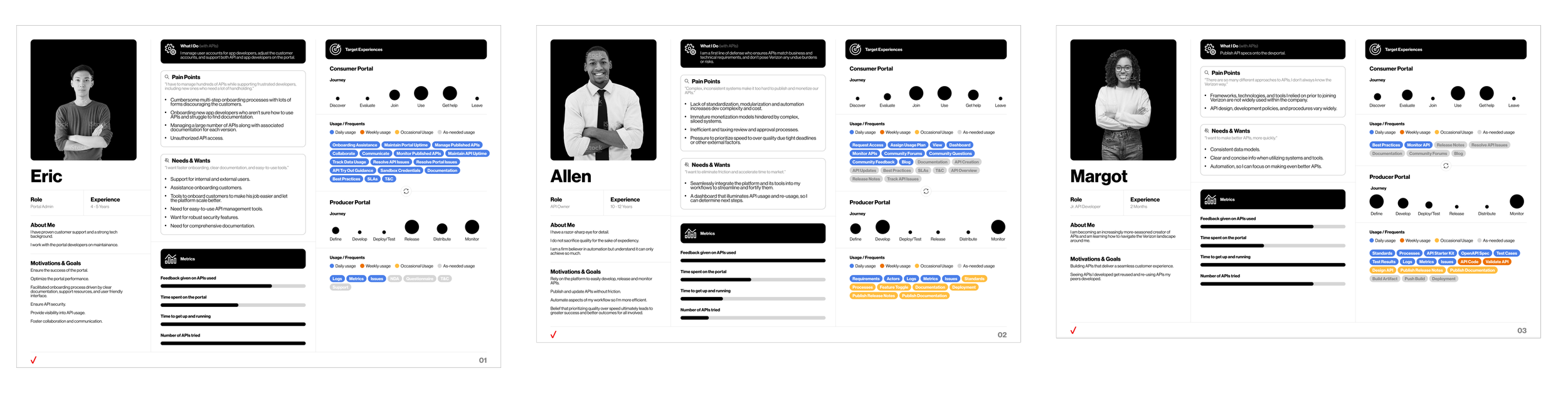
From this I defined two core personas: the Explorer (trying to find the right API for a new project) and the Integrator (who already knows what they need but can't get access or validate it fast enough). These two journeys became the backbone of the IA.
Prototyping:
Low-fidelity wireframes to align stakeholders on catalog taxonomy and documentation layout before any visual work
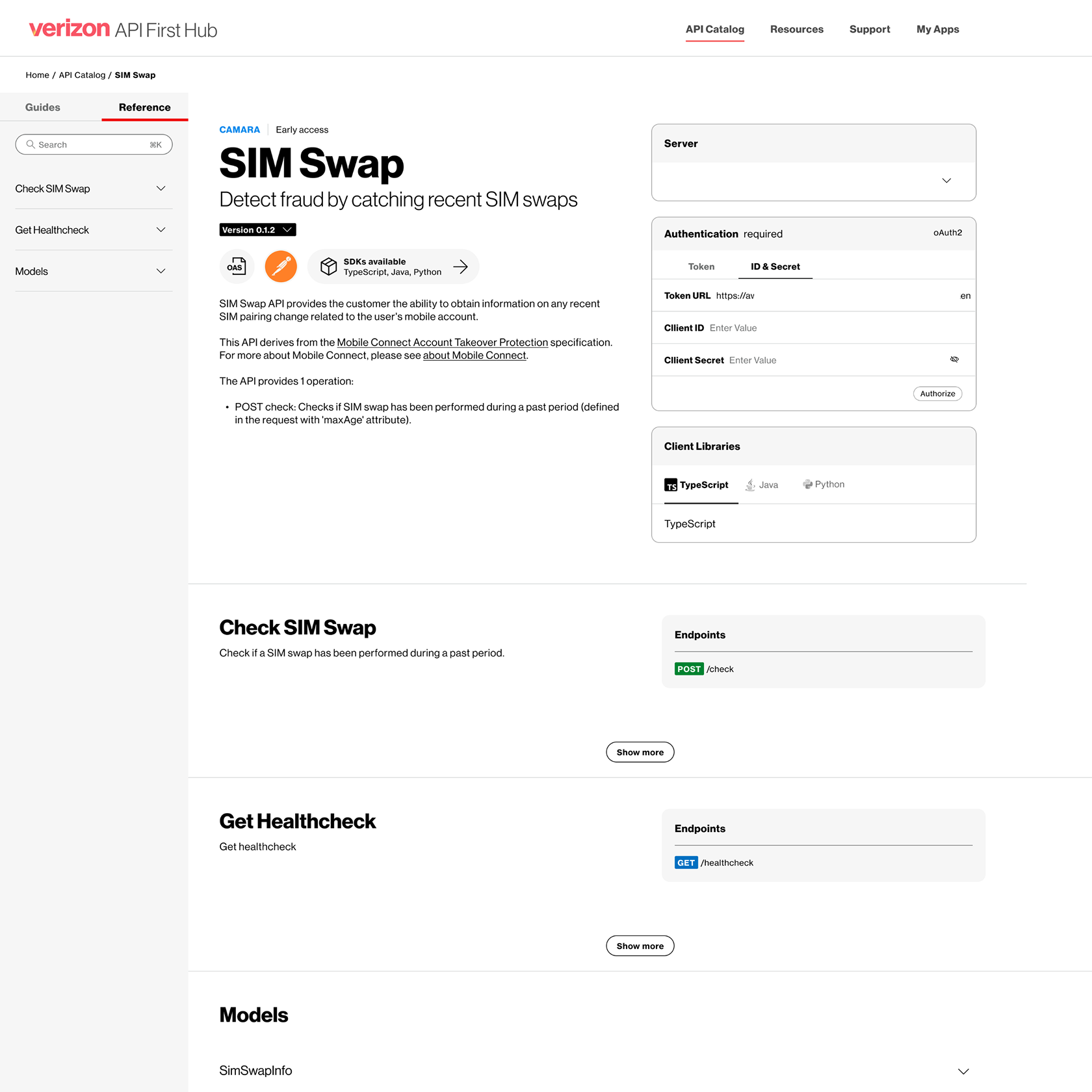
High-fidelity Figma prototypes focused on the TTFC metric - with a built-in testing console embedded directly alongside documentation to simulate swivel-chair elimination
Key flow validation across three critical journeys: catalog search and filtering, endpoint documentation navigation, and the self-service API key request workflow
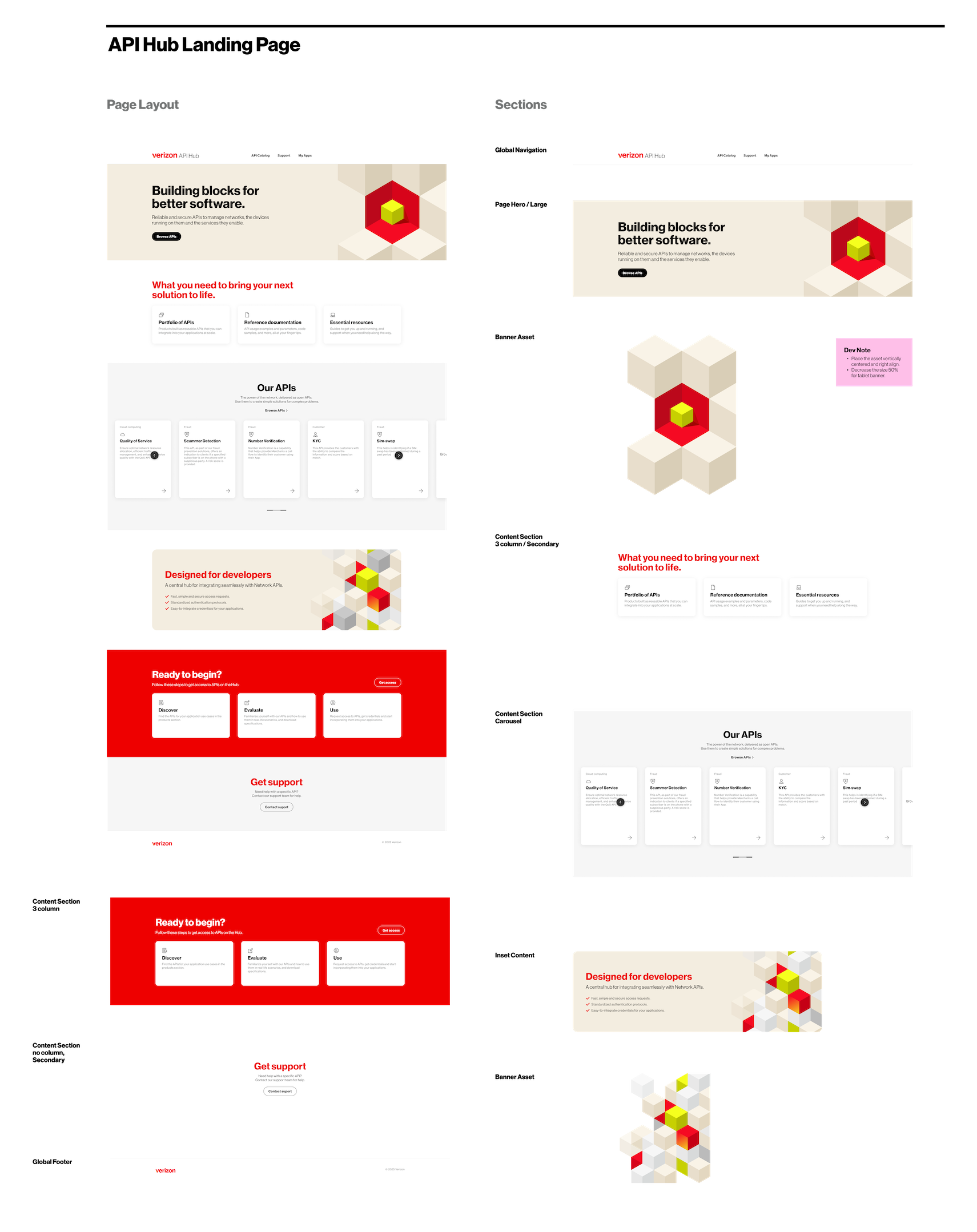
Designing for Discovery & Scalability
Great UX starts with a clear plan.
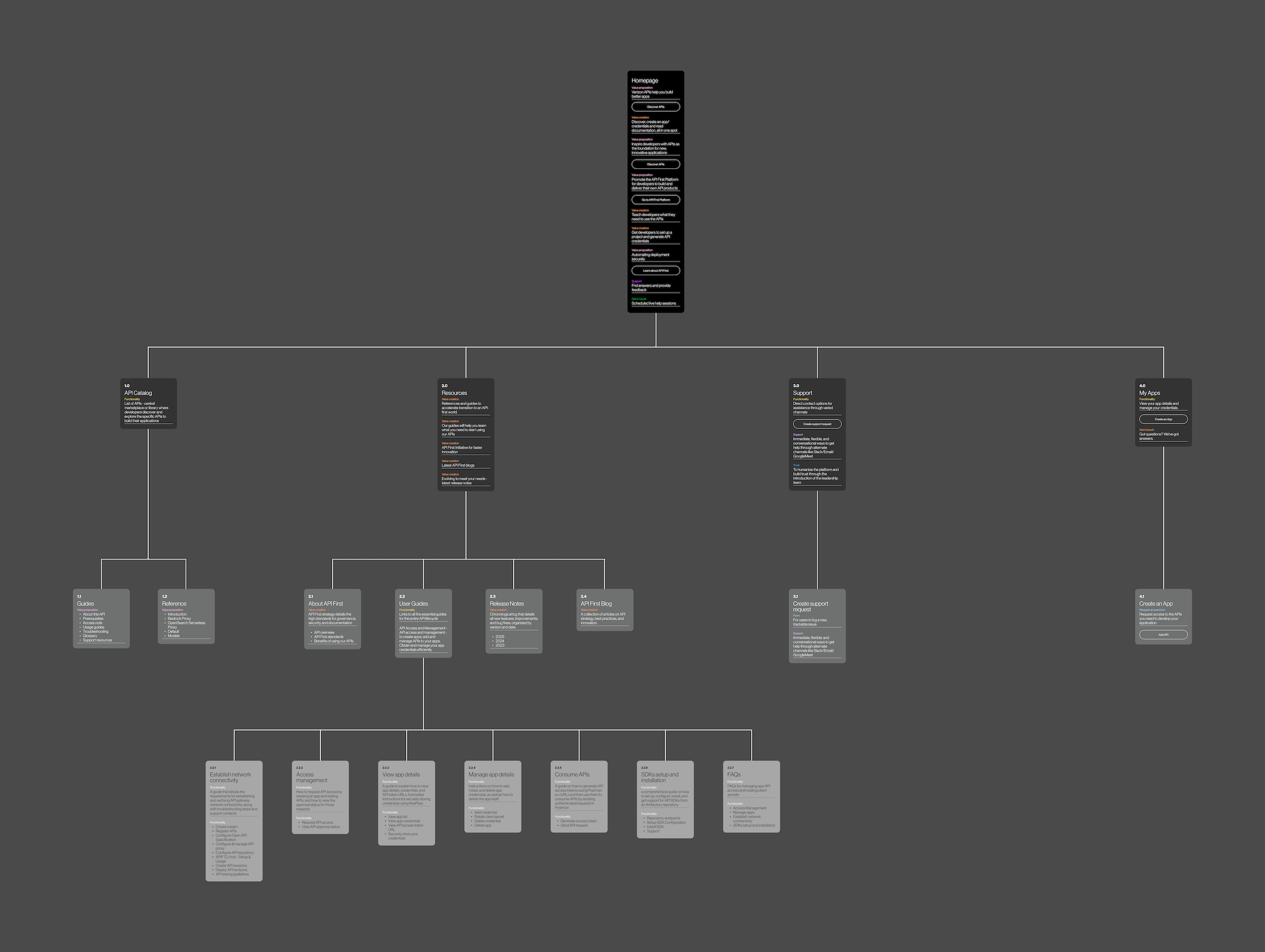
The four-pillar structure - Catalog, Resources, Support, My Apps - was the result of card-sorting exercises with real developers, not assumptions. The most important decision was separating the Catalog (discovery-first, browse-oriented) from My Apps (task-first, management-oriented). Developers in discovery mode think differently than developers in maintenance mode. The IA reflects that.
The Outcome:
A Cultural Shift in Engineering
The API First Hub launched across multiple Verizon business units. Within the first year:
12 min → 3 min - Time to First Call, a 75% reduction
500M+ API calls per month at peak, up from 70M at launch
99.5% uptime across the portal portfolio
Eliminated redundant R&D spend from teams recreating existing tools
The larger shift was behavioral. When discovery and access are frictionless, developers actually use what exists instead of rebuilding it. The portal made reuse the path of least resistance.
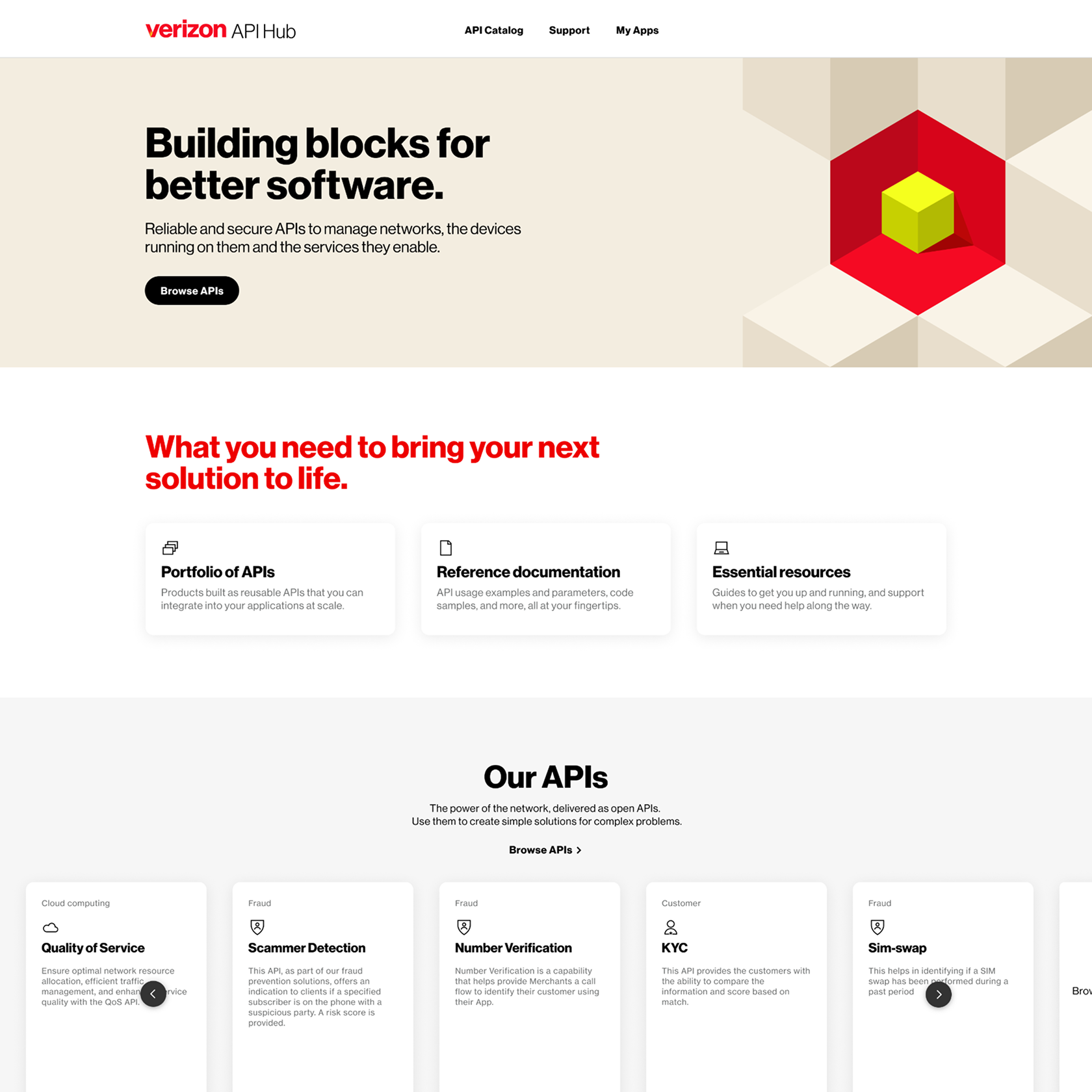
Ingesting APIs
Request a prototype demo
This portal was built on proprietary infrastructure, so I keep the deeper documentation out of public view. But I'm happy to walk you through it live - the full flow, the design decisions, the tradeoffs. Reach out to schedule a 1:1 demo. I just ask that we keep it screen-capture free.
“Ryan has this amazing combination of strong design instincts, technical curiosity, and a genuine desire to learn. He wasn’t satisfied with surface-level understanding — he wanted to know how things actually worked so his designs could be practical, scalable, and user-centric. On top of all that, he’s incredibly easy to work with, thoughtful in feedback, and deeply collaborative.
Any team would be lucky to have Ryan. If you’re looking for someone who takes ownership, learns fast, and designs with both users and systems in mind — Ryan is that person, and then some”.
Anamika Rashmi
Technical PM - Verizon
See More Product Design case studies