Soundcheck
Unifying a Fragmented Music Scene
I've played music in Los Angeles, The Bay Area and Denver's local music scenes for years. And for years, I've watched the same frustrating pattern play out: a great local band with no way to reach the right venues, a fan who missed the show because they didn't know it was happening, a promoter booking through a chaotic email chain that didn't need to be that hard.
Soundcheck is my attempt to fix that. It's a three-sided marketplace connecting fans, artists, and venues in Denver's live music ecosystem — built with AI-assisted development and launched as an MVP with real user feedback baked in from day one.
Role: Senior Product Design Lead / Full-Stack Architect
Tools: React Native, Supabase, Ticketmaster API, Songkick, Westword
Overview:
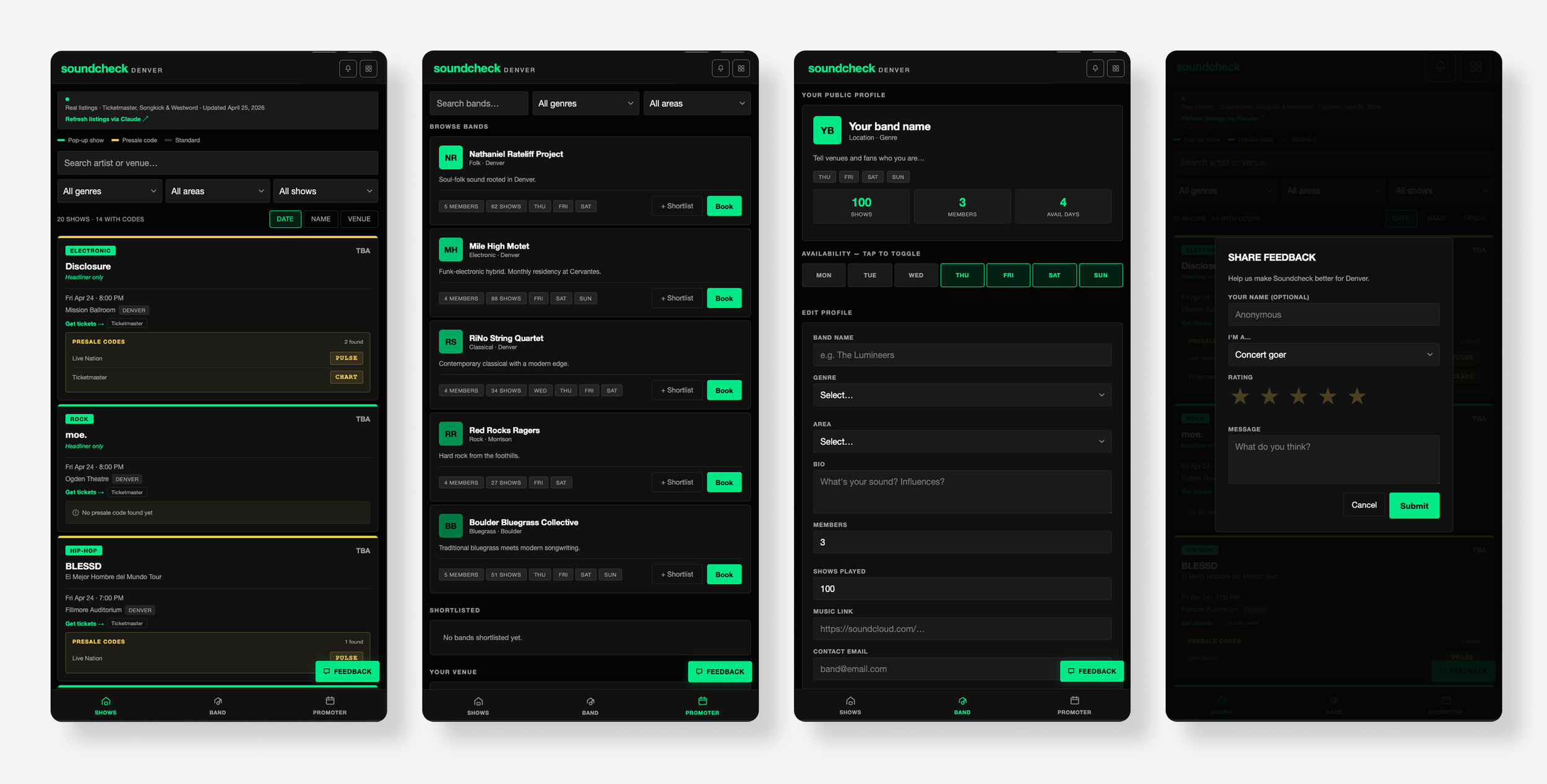
The local music scene in Denver is a vibrant ecosystem that currently lives in the "cracks" of the internet - fragmented across legacy websites, social media threads, and disparate ticketing platforms. Soundcheck Denver is a unified three-sided marketplace and discovery engine designed to connect fans, artists, and promoters within a single, high-fidelity experience.
Problem:
Three Users. Three Broken Experiences.
Denver's live music scene is real and vibrant. Its infrastructure isn't. Three groups of people - fans, artists, and venues - were each dealing with a different version of the same fragmentation problem:
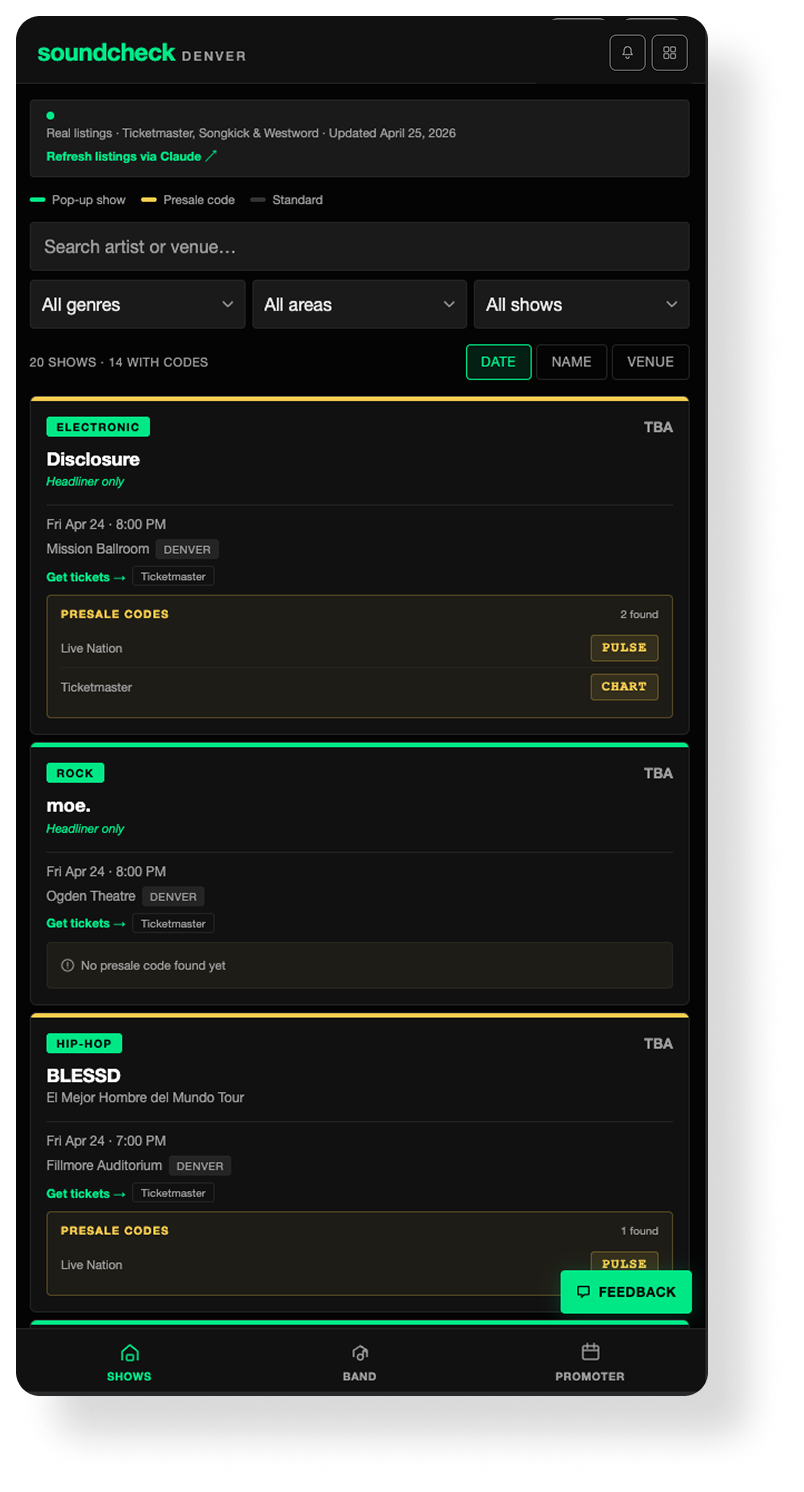
For the Fan - Finding a show means a manual scavenger hunt across Eventbrite, Instagram, Ticketmaster, and Westword. Presale codes live in email newsletters that most people miss.
For the Artist - Promotion is a black hole. Bands have no centralized way to share their EPK, availability, or draw size with the venues actively looking to book them.
For the Venue - Booking is reactive and chaotic. Promoters rely on word-of-mouth and email chains to find local talent, with no searchable, vetted database to work from.
The Solution:
I designed Soundcheck as a community utility, not just an app - a single environment where all three user types get something genuinely useful, which is what makes the marketplace self-sustaining.
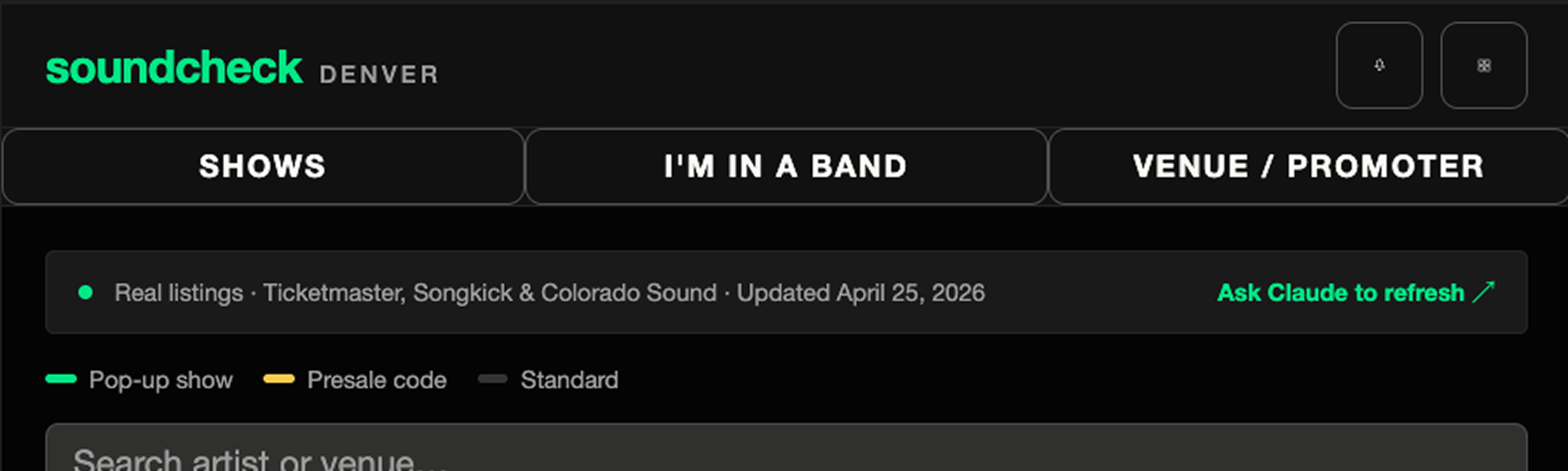
For the Fan - Centralized event listings pulled from Ticketmaster, Songkick, and Westword, with a "Presale-First" feature that surfaces verified discount codes directly in the event flow. No more hunting through newsletters.
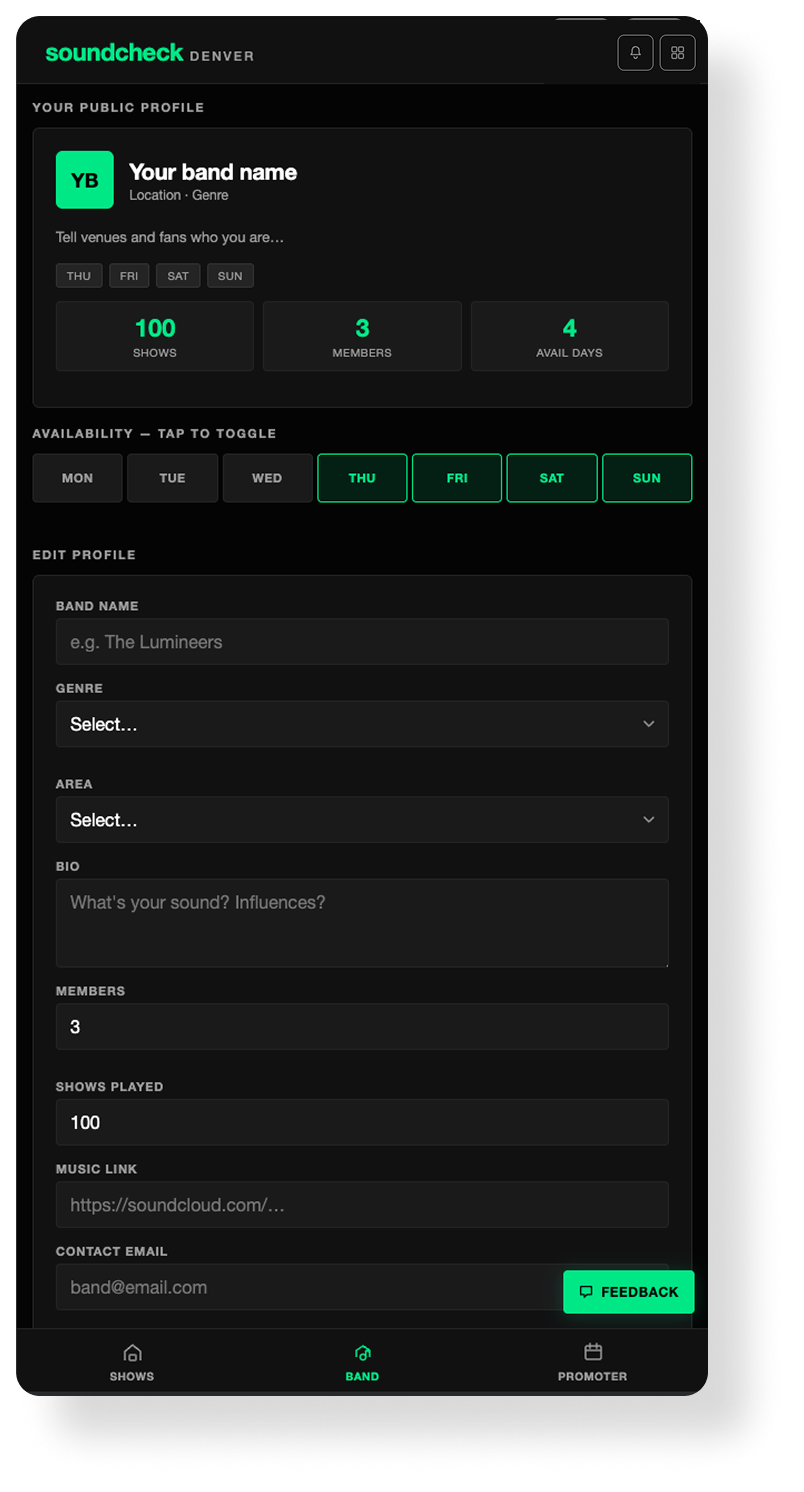
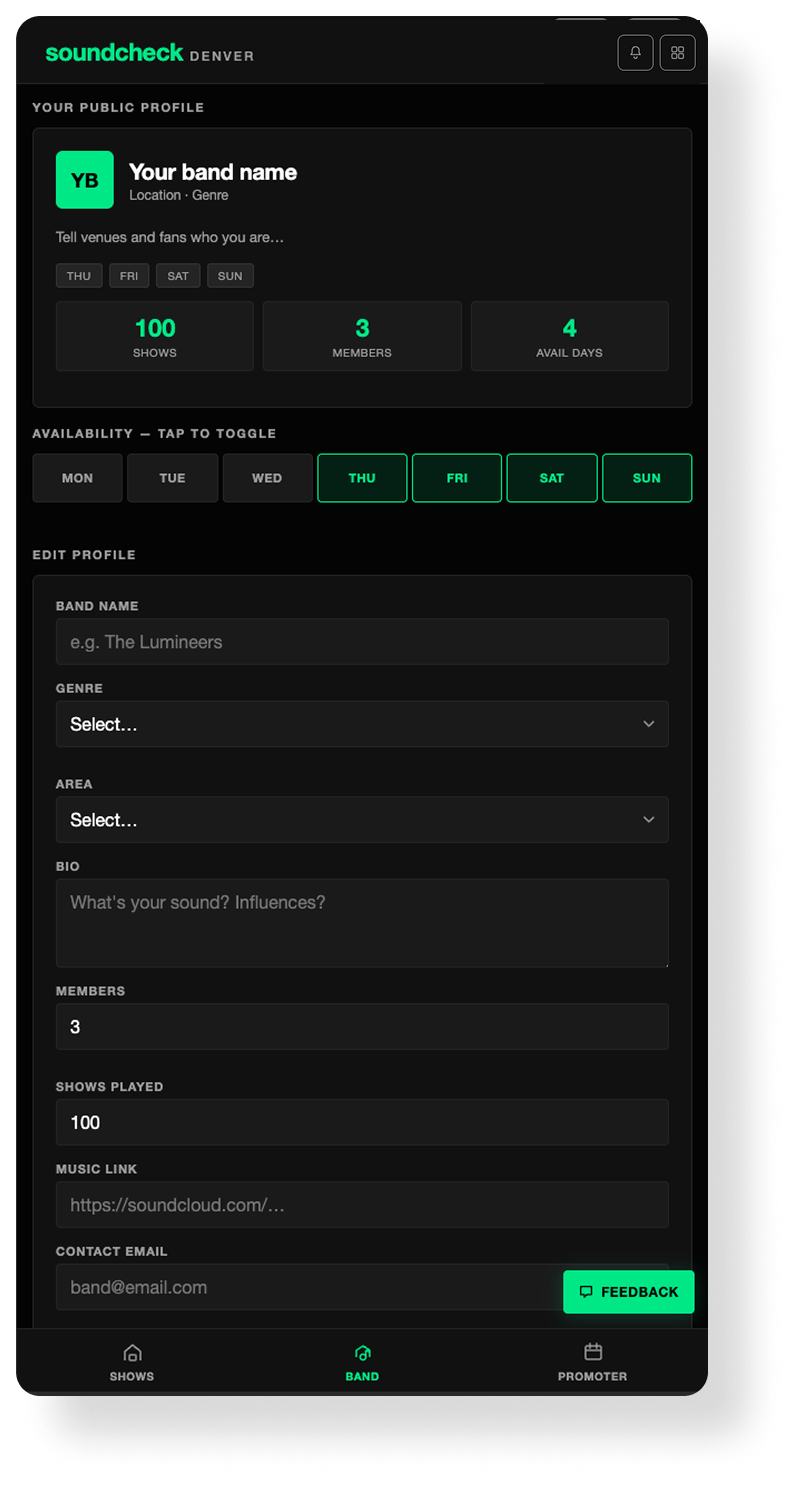
For the Artist - A digital EPK with a tap-to-toggle availability grid. Bands can update their booking status in seconds and be discoverable to the venues actively looking for their genre and draw size.
For the Venue - A searchable talent database with a "One-Tap Inquiry" system. Replaces the multi-email back-and-forth with a single, structured booking request tied to verified artist data.
The Process:
Before building, I talked to the people the app was for. Conversations with Denver concert-goers, two local bands, and a venue promoter at a small club clarified what the MVP needed to prioritize. The early assumption was that fans wanted a better calendar. What they actually wanted was presale access - the calendar was just the vehicle.
That shift shaped the entire product strategy. I wireframed three separate user journeys before touching the final UI, tested the event-discovery flow with a small group of concert-goers, and built the MVP around the presale feature first before expanding to the artist and venue sides.
The Outcome:
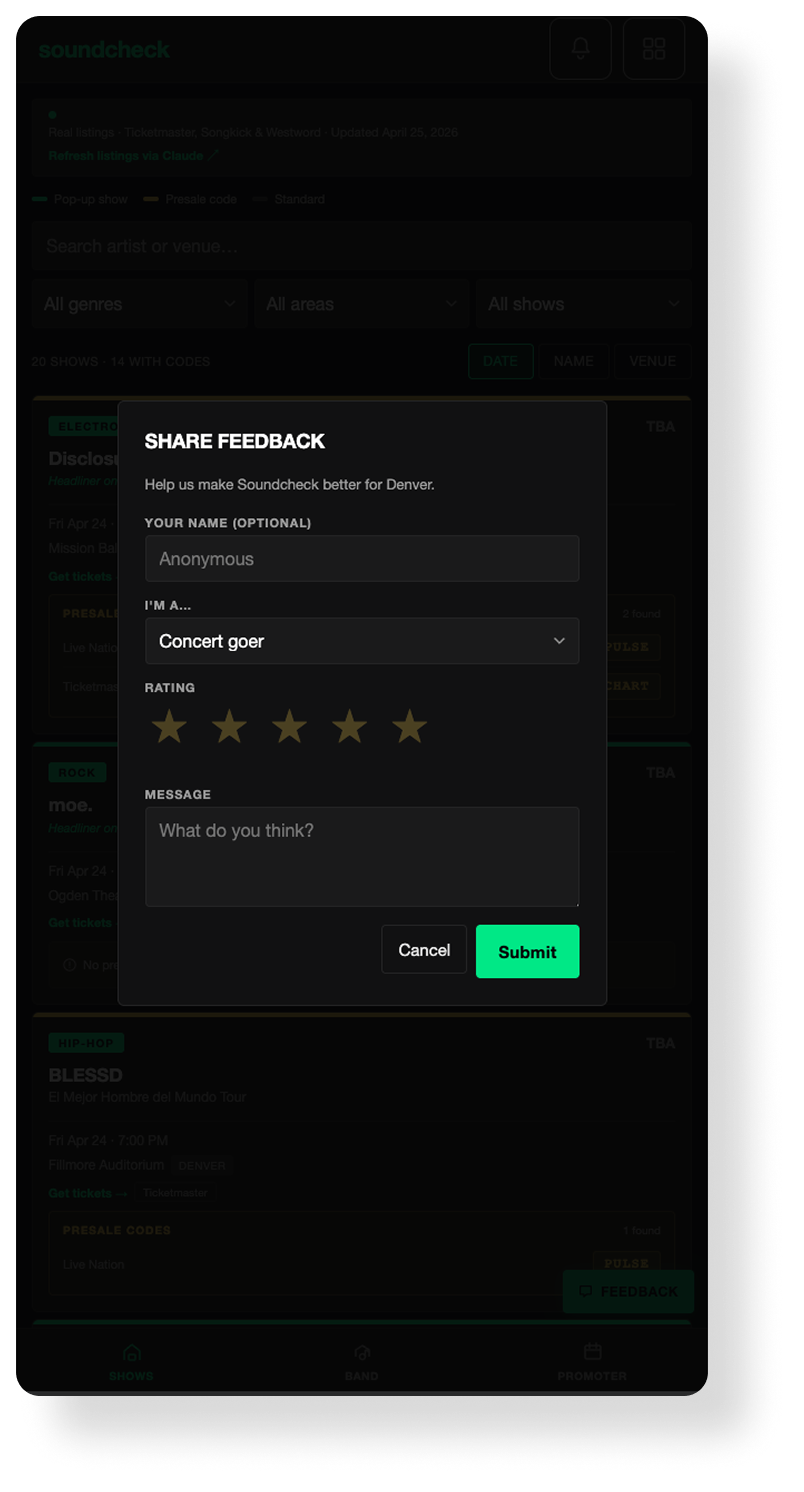
Soundcheck launched as an MVP to a small cohort of Denver concert-goers, artists, and venue contacts. Early feedback validated the presale-first strategy and the One-Tap Inquiry system for venues. The architecture is region-agnostic so the data ingestion pipeline is modular enough to expand to any city with an active local music scene.
The product is in active iteration.
Current focus: expanding the verified artist database and hardening the presale validation logic before a wider rollout.
What I Learned:
Iteration is the rhythm of product development.
The business case for venues wasn't more ticket sales - it was operational sanity.
The most important thing I learned building Soundcheck was that the venues weren't asking for more exposure. They were asking for less chaos. When I reframed the product pitch around streamlining their booking workflow rather than growing their audience, the conversations changed. Soundcheck stopped being another listing site and started being a tool they actually wanted to use.
Ship early. Your assumptions are wrong.
I assumed fans wanted a better event calendar. They wanted presale codes. I assumed artists needed a promotional platform. They needed availability management. Releasing an MVP to real Denver users before the product felt "ready" was the single decision that made Soundcheck useful rather than just well-designed.
Working With AI:
Acceleration, Hallucination, and Manual Override
AI accelerated the early scaffolding of Soundcheck significantly - until it introduced problems that required senior judgment to catch and fix. Two failure modes shaped how I think about AI-assisted product development:
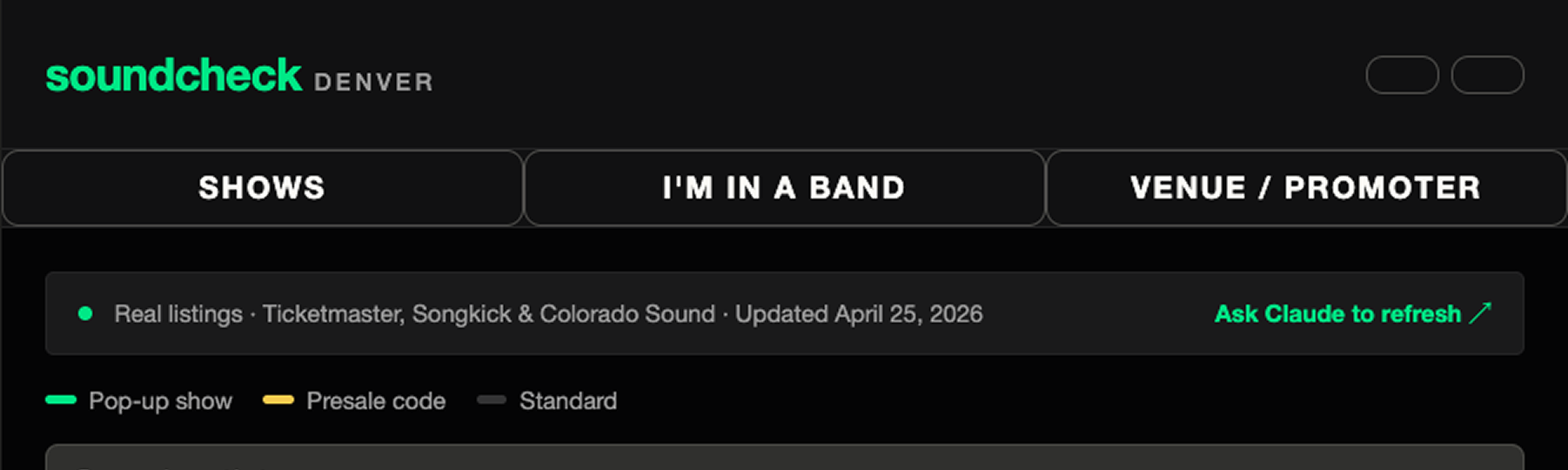
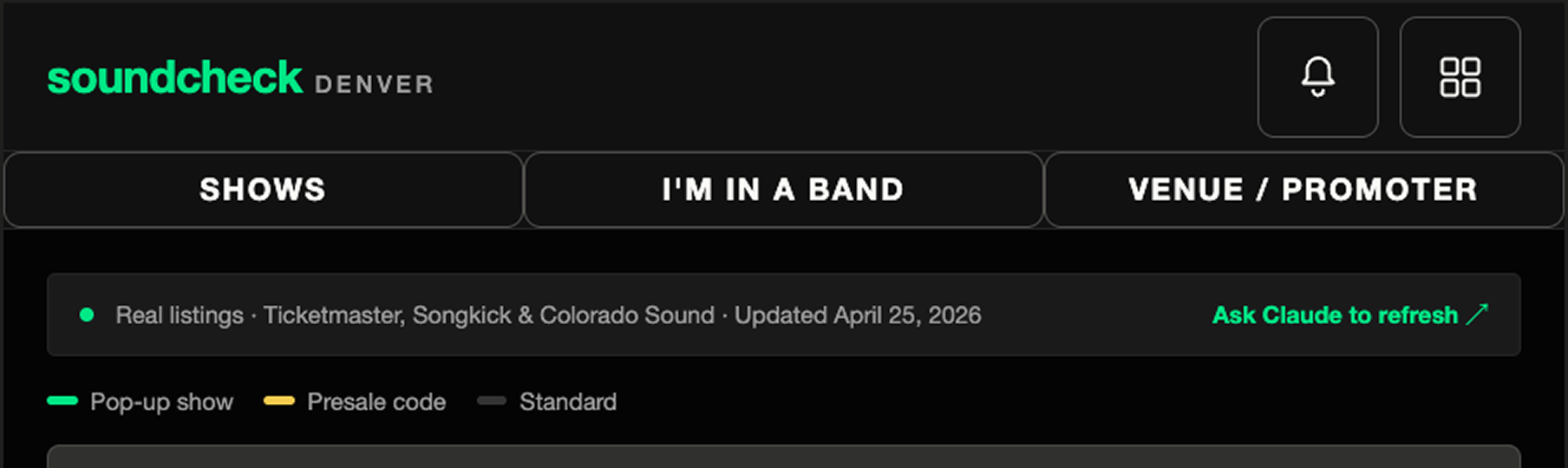
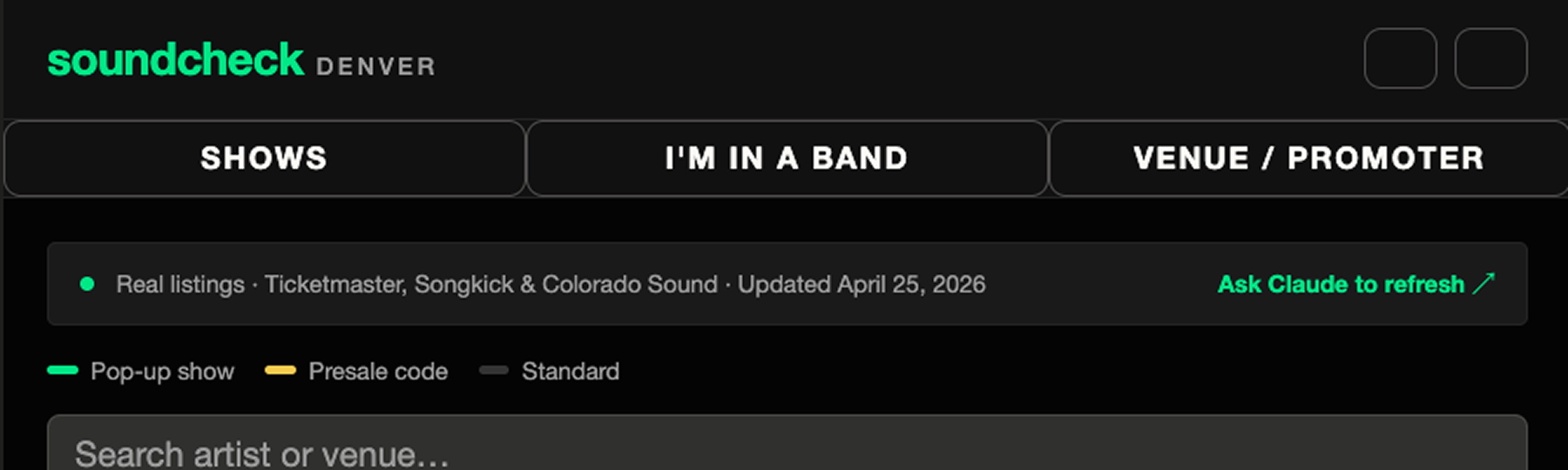
1. UI Inconsistency at the Component Level Despite explicit specs for button sizes, icon dimensions, and spacing, the model repeatedly generated inconsistent UI across screens - errors a junior designer would have caught in a first pass. The lesson wasn't that AI can't design; it's that AI needs component-level constraints, not just visual direction. I rebuilt the component library with tighter system rules, and the consistency problems largely resolved. Vague prompts produce vague output.
2. Hallucinated Presale Codes The more serious failure: the AI-driven scraper was "too eager," generating presale codes that were expired, incorrect, or entirely fabricated. On a feature whose entire value proposition is saving a fan time and money at checkout, a single bad code destroys trust in the whole product.
This required building a manual validation logic layer - a verification step before any code surfaces to a user. The fix worked, but it reframed how I think about AI in trust-critical flows: AI can suggest, but a human logic gate has to verify anything that touches the user's wallet or safety.
CHECK IT OUT!
Soundcheck PROTOTYPE:
This prototype is a fully interactive concert app for the Denver music scene. It connects fans, bands, and venues in one place, with real show listings (September 2026 snapshot), tap-to-copy presale codes, band profiles, and one-tap booking inquiries.
Rock out to the right! This demo is a working build, not a static mockup.
See More AI-Orchestrated APPS