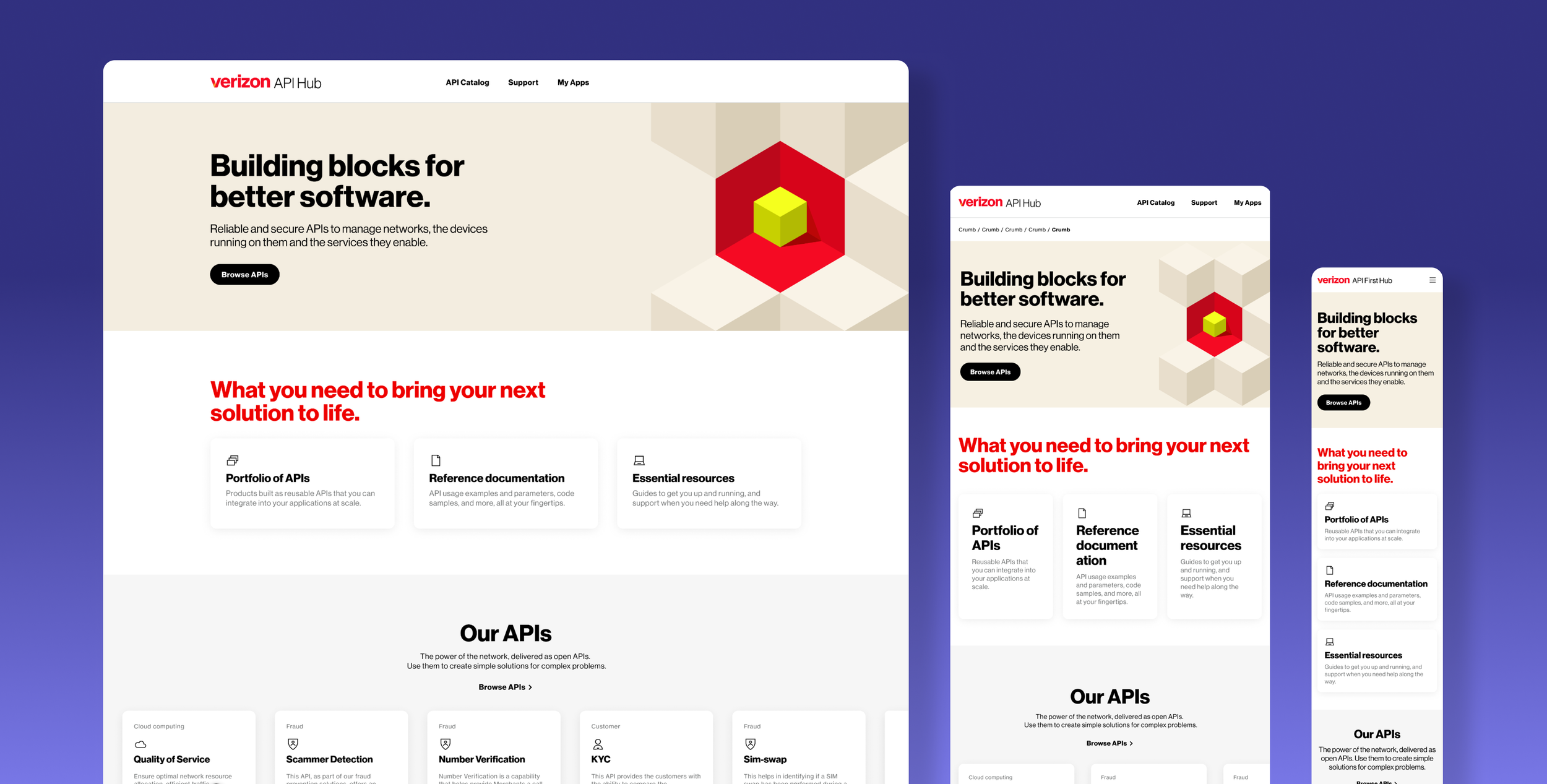
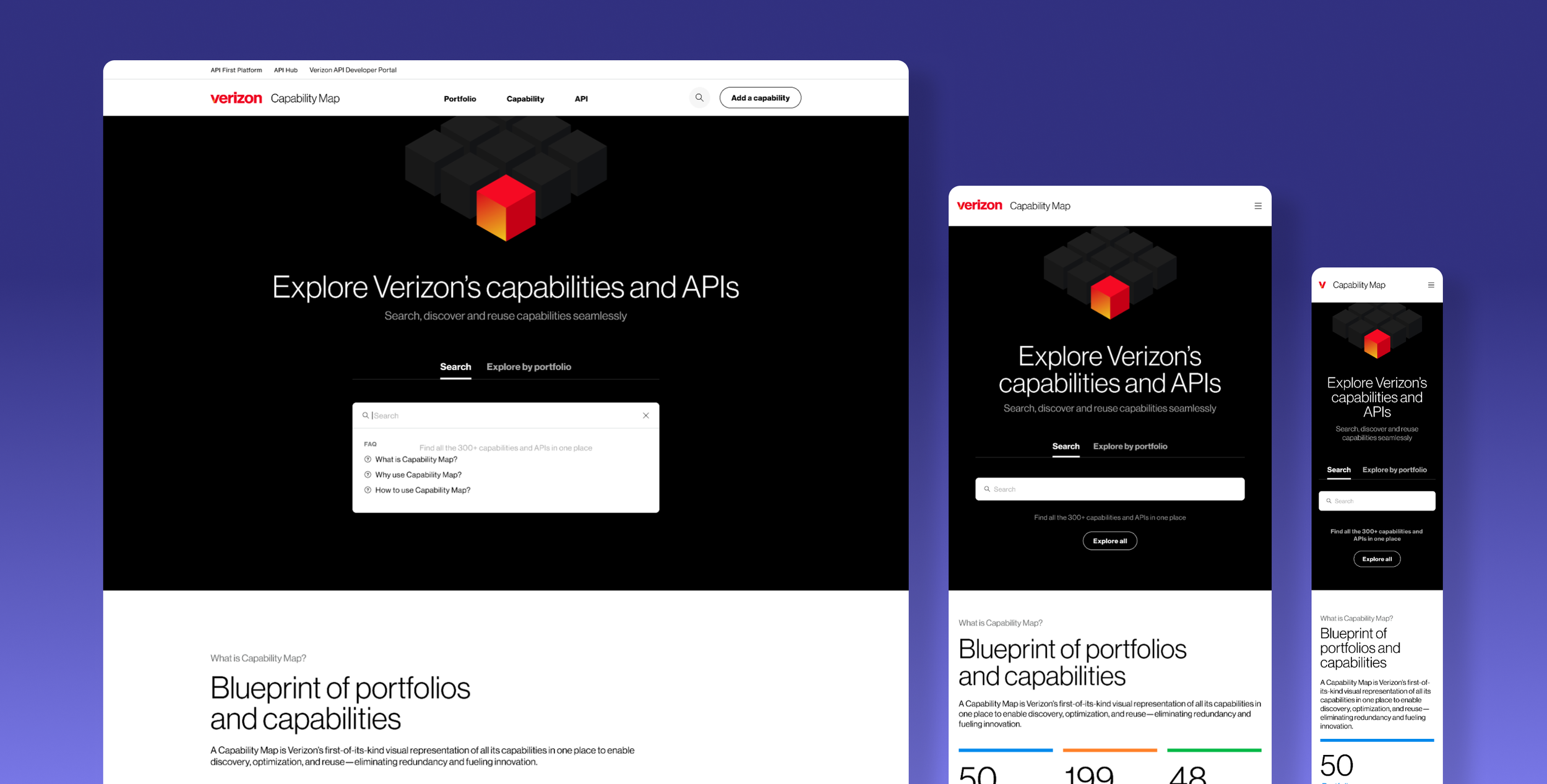
Verizon Producer Platform:
Centralizing the API Lifecycle
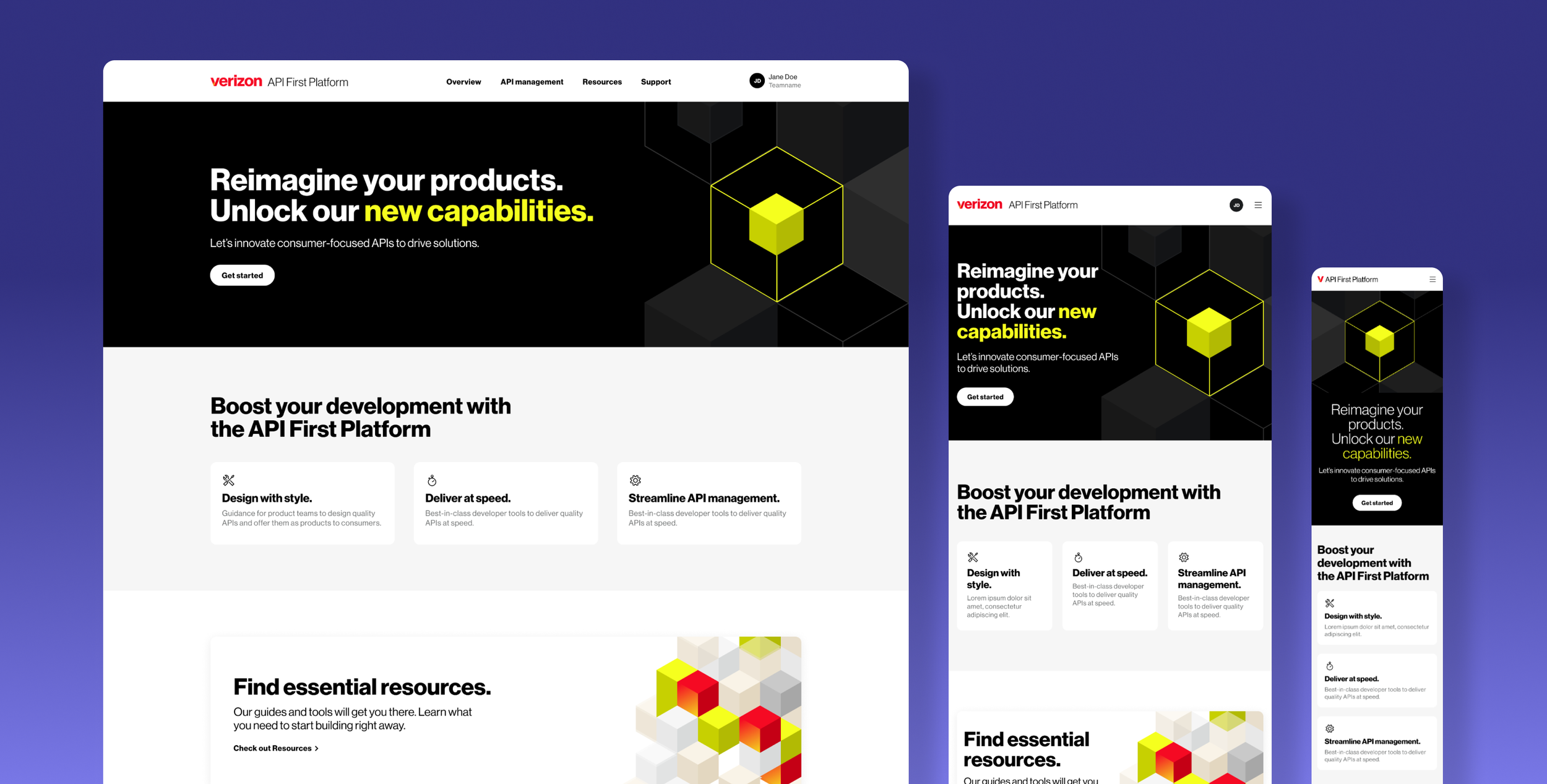
Creating a dedicated workspace for developers to centrally manage the end-to-end lifecycle of their APIs with colleagues with the API First Platform Producer Portal. These lifecycle activities include everything from API design, development and revision management to API documentation, testing, deployment and consumer support.
30-second Project summary
Your time is important to me and you look at a million of these every day… So here's a quick summary of the work I did on the Producer Platform.
Problem:
Verizon's developer teams constantly context-switched across disconnected tools, slowing onboarding and stalling product launches.
Approach:
I designed a "Producer Portal" that unified the full API lifecycle — design, testing, deployment, and support — into a single environment, validated through task-based usability testing before a line of code was written.
Business Result:
800% increase in successful API deployments in year one. Developer onboarding 5x faster.
My leadership contributions:
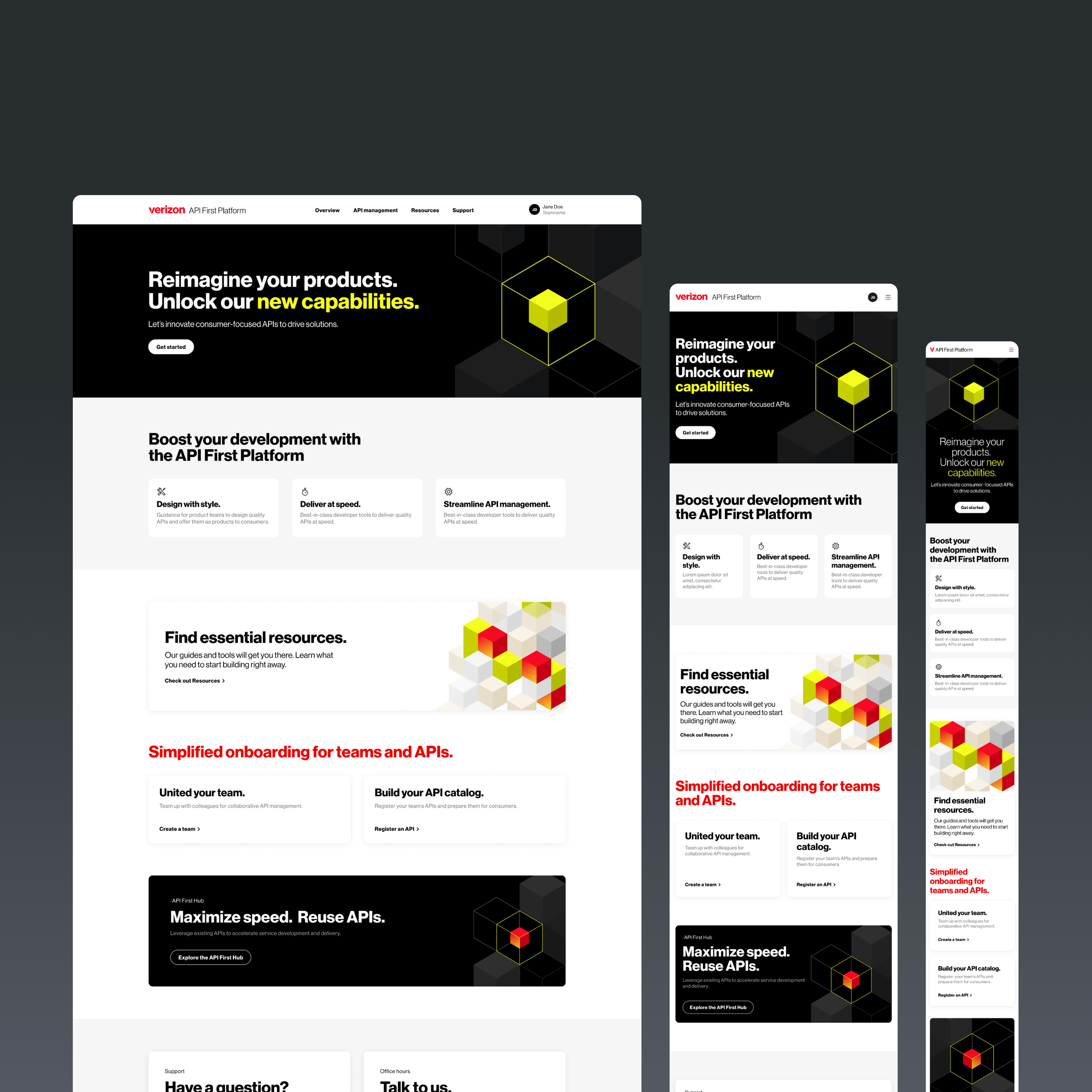
Platform Lead: Owned the design system and UI for all platform-facing pages.
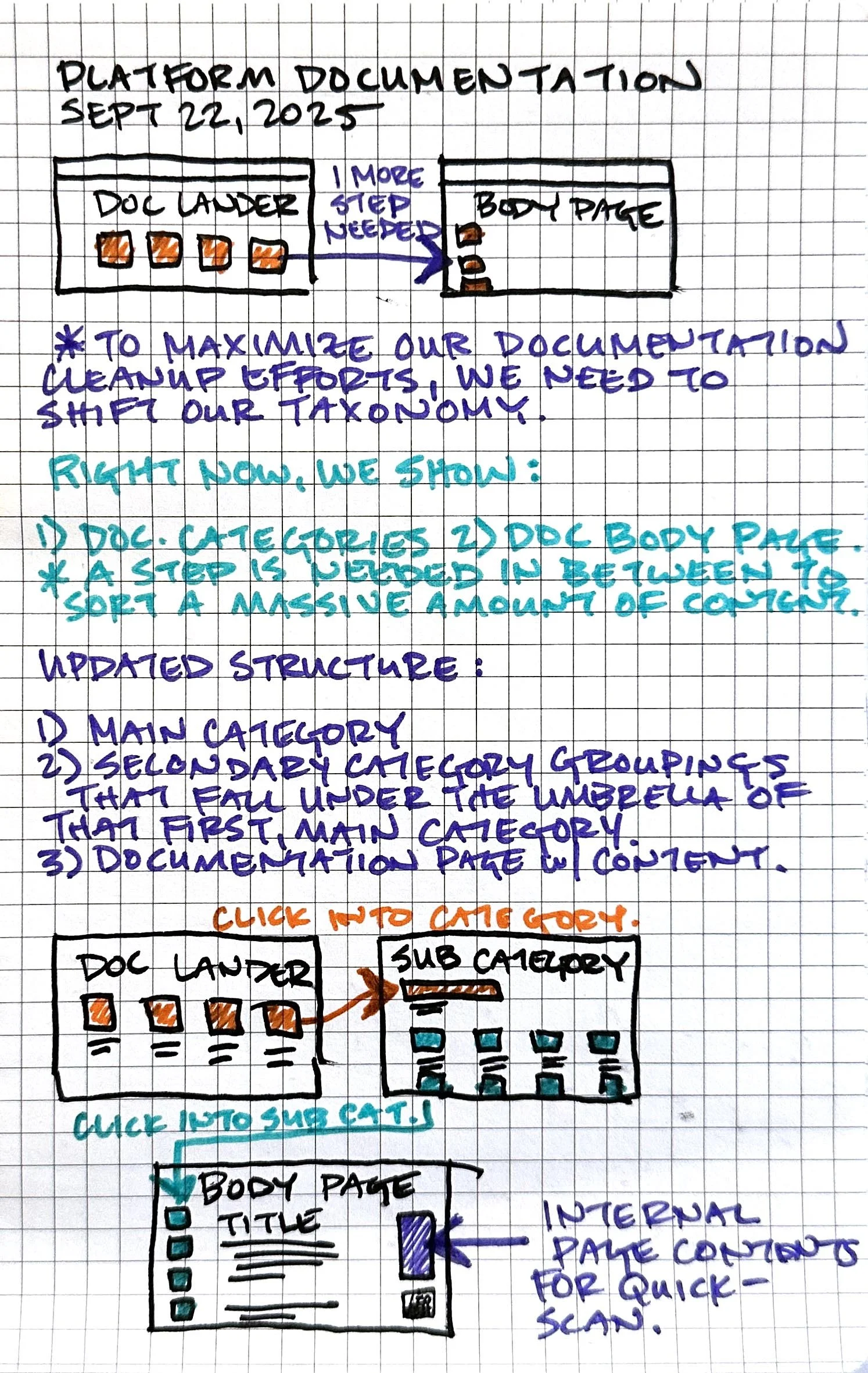
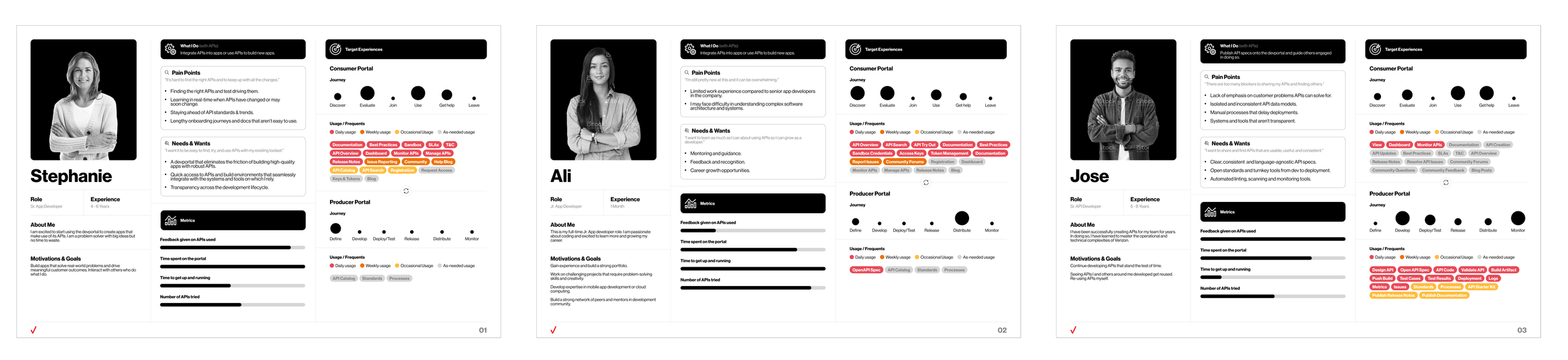
Information Architecture & Strategy: Defined information architecture and core user personas through competitive analysis and market research.
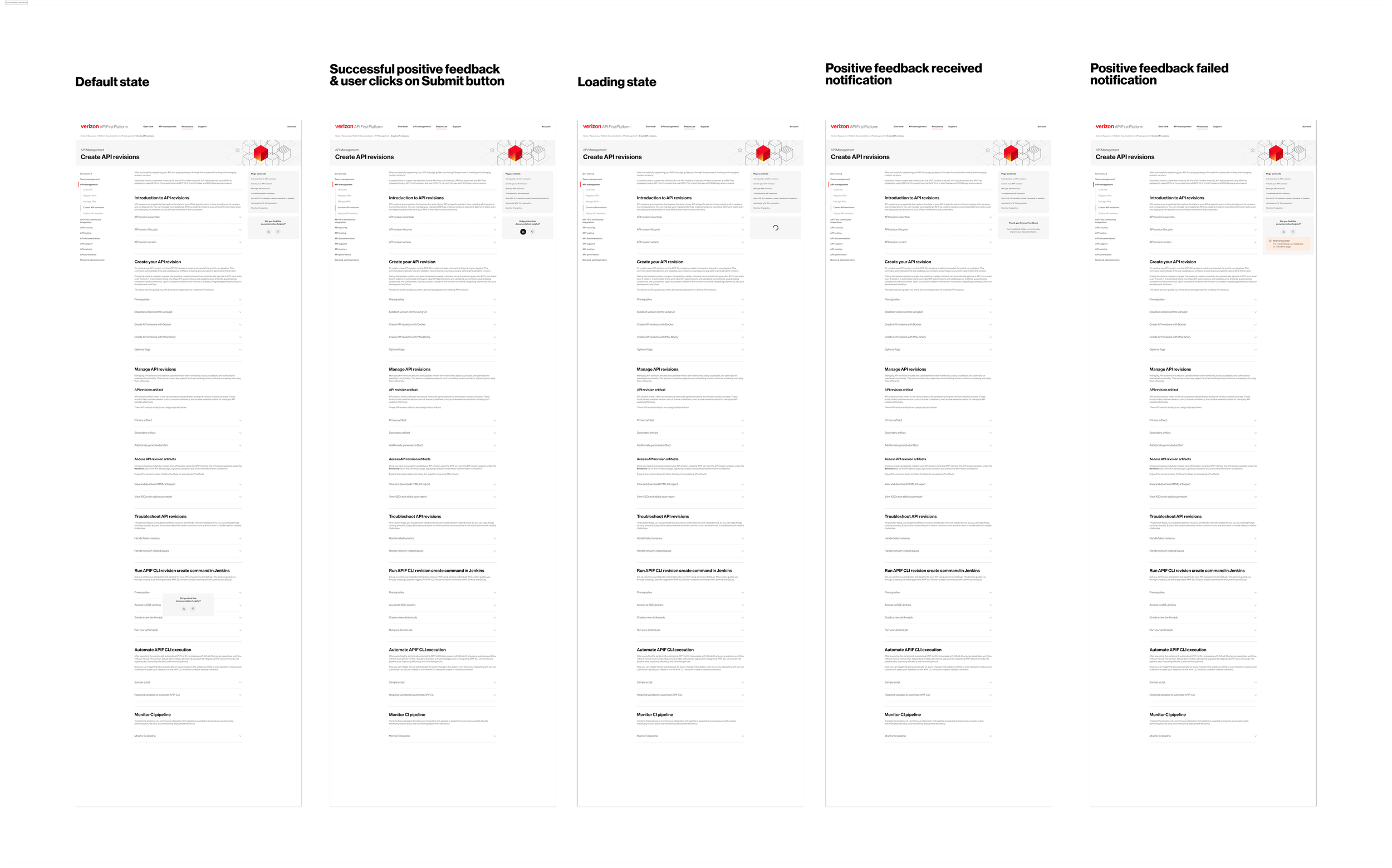
UX Writing: Directed content strategy and UX writing while auditing technical documentation for consistency.
Usability Testing: Facilitated user testing sessions and spearheaded iterative design updates based on findings.
Cross-Functional Collaboration: Worked alongside back-end developers to align design goals with security protocols.
The problem:
Verizon's API toolchain was spread across five disconnected portals. Developers wasted hours onboarding, switching contexts, and hunting for documentation - time that should have gone toward building. The bottleneck wasn't technical. It was organizational, and it showed up in delayed launches and frustrated teams.
The Mission:
Build a "Producer Portal" that empowers developers to manage the entire API lifecycle—design, testing, deployment, and support—within a single, high-performance environment.
The Process:
Bridging Research & Reality
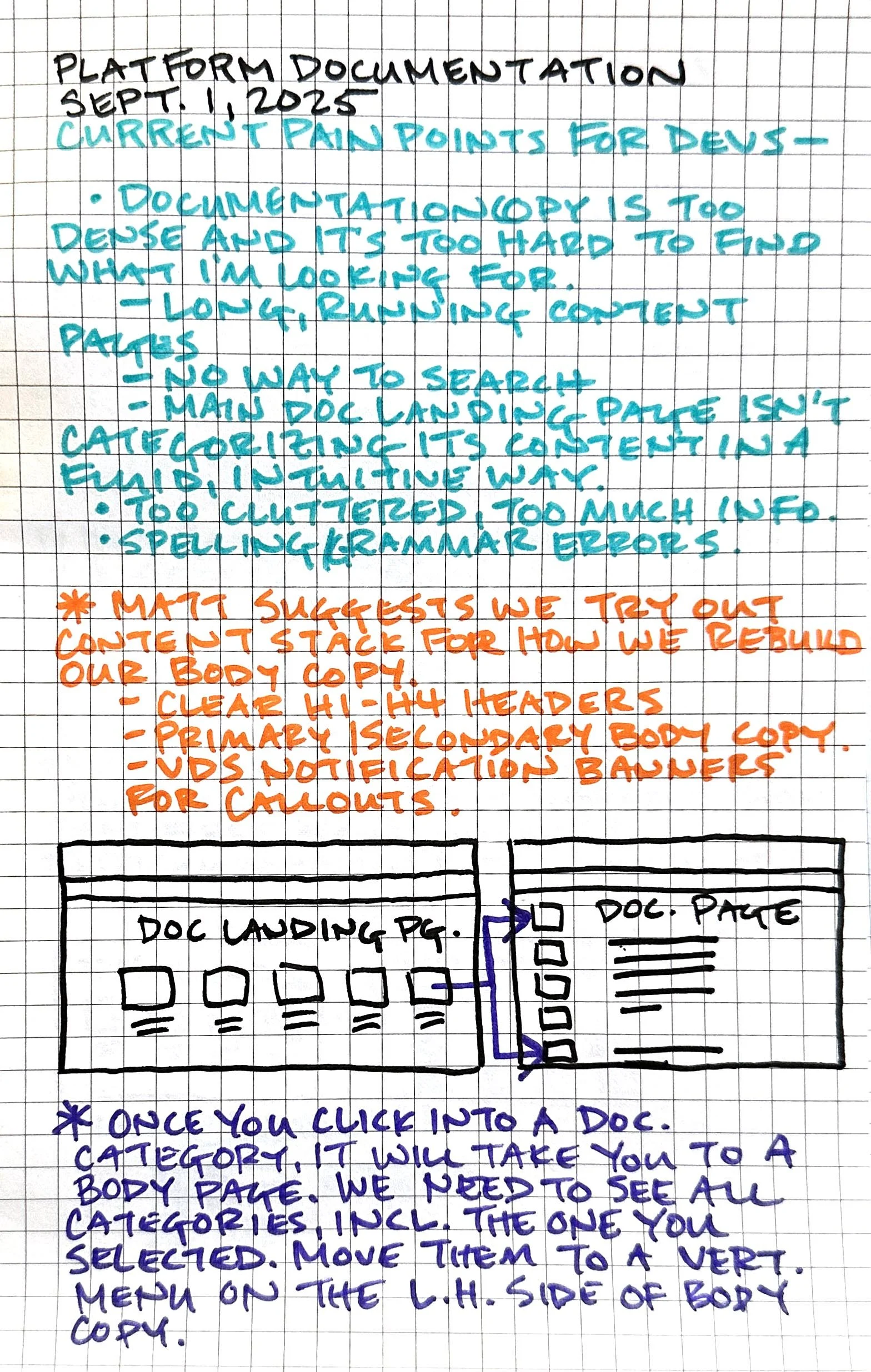
I started by shadowing developers navigating the existing toolchain - watching where they got stuck, what they searched for, and what they gave up on. This surfaced three consistent friction points: fragmented onboarding, no single home for documentation, and an opaque revision-management process. Those three gaps became the design brief.
User research:
Agile Strategy: Bridged the gap between research findings and a tangible solution by visualizing the new, unified workspace before committing to development.
Task-Based User Testing: Brought the interactive models back to developers and technical leads to observe them navigating the mocked-up Producer Portal (testing core tasks like onboarding, documentation management, and deploying revisions).
Iterative Refinement: Leveraged continuous feedback loops to identify lingering UI friction, refine complex interactions, and validate that the consolidated design successfully eliminated administrative overhead and context-switching.
Prototyping:
Structural wireframes to map the unified lifecycle architecture before touching visuals.
High-fidelity Figma prototypes simulating full developer workflows end-to-end.
Task-based usability testing with real developers — core tasks like onboarding, documentation management, and deploying revisions — before any code was written.
Architecting for Complexity:
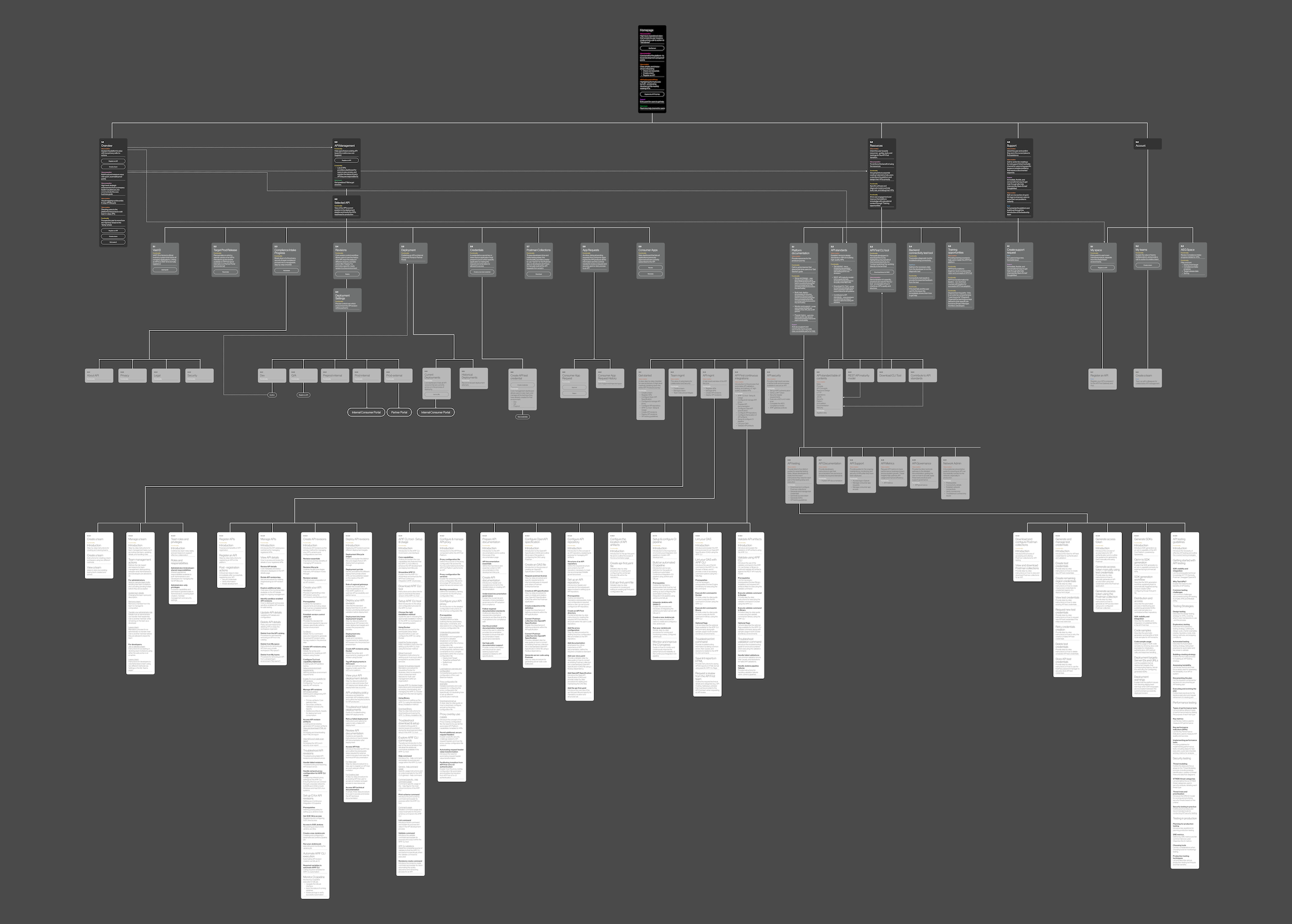
Great UX starts with a clear plan
The IA was the hardest design problem on this project. Developer portals fail when they try to be both a reference tool and a workflow tool at the same time. I separated the two concerns — putting task-based workflows (create, test, deploy) in a dedicated left-rail navigation, while documentation and resources lived in a context-sensitive right panel. The result: power users could move fast without getting lost.
The Outcome:
A Streamlined Engine for Growth
The Producer Portal launched to immediate adoption. Within 12 months:
800% increase in successful API deployments
5x faster developer onboarding
5 legacy portals consolidated into one source of truth
The bigger shift was cultural — teams stopped fighting the toolchain and started building on top of it.
Producer Resources
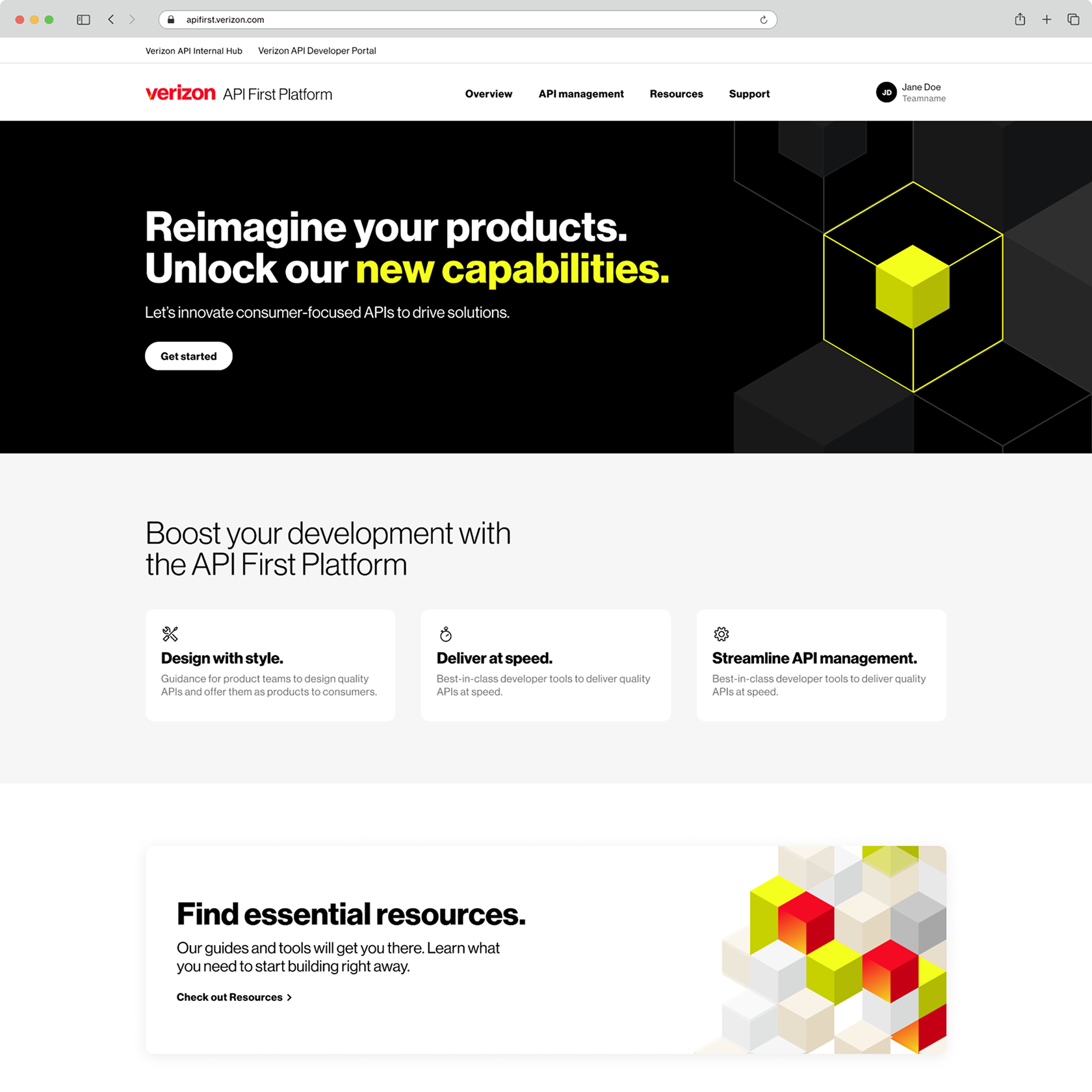
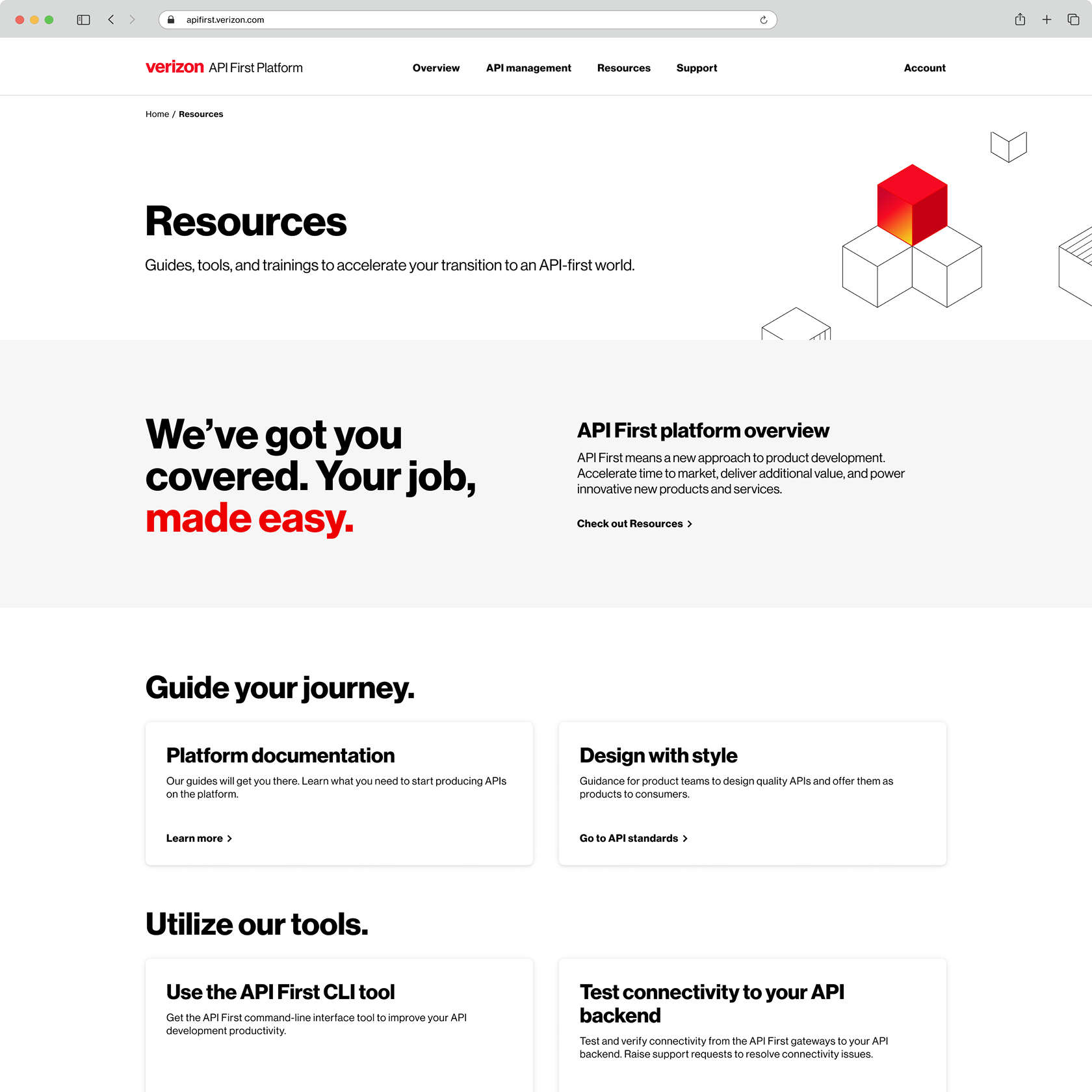
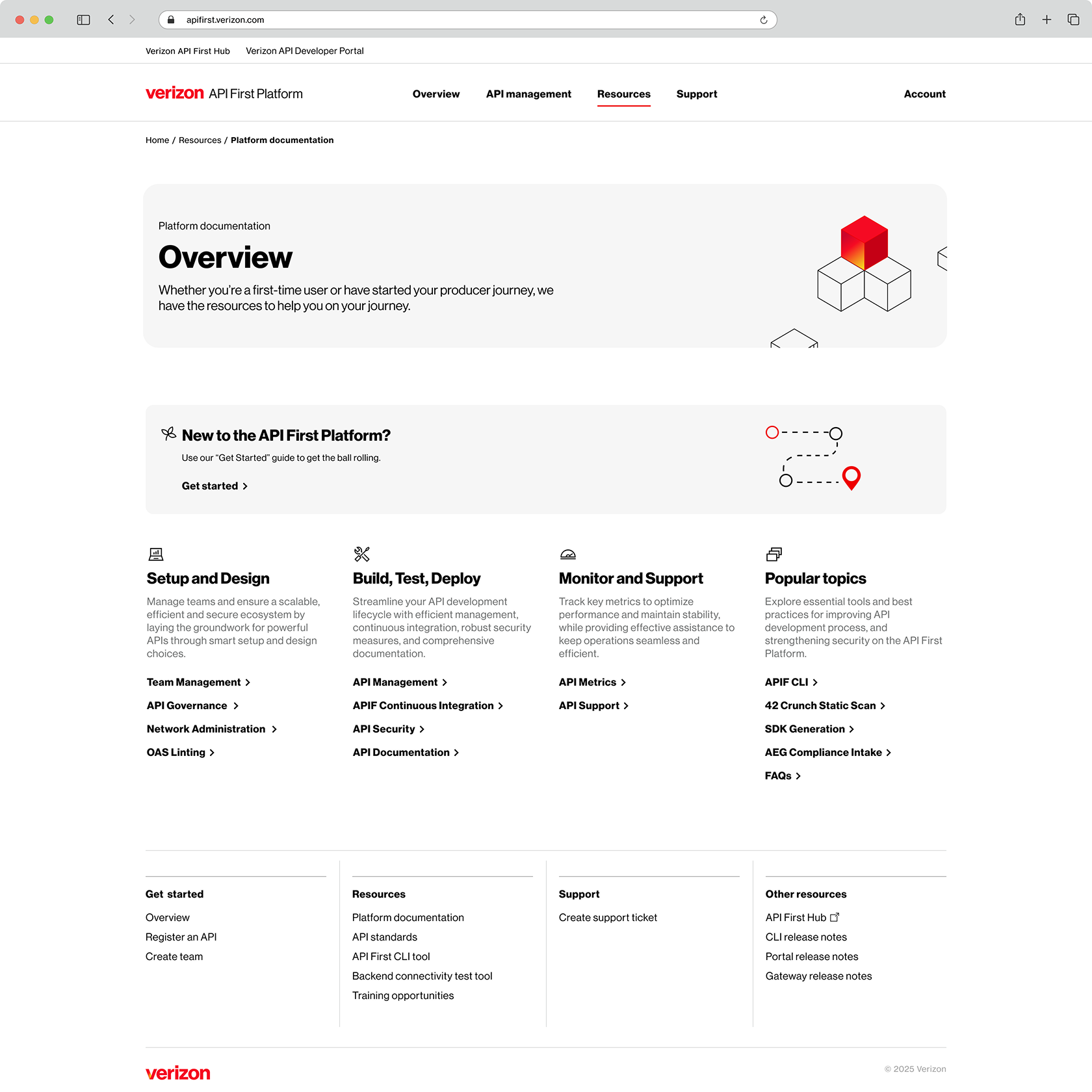
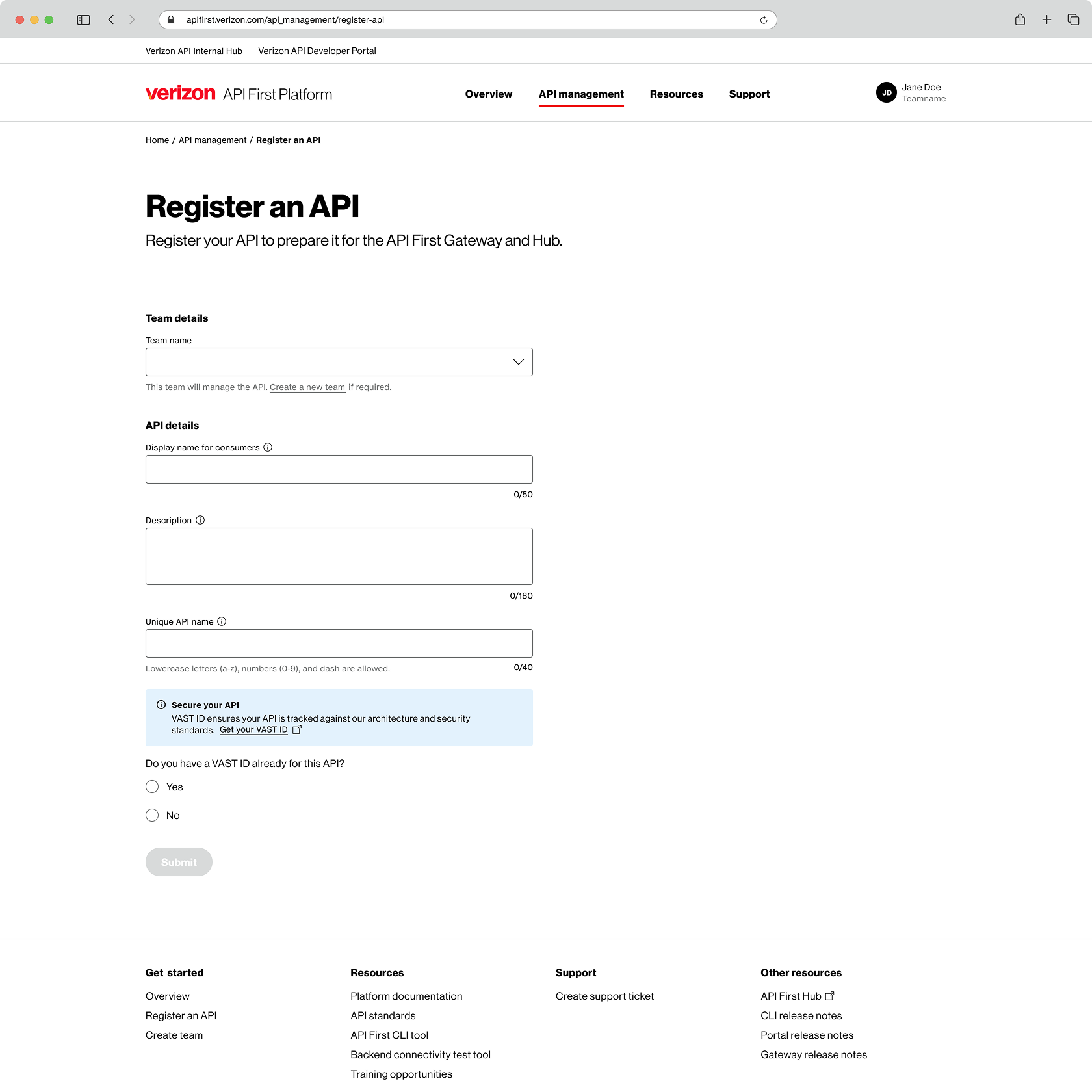
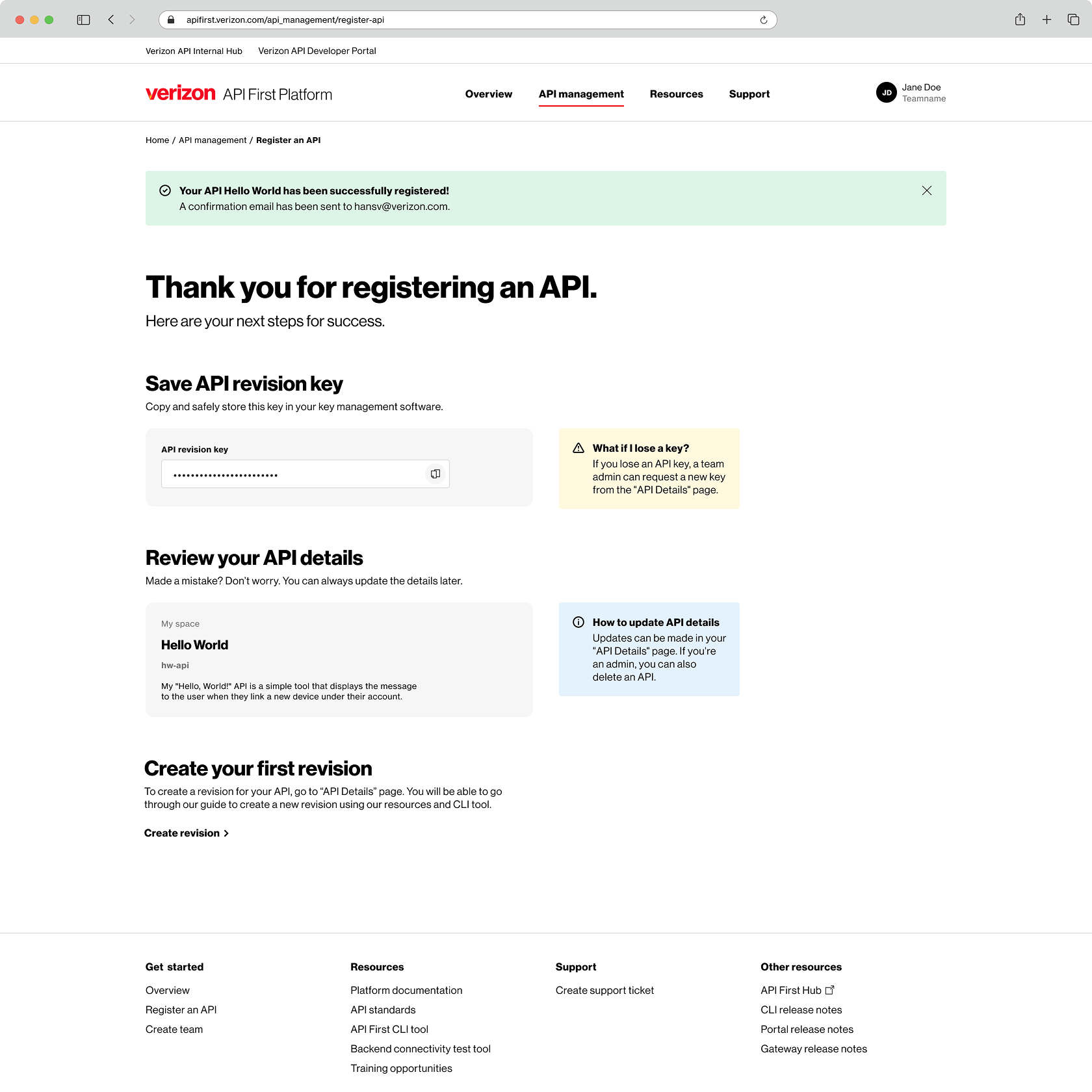
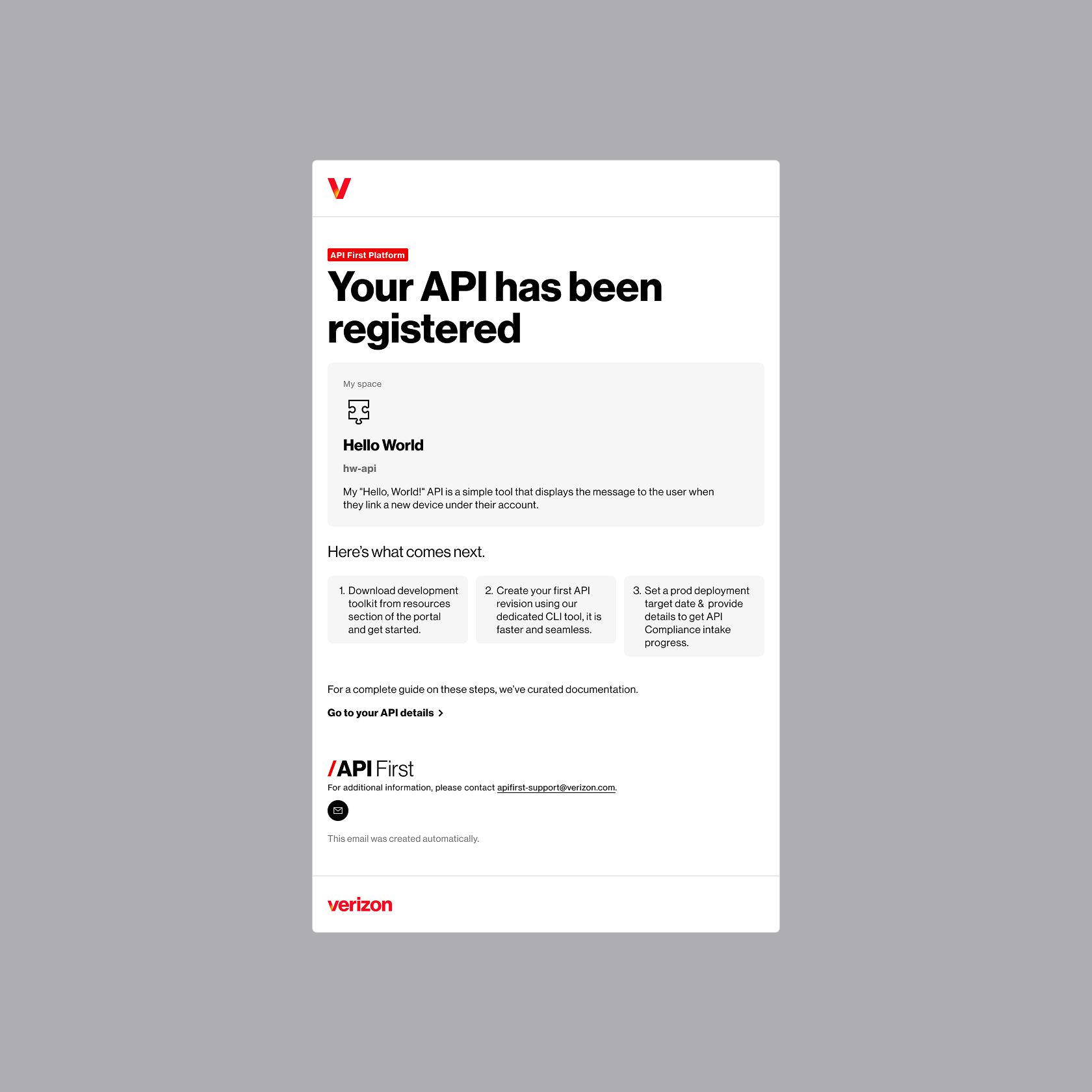
API Registration
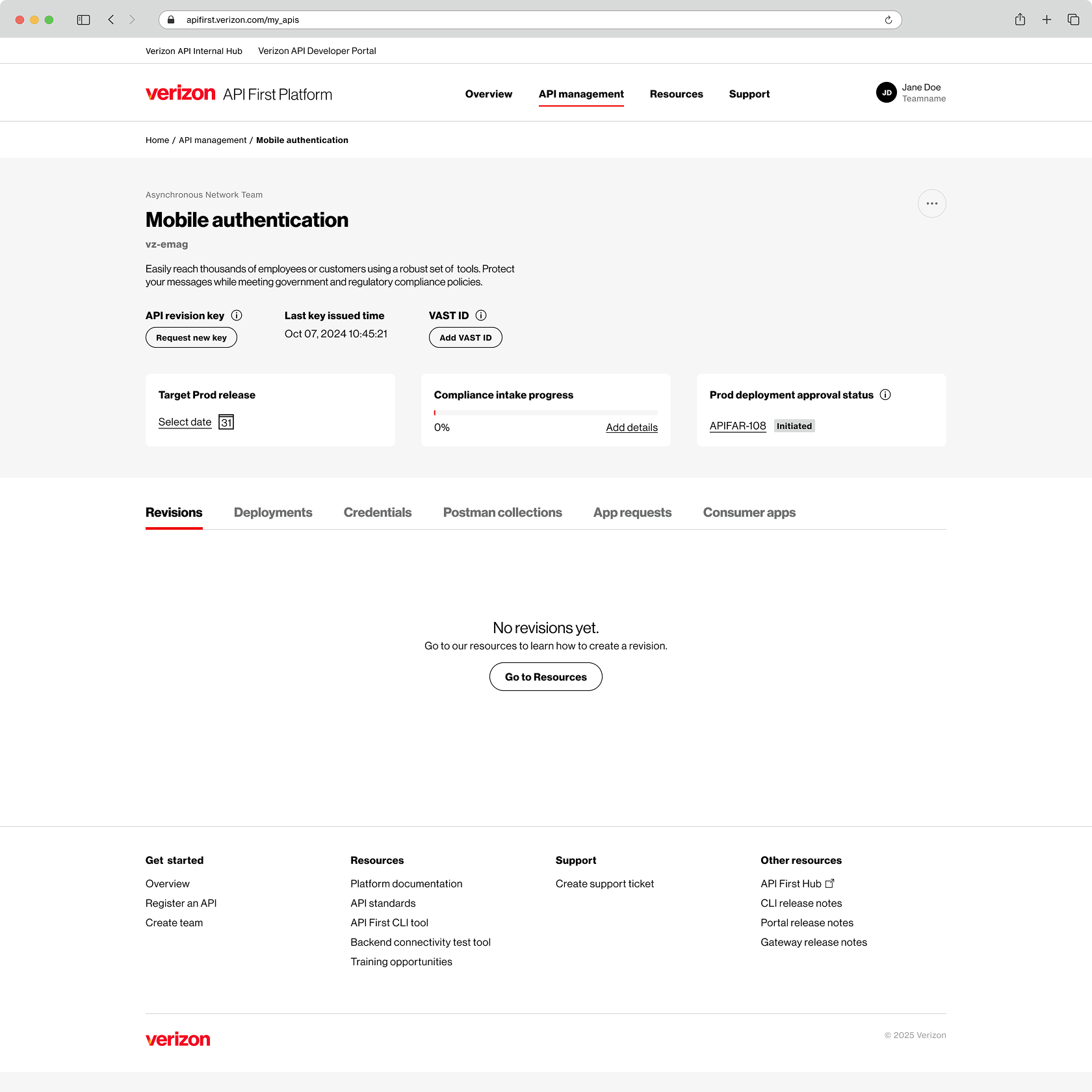
API Management
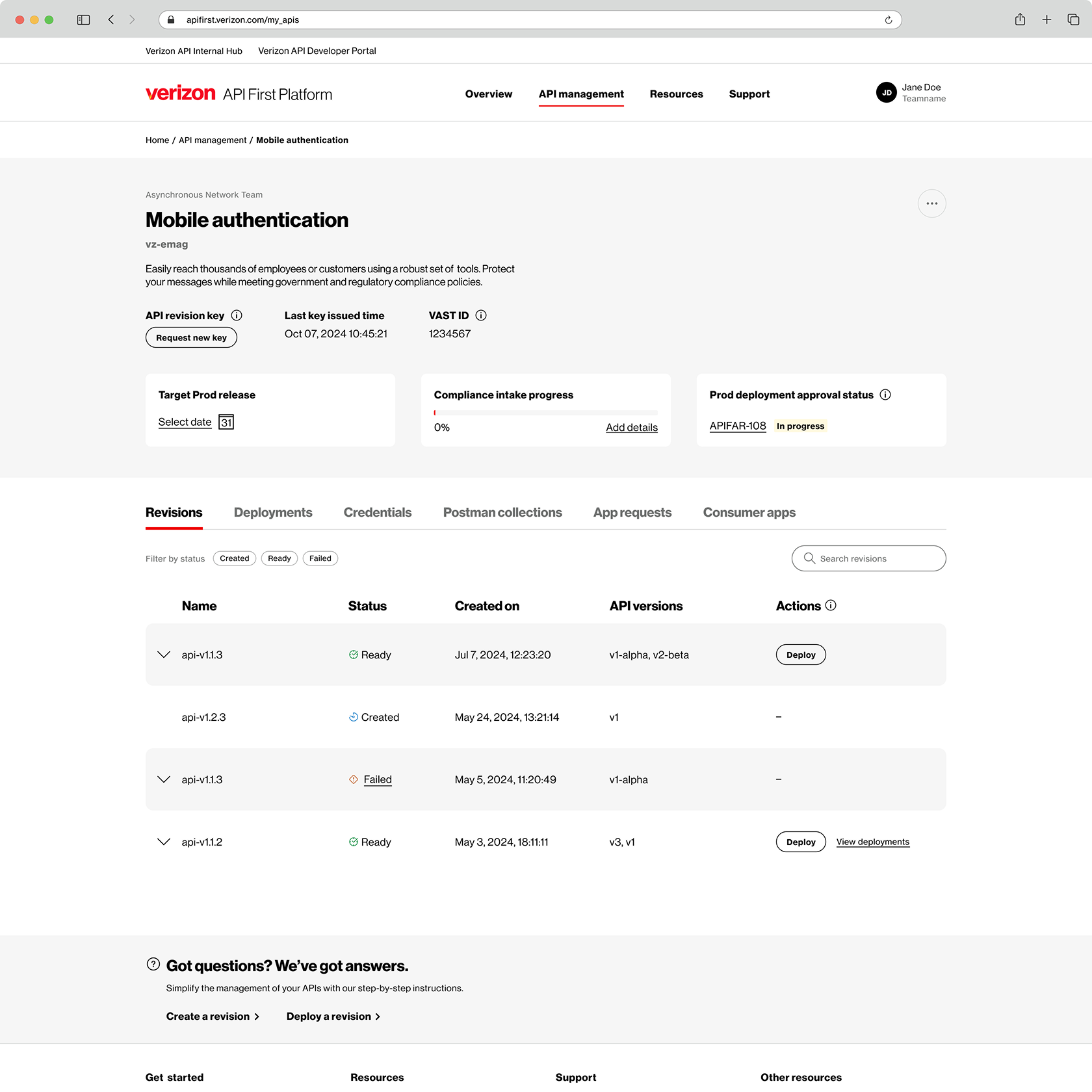
Check it out!
Producer Documentation Prototype:
The prototype to the left covers the full documentation experience - search, navigation, and endpoint discovery.
Expand it for the full view.
“Ryan is an outstanding peer and designer whose work is defined by a strong, usability-first approach. Ryan demonstrated this expertise when he single-handedly revamped the complete Documentation portal for our project. It was a complex challenge involving the design of dozens of unique yet related templates, which Ryan managed with utmost care and empathy for our developer users, resulting in a significantly improved user experience”.
Surya Shanmugam
User Experience Lead - Verizon
See More Product Design case studies