
API Consumer Portal

The API First Hub is an all-in-one Consumer Portal designed to simplify how internal teams interact with Verizon’s broad array of APIs. By unifying the discovery, documentation, and management phases, the Hub allows developers to move from "searching" to "ingesting" with minimal friction. It provides a clear, self-service path for teams to verify functionality, gain secure access, and manage their API lifecycle in one place.
ABout this portal
My contributions:
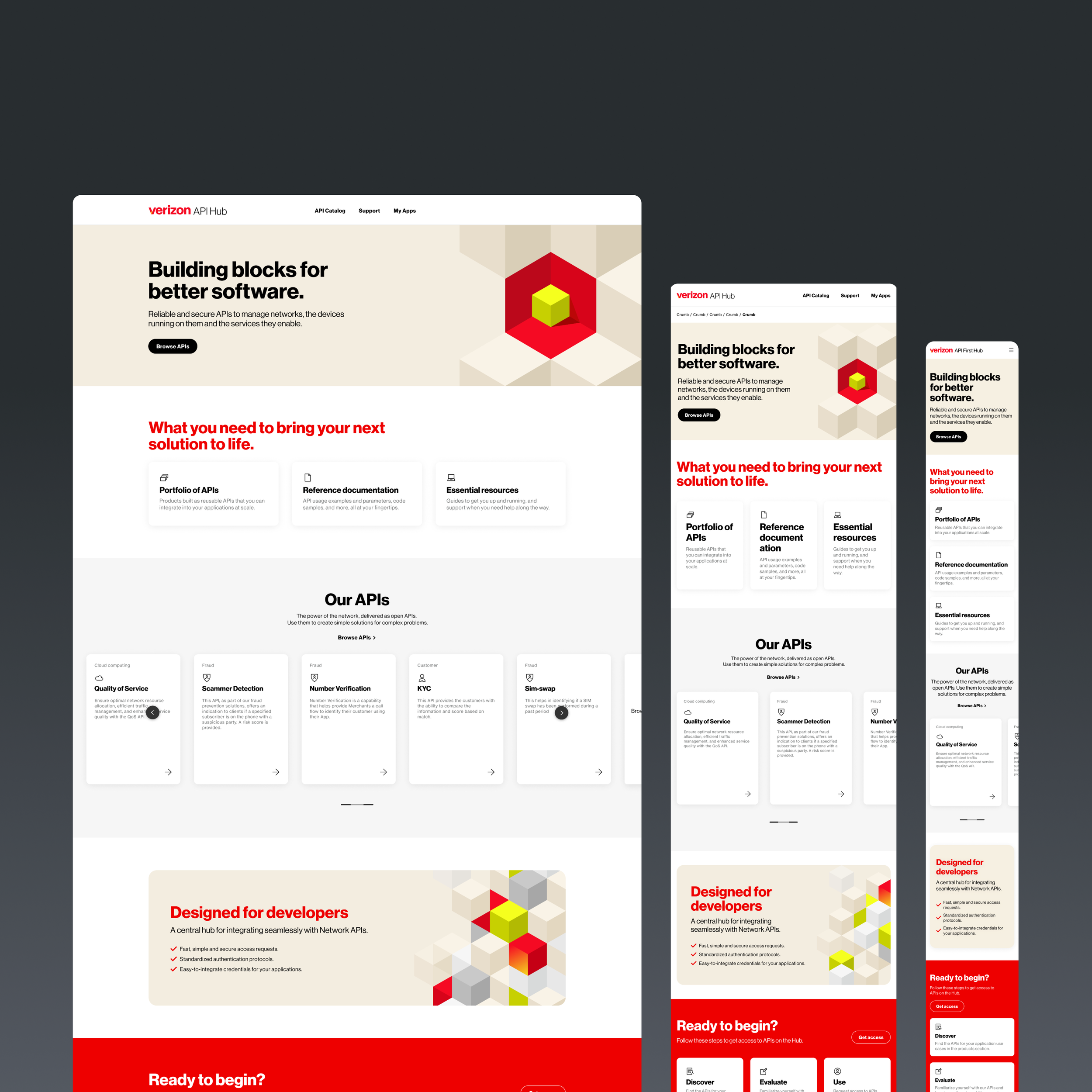
Product Designer: Owned the UI/UX for the comprehensive Consumer Portal ecosystem.
Information Architecture: Defined content hierarchies and navigation structures for internal API consumers.
Research & Benchmarking: Conducted internal persona mapping and competitive analysis of API consumer environments to drive feature prioritization.
UX Writing & Editorial: Directed all platform copy and collaborated with technical writers to refine complex documentation.
Brand Integration: Managed the successful migration of the portal during a company-wide rebranding effort.
Cross-Functional Security: Aligned with back-end development teams to integrate secure authentication and data-protection standards into the UI.
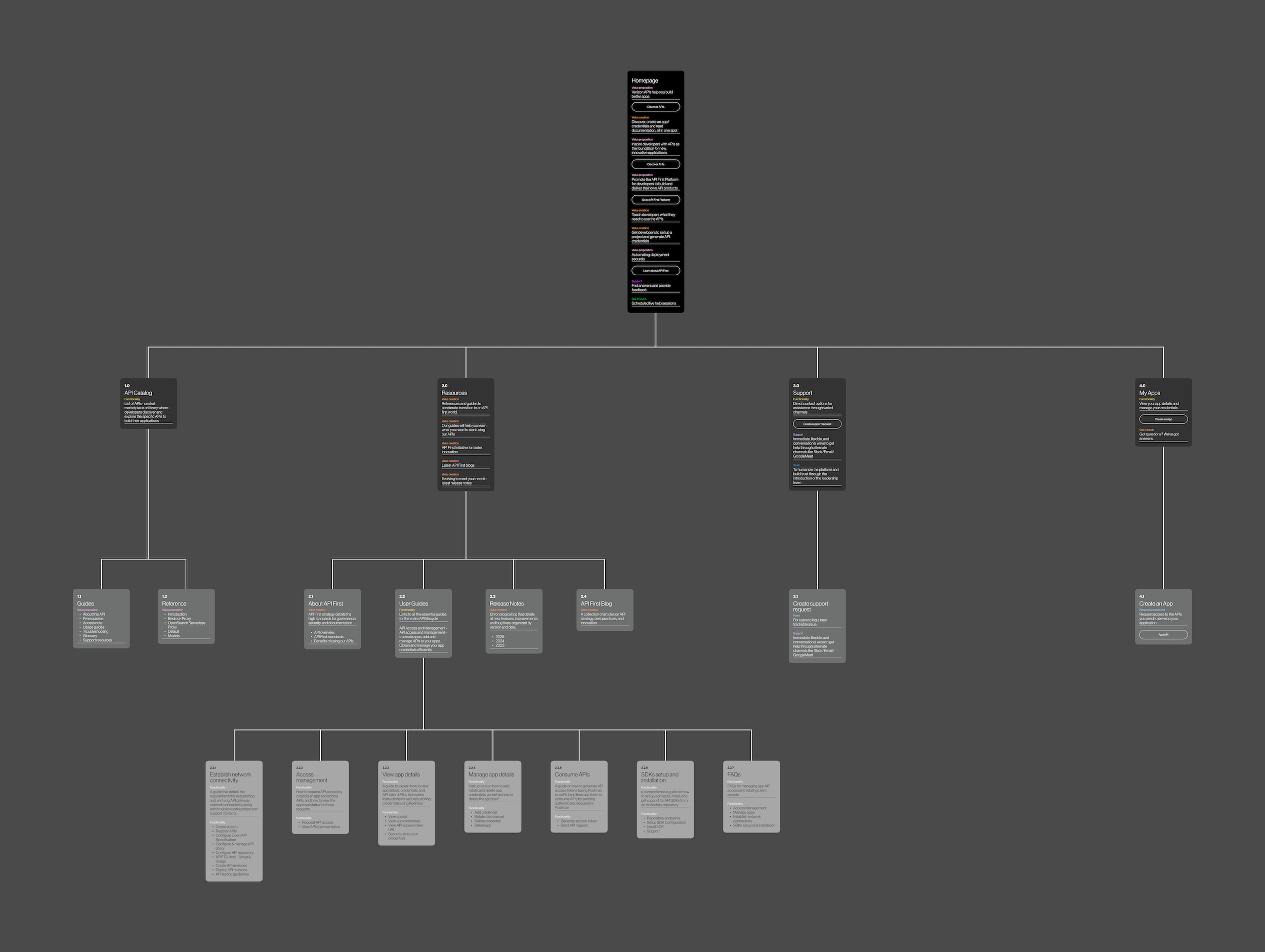
Great UX startS with a clear plan.
This hierarchical information architecture (IA) diagram for our Consumer Portal was crafted with API Internal developers in mind. Starting from a central Homepage, the structure branches into four primary navigational pillars: API Catalog, Resources, Support, and My Apps.
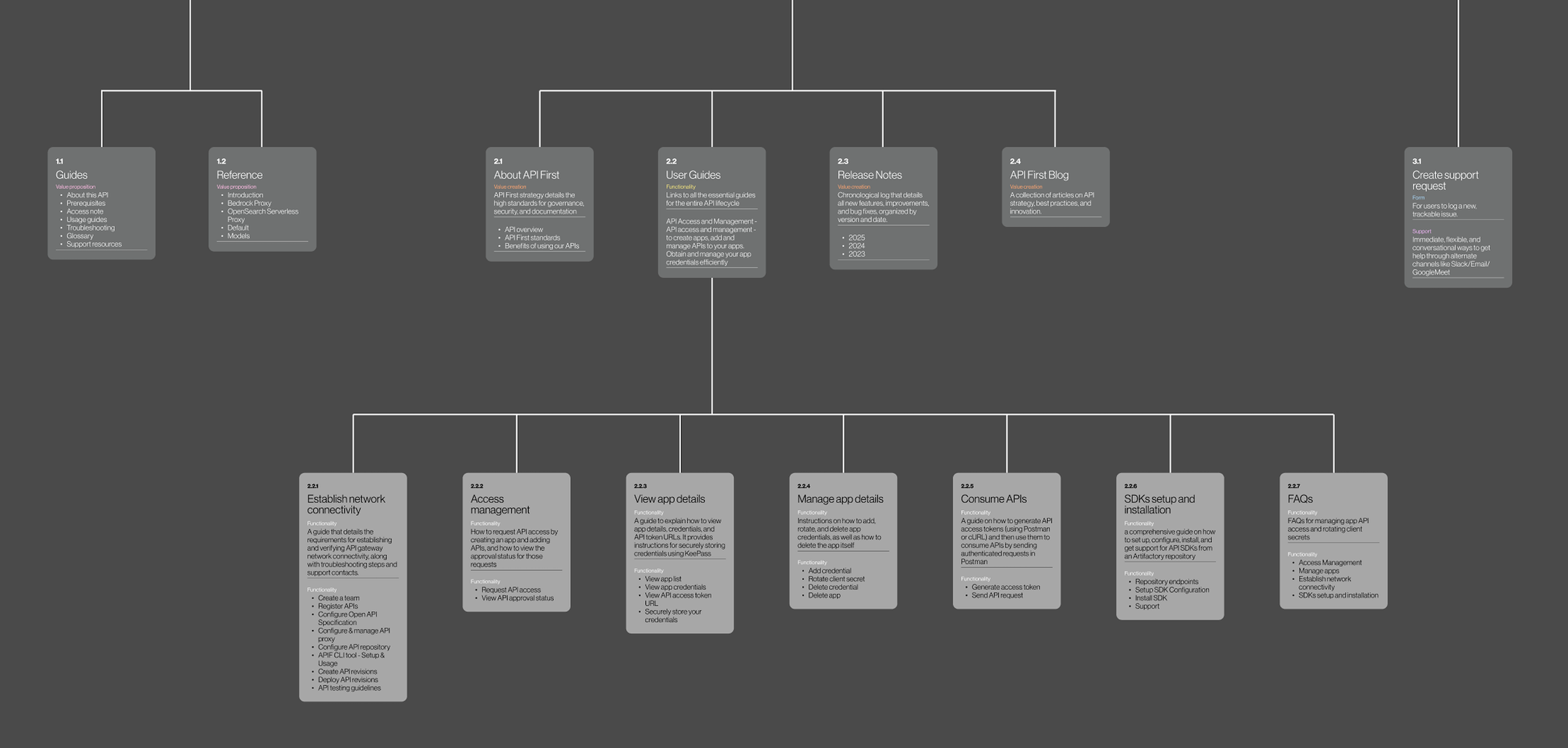
These main categories further break down into specific sub-pages and tasks, outlining a clear taxonomy for developer documentation, technical resources, support ticketing, and application management, utilizing a top-down tree format with text cards and orthogonal connecting lines to visually map out the site's content hierarchy and user navigation paths prior to building the actual interface.
Our developer portal provides comprehensive, step-by-step guides to help you seamlessly navigate every stage of the API lifecycle, from establishing secure network connectivity to managing app credentials. Whether you need to securely consume APIs, configure SDKs, or troubleshoot access issues, our resources are designed to streamline your workflow and empower your team.

Request a prototype demo
Due to the proprietary nature of my work, this portfolio focuses on project outcomes rather than internal methodologies. While I cannot share additional documentation publicly for security reasons, I am happy to provide a live 1:1 demo. I simply ask that no screen captures be taken during our session. In an industry built on trust and security, protecting this content remains my top priority.