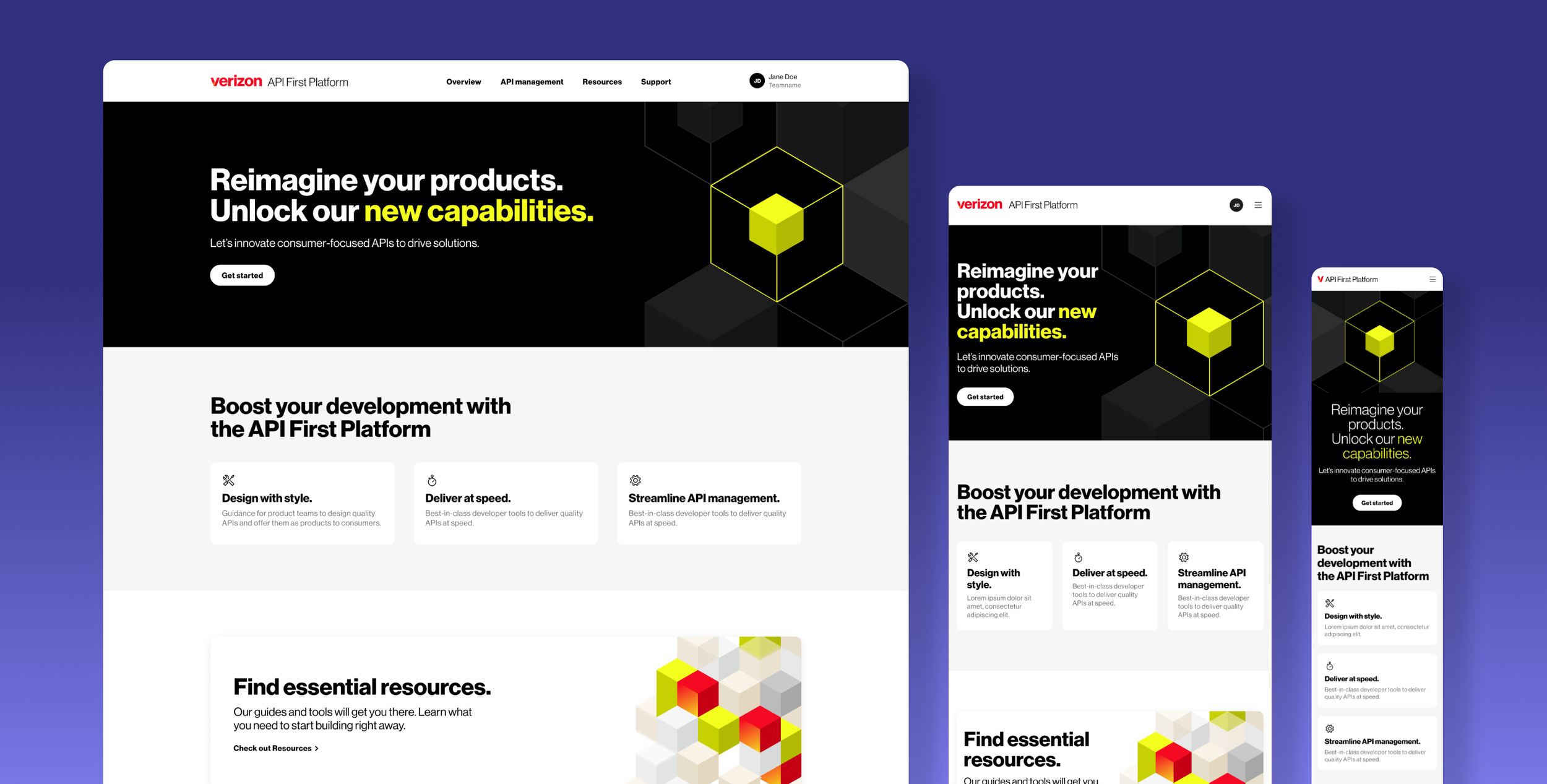
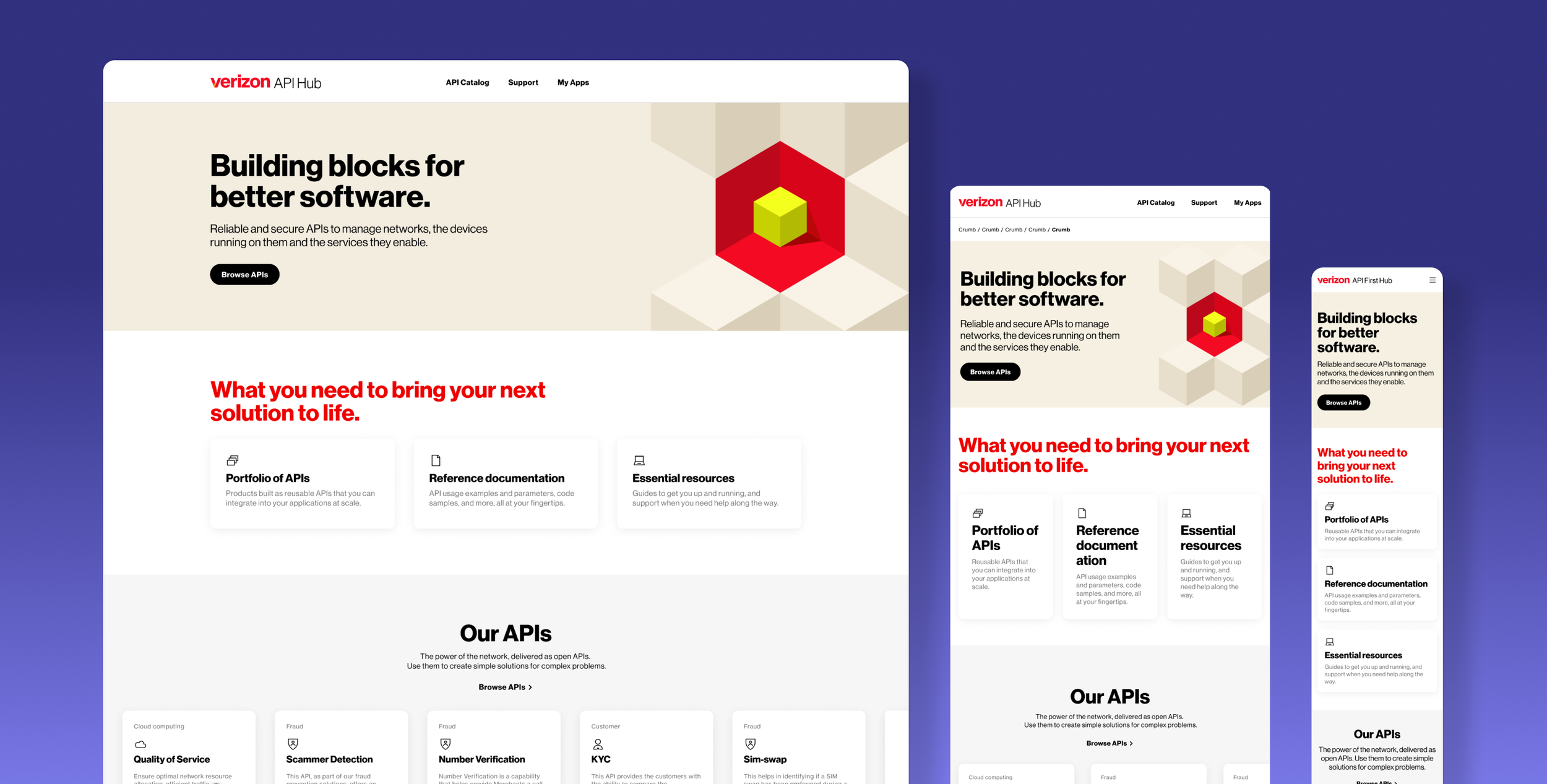
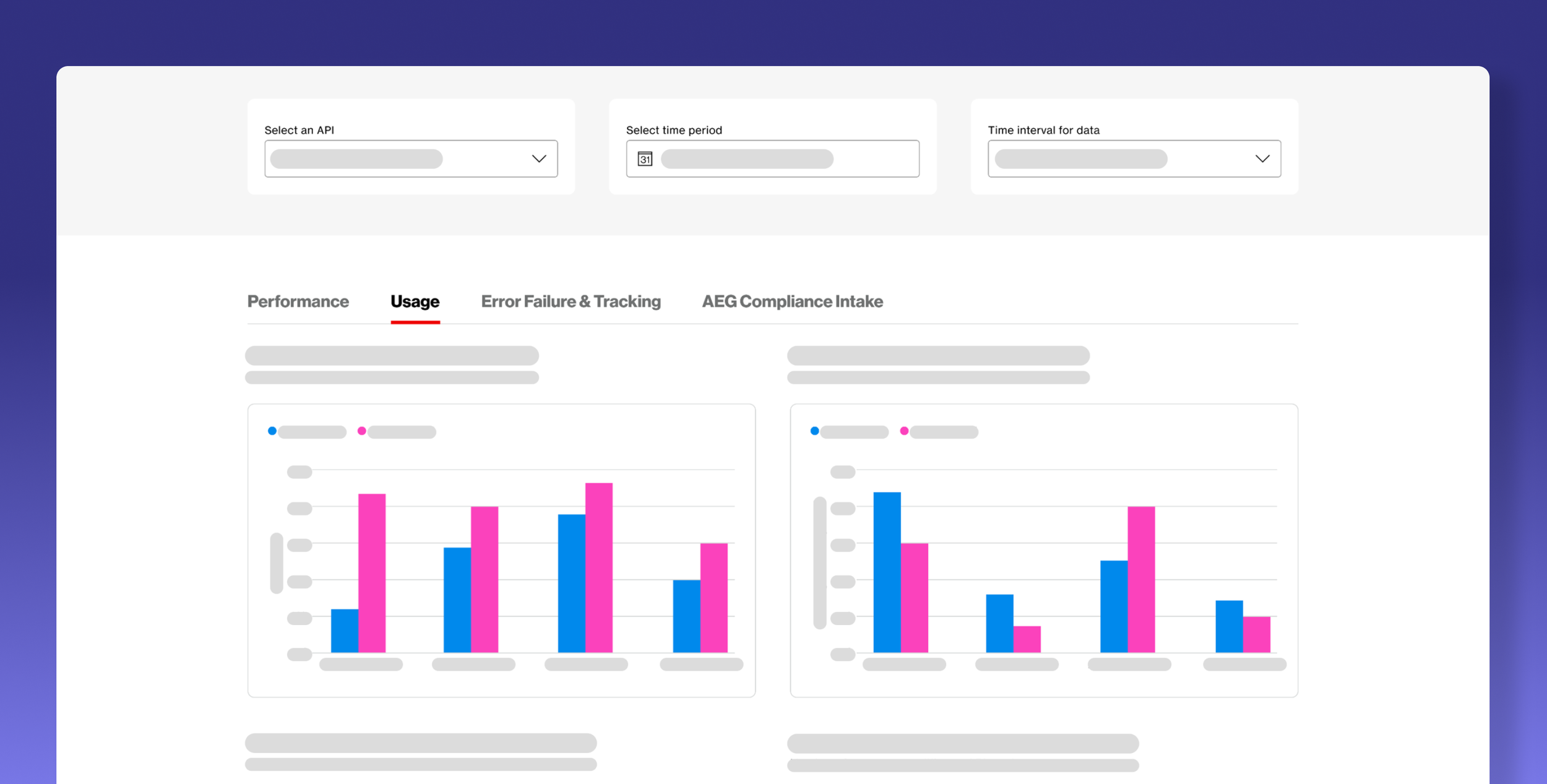
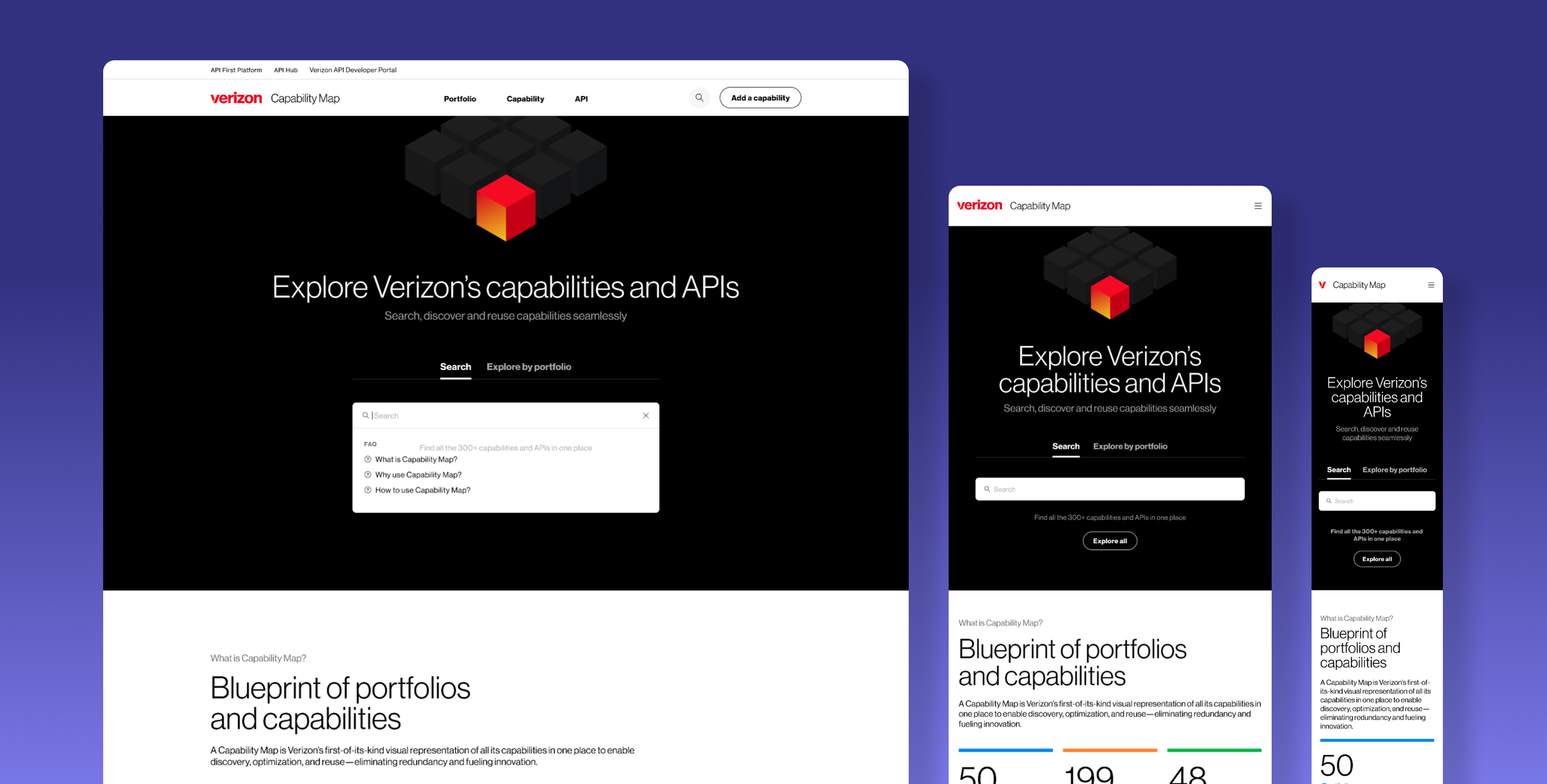
Capability Map:
the end of Redundancy
Why build something that already exists? The Capability Map eliminates the "build vs. reuse" dilemma by providing a centralized, exploratory repository for our API ecosystems. It offers an intuitive interface where consumers can easily navigate technical capabilities by category, gain deep functional insights, and seamlessly request access for their applications, providing total visibility into existing assets.
30-second Project summary
Your time is important to me and you look at a million of these every day… So here's a quick summary of the work I did on the Capability Map.
Problem:
The primary challenge was a lack of visibility within Verizon’s massive API ecosystem, which forced engineering teams to operate in silos and "reinvent the wheel." This transparency gap led to significant resource drain, as teams frequently spent months building redundant solutions simply because they lacked a centralized way to discover existing technical capabilities.
Strategy:
To solve this, I designed a centralized, scalable mapping system that utilized z-layered cartographic principles to transform siloed tribal knowledge into an intuitive, high-density visual repository. By establishing a unified technical taxonomy and a streamlined "search-to-access" workflow, the strategy bridged the gap between API providers and consumers to incentivize reuse and eliminate redundant engineering efforts.
Business Result:
By making APIs discoverable and increasing transparency, we accelerated project kick-offs by 600% and drastically reduced technical debt by preventing redundant API builds and ensuring enterprise-wide architectural consistency.
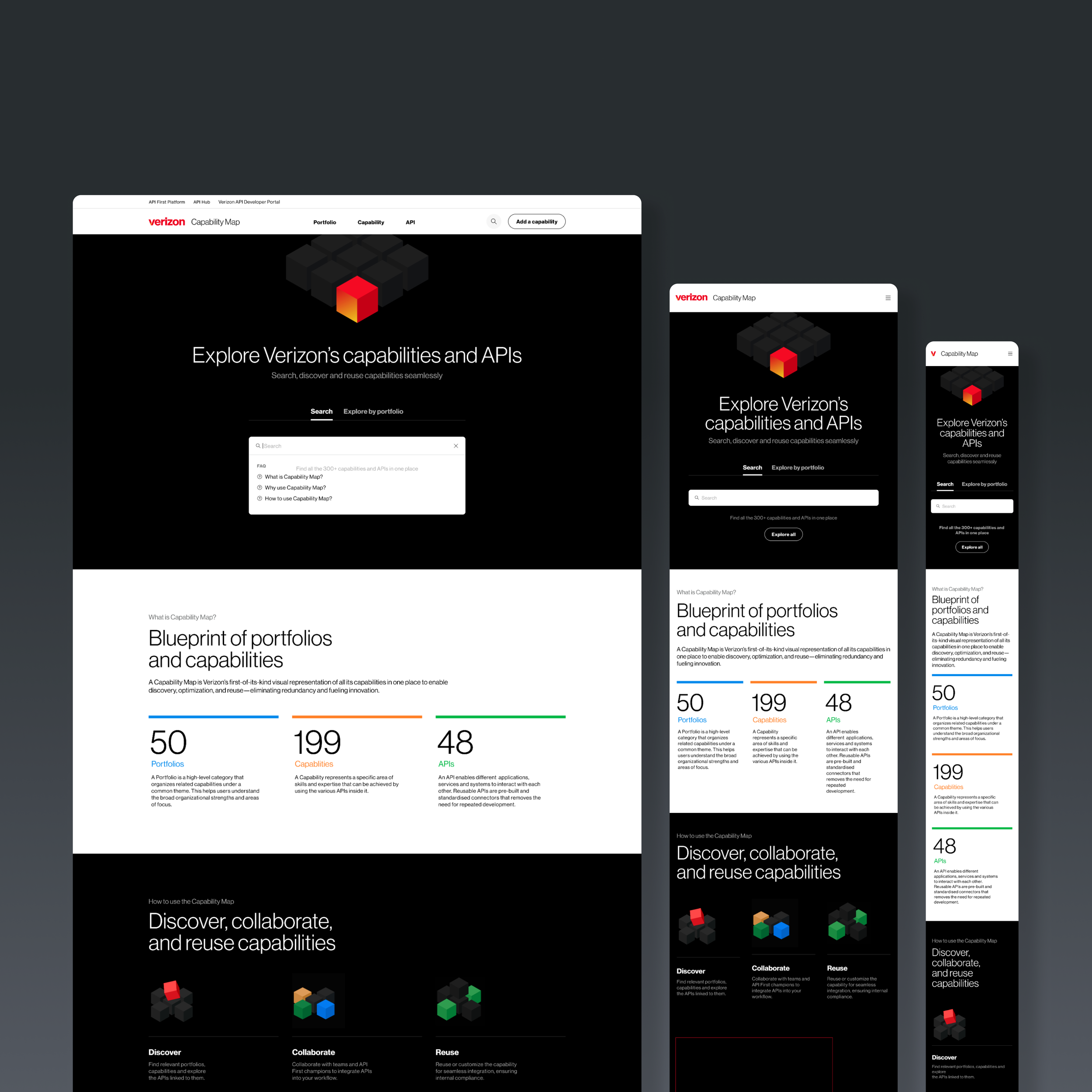
My Leadership contributions:
Lead Product Designer: Owned the full-lifecycle design of the Capability Map ecosystem.
Scalable IA: Established the information architecture with a focus on future-proofing and data scalability.
User Research: Conducted persona identification and usability testing to drive a user-centric product roadmap.
Iterative Design: Optimized the platform through continuous feedback loops and user-testing insights.
Cross-Functional Collaboration: Aligned with software architects and back-end teams to maintain data integrity across the UI.
Art Direction: Managed the production of brand-aligned animations and illustrations to enhance the digital experience.
Overview:
I conceived and led the design for the Capability Map, a first-of-its-kind exploratory repository that solved Verizon's "Build vs. Reuse" dilemma. By applying cartographic principles to technical architecture, I created a high-density, z-layered mapping system that allowed developers to visualize, discover, and request access to thousands of existing APIs, drastically reducing technical debt.
Impact at a Glance:
Technical Debt Reduction: Prevented a countless number of redundant API builds within Verizon.
Speed-to-Market: Accelerated project kick-offs by 600% through instant asset discovery.
Architecture Consistency: Centralized tribal knowledge into a scalable "Single Source of Truth."
The problem:
At a global enterprise scale, the greatest barrier to innovation is accidental duplication. Verizon’s API ecosystem was massive but opaque. Teams operated in isolation, often spending months building solutions that already existed elsewhere.
The Transparency Gap: Tribal knowledge was trapped in Slack pings and emails.
The "Reinventing the Wheel" Syndrome: Engineering teams were recreating assets simply because they didn't know they were available.
The Result: Massive resource drain and inconsistent architectural standards.
The Mission:
The mission of the Capability Map is to eliminate the "build vs. reuse" dilemma by providing a centralized, exploratory lens into the enterprise's technical assets—transforming siloed tribal knowledge into a transparent, scalable mapping system that reduces technical debt and accelerates speed-to-market.
“Ryan is an incredibly dynamic and charismatic UX Designer, bringing an inspired energy and eagerness to every collaboration. His work on internal evangelization and content delivery for the Verizon API portals was marked by his excellent team-player attitude and flexible nature. Ryan is not only research-minded but is continually striving to deliver the best possible design outcomes, making him a truly valuable and motivated asset to any UX team”.
Ivan Hollander
Associate Director, Product Engineering and Design - Verizon
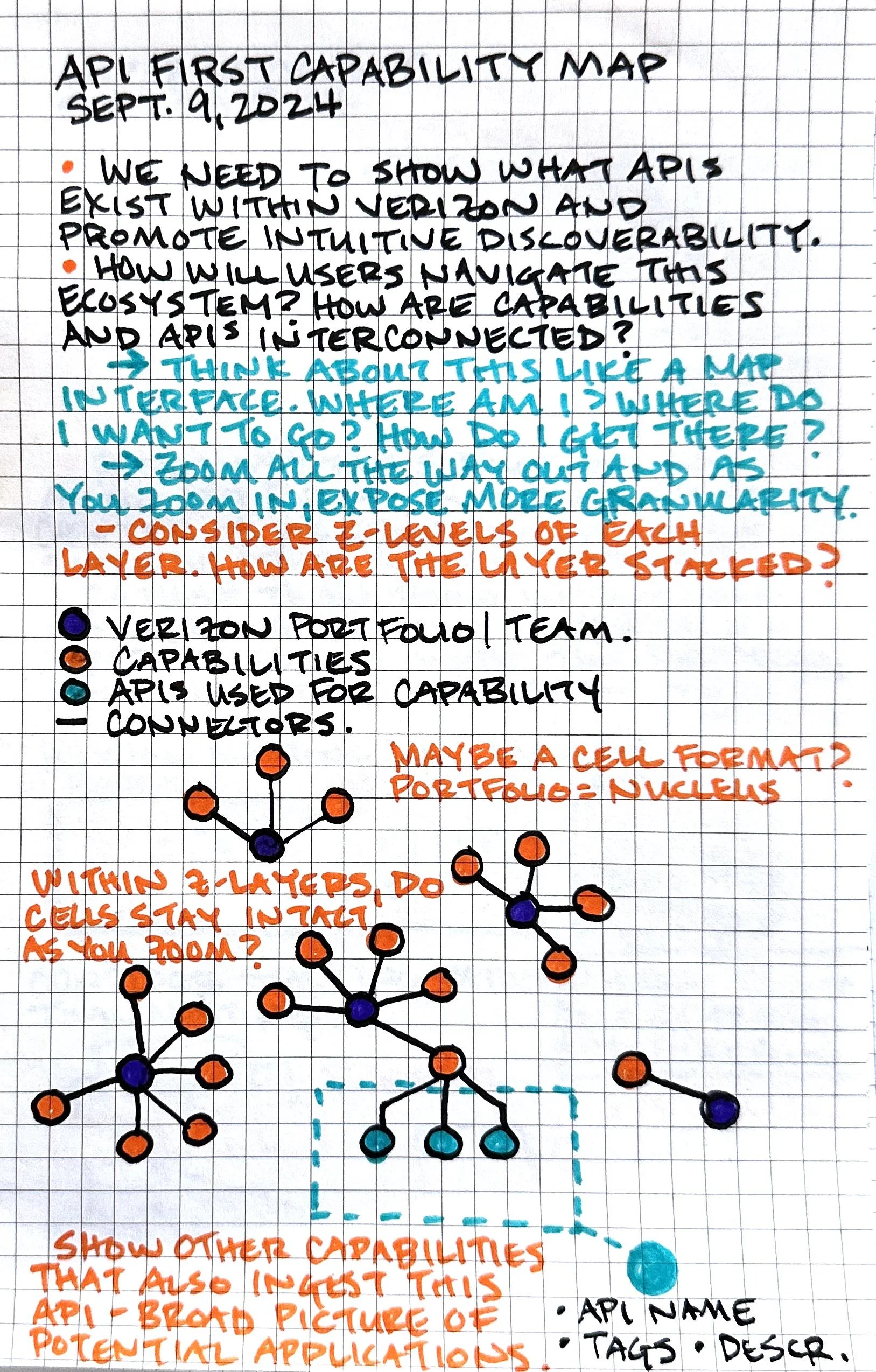
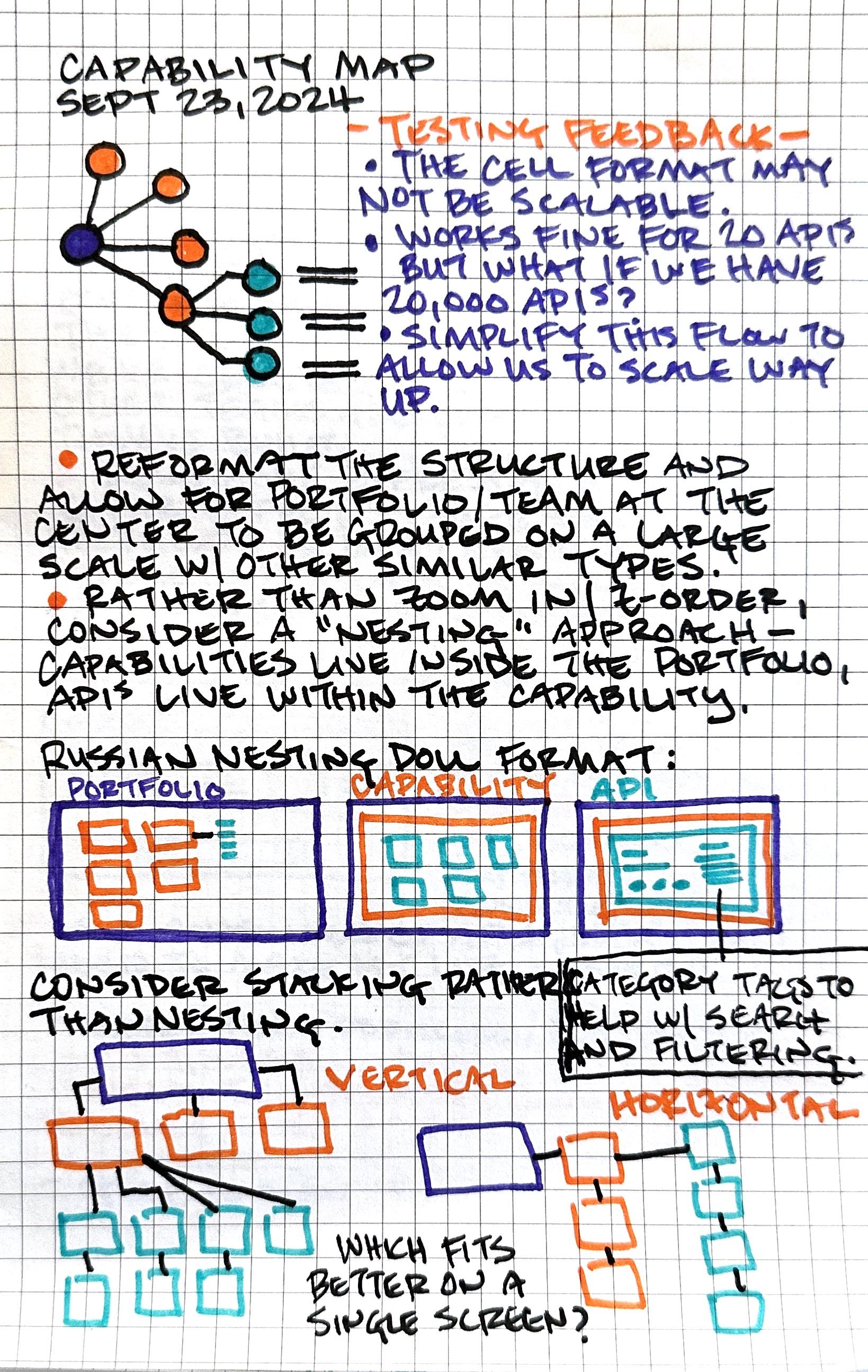
We identified a major gap and built a bridge to cross it.
Teams within Verizon (as is the case with most large tech companies) seldom speak outside of their own circle. Work was highly siloed within individual teams and organizations lacking any transparency for what is being built by the company as a whole. APIs take time and resources to build and far too often, we were rebuilding what had already been built, simplify because we had no idea it already existed.
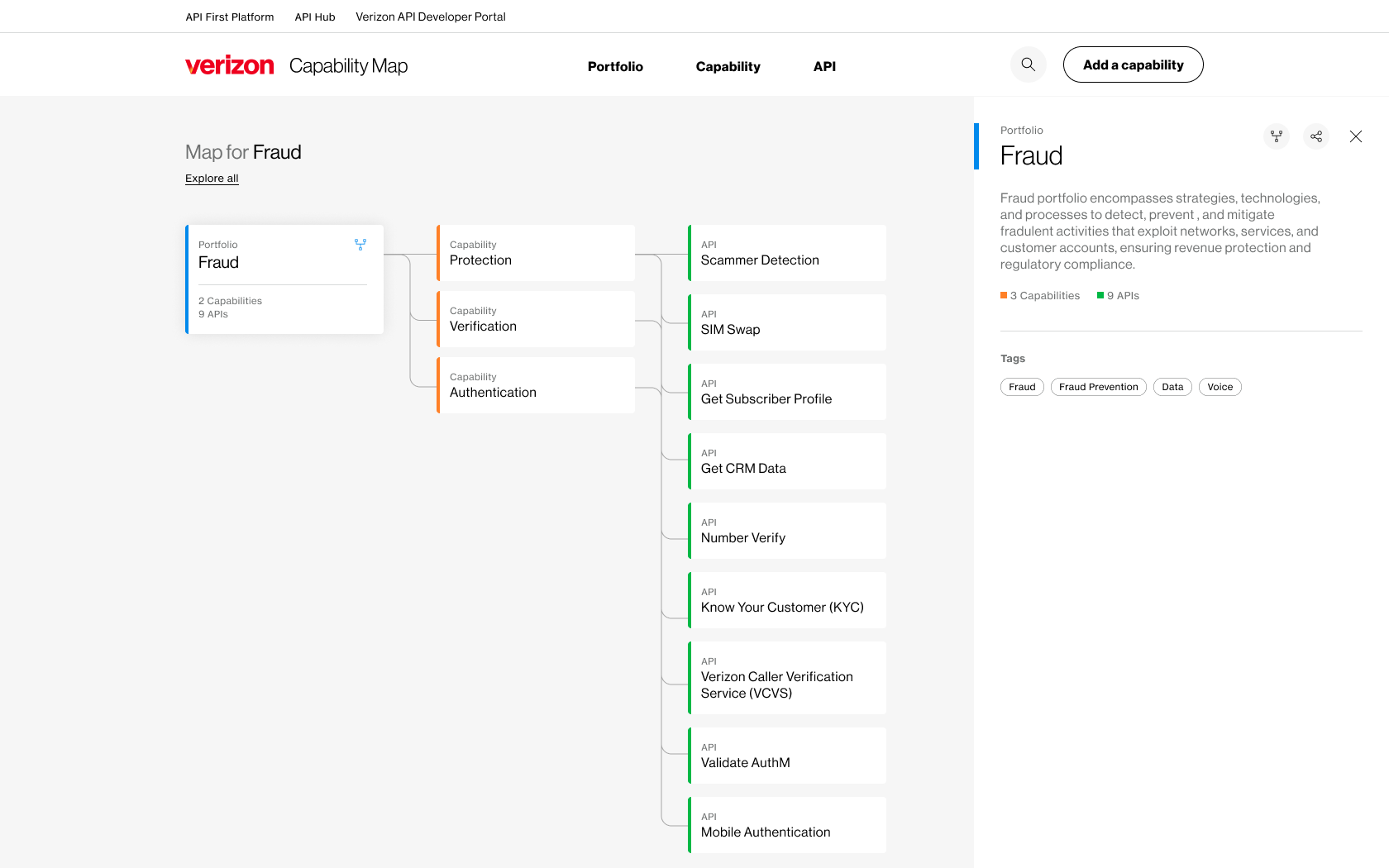
I proposed a solution to this - create an intuitive, central database for any Verizon Dev to see what has been built and make it scalable so as new APIs are crated, they can be added to the database. For the UX, I took a page out of my “cartography” book and created a mapping system - using z-layering to stack the taxonomy of Portfolios, Capabilities and the APIs that they ingest. I wanted to know the full context for what the API was, how it was intended to be used, and how it could be applied to new work in-flight.
User research:
Stakeholder Deep Dives: Conducted interviews with Engineering Directors and Product Leads to identify the high-level business impact of redundancy and define the "North Star" metrics for success.
Developer Shadowing & Contextual Inquiry: Observed backend and frontend developers during their discovery process to understand how they currently searched for APIs and where they hit "dead ends" in existing documentation.
Lack of clarity: I mapped the informal ways information was being shared (Slack pings, emails, and word-of-mouth) to identify the gaps where a formal tool was most needed.
Persona Identification: Defined two primary user types with distinct needs:
The Consumer: Needs to find, understand, and request access to a capability quickly.
The Provider: Needs a low-friction way to document and "advertise" their API to the rest of the company.
Information Architecture (IA) Testing: Performed card sorting exercises with developers to determine a technical taxonomy that felt intuitive—deciding whether to categorize APIs by business unit, technical stack, or functional capability.
Competitive Analysis (Internal vs. External): Evaluated third-party API marketplaces (like Stripe or Twilio) against our internal legacy tools to pinpoint exactly why our current systems were failing to encourage reuse.
Pain Point Synthesis: Consolidated findings into a "Journey Map" that highlighted the high friction of the current access-request process, which often took weeks and discouraged developers from even trying to reuse code.
Prototyping:
Low-Fidelity Logic Mapping: Created flow diagrams and wireframes to establish the "search-to-access" journey, focusing on reducing the number of steps required to see a live endpoint.
Taxonomy & Schema Design: Collaborated with Lead Architects to prototype the data structure, ensuring the UI could dynamically scale to support thousands of APIs without becoming a "wall of text."
Rapid UI Iteration in Figma: Developed a series of interactive prototypes to test different navigation models, such as "directory-style" browsing versus "global-search" focused entry points.
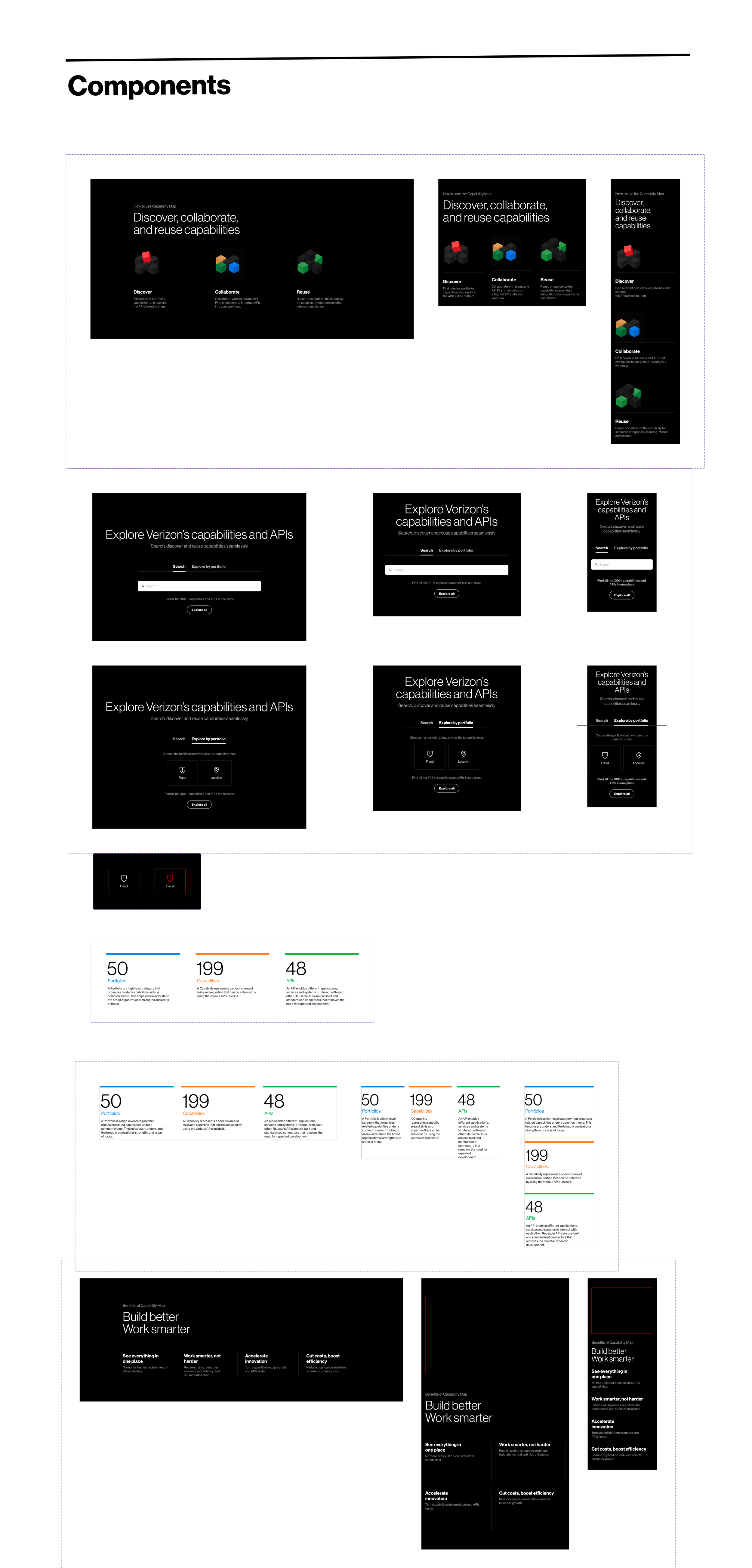
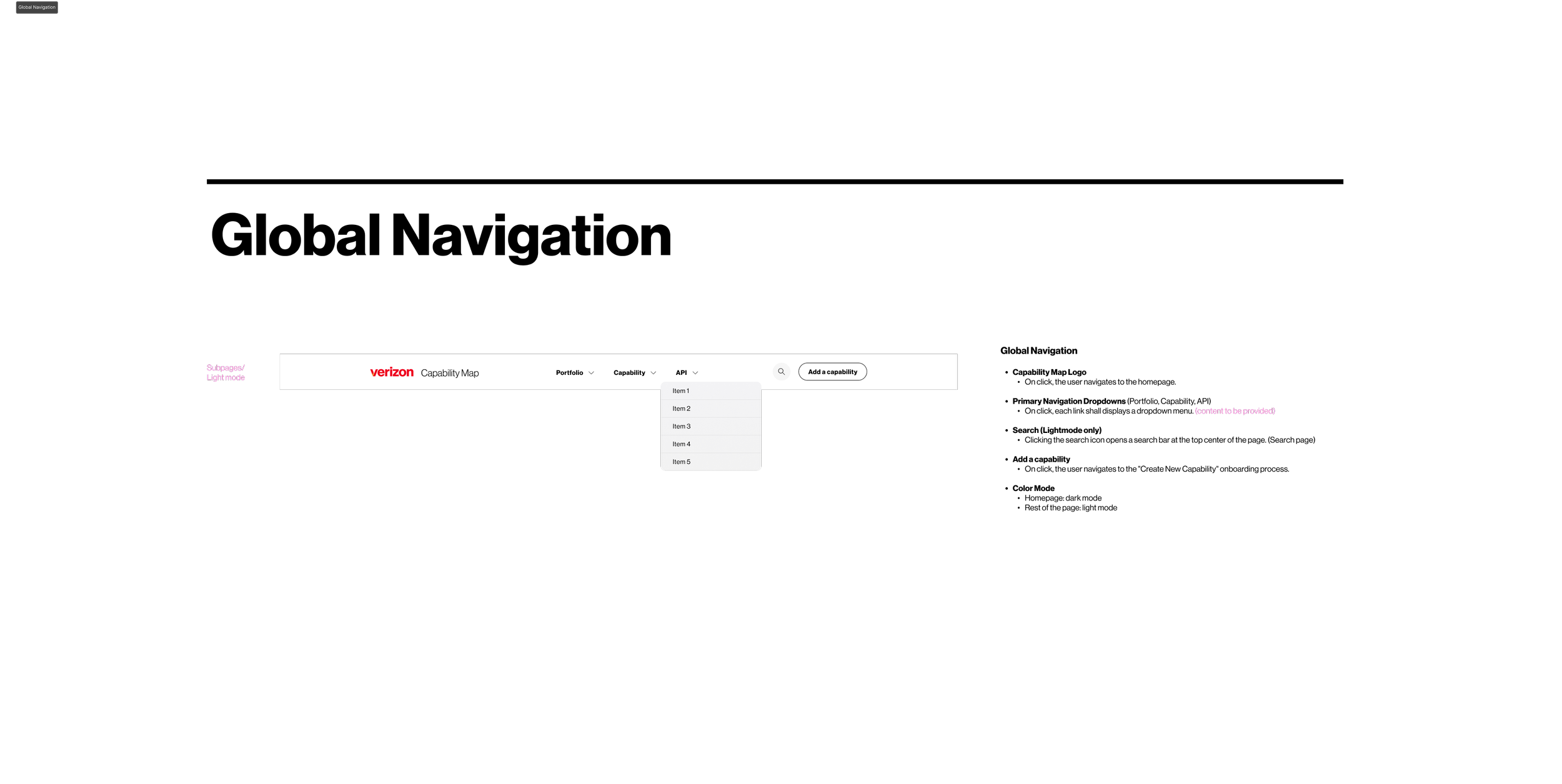
Component-Driven Design: Built a specialized library of UI components—like status badges (for API health), versioning toggles, and technical spec drawers—that integrated with Verizon’s existing design system.
"Draft to Documentation" Workflows: Prototyped the creator side of the map, ensuring that API providers could easily input their technical specs via Markdown or Swagger/OpenAPI imports.
Usability Testing (Internal Beta): Conducted moderated sessions with a small cohort of developers using a clickable prototype to identify friction points in the "Request Access" flow and the clarity of functional descriptions.
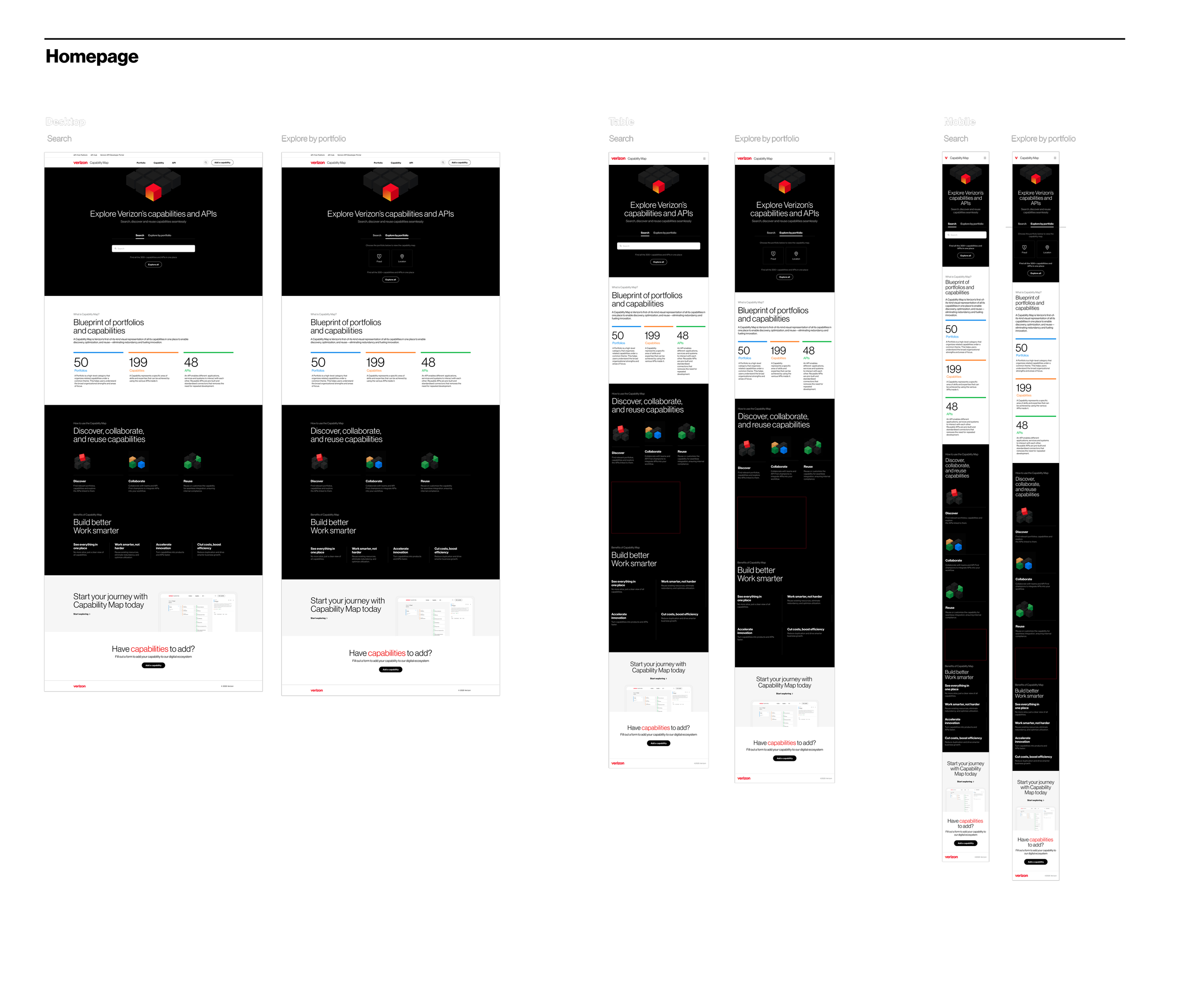
High-Fidelity Visual Polish: Applied technical styling to the interface, using a high-density layout that catered to power users who needed to scan large amounts of metadata quickly.
Accessibility & Responsiveness Review: Refined the prototype to ensure it met WCAG standards, specifically focusing on color contrast for code blocks and keyboard navigability for the exploratory map.
The Outcome:
A Source of Truth for the Future
The Capability Map fundamentally transformed how technical assets are consumed across Verizon.
The Shift: Replaced "tribal knowledge" with a transparent, automated repository.
The Result: Improved engineering efficiency and brought architectural consistency to a previously disjointed ecosystem.
The Bottom Line: By making the invisible visible, we empowered teams to build on top of existing work rather than starting from scratch.
Check it out!
Capability Map Prototype:
Dive into the interactive Figma prototype to the right to experience the Capability Map's intuitive design and seamless user flows firsthand. Click around the screens to explore its core features and see how the product transforms complex data into clear, actionable insights.
Be sure to expand the prototype window to see the full experience!
See More Product Design case studies