
Verizon API First Hub:
A Centralized Consumer Portal for Enterprise Scale
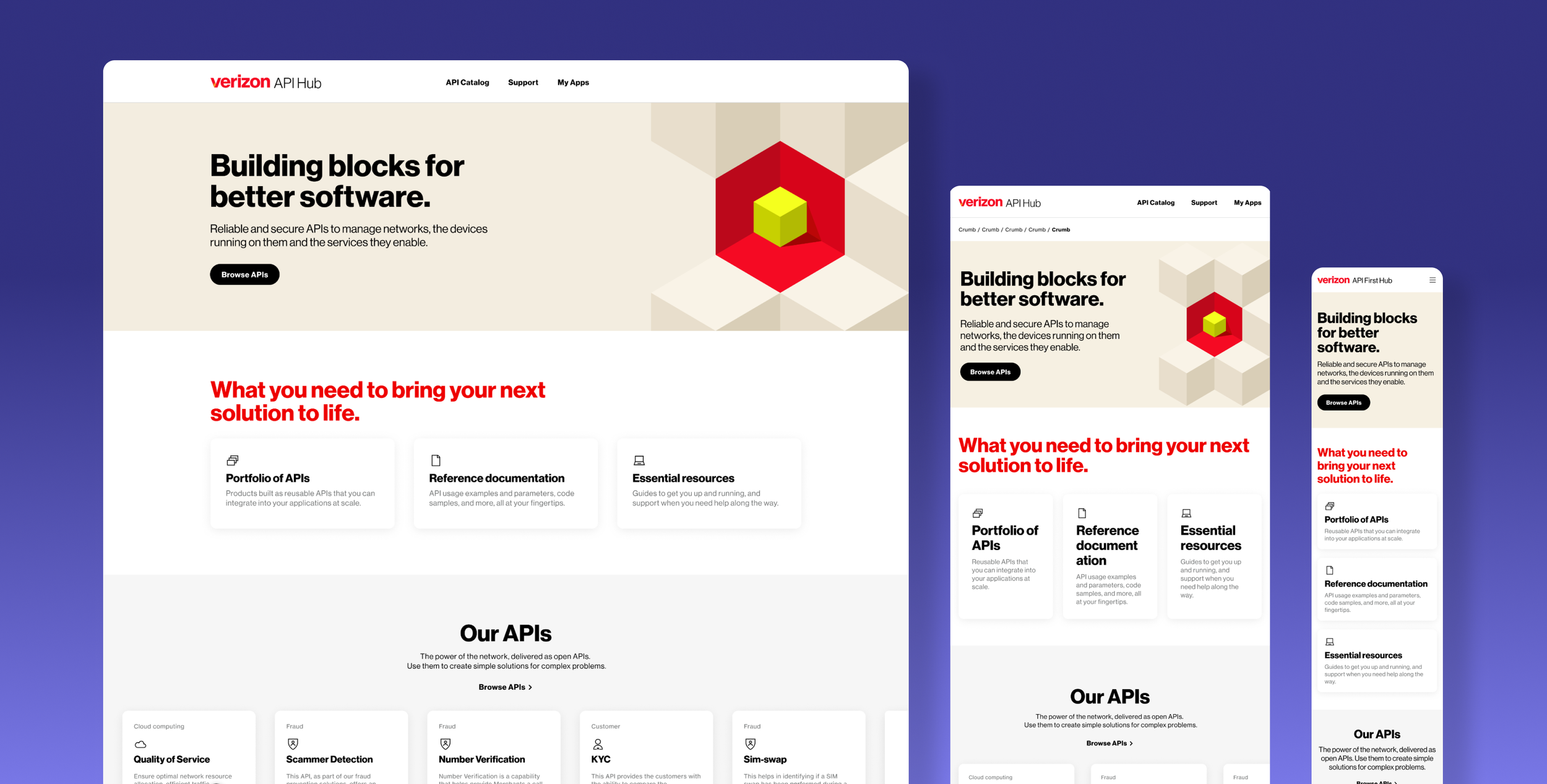
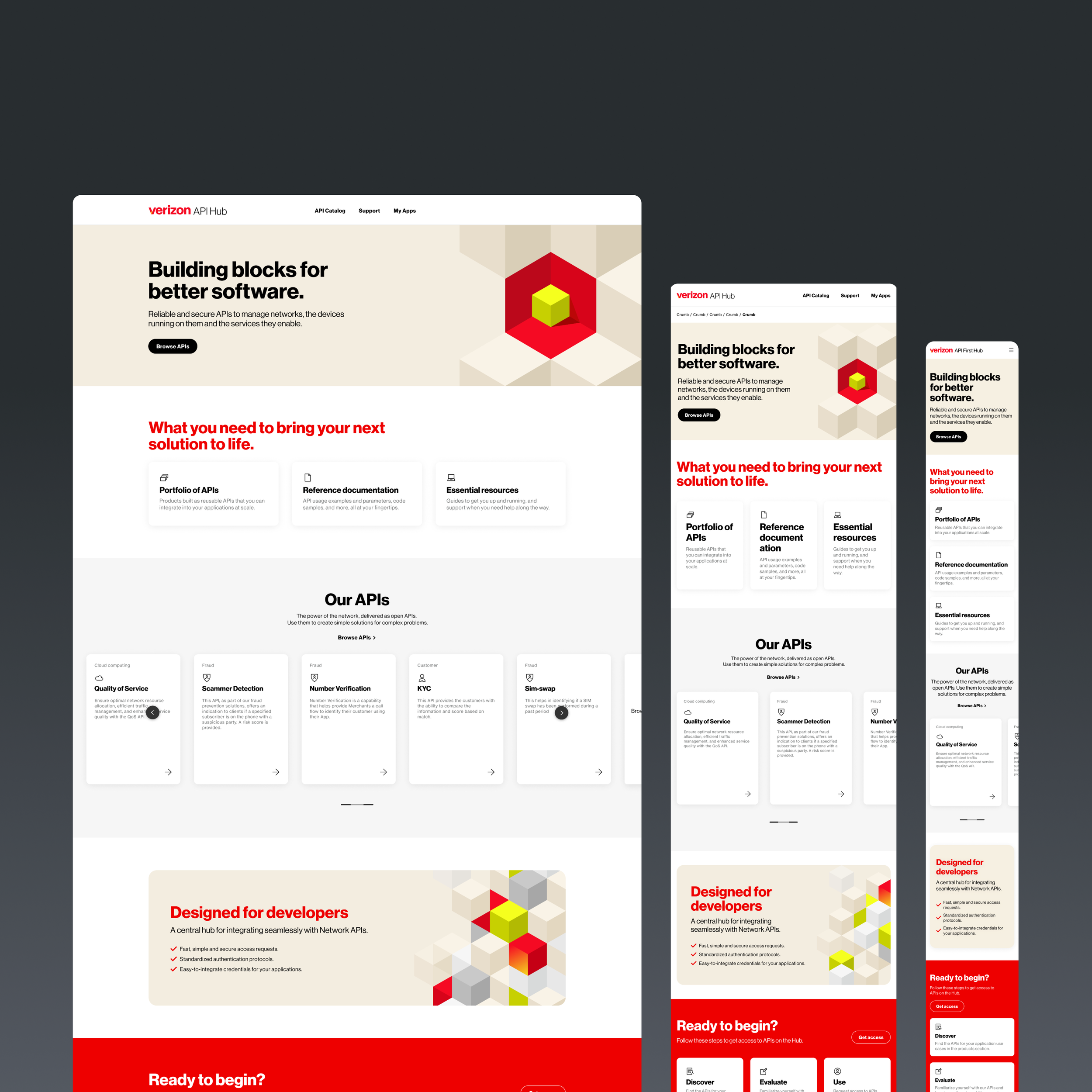
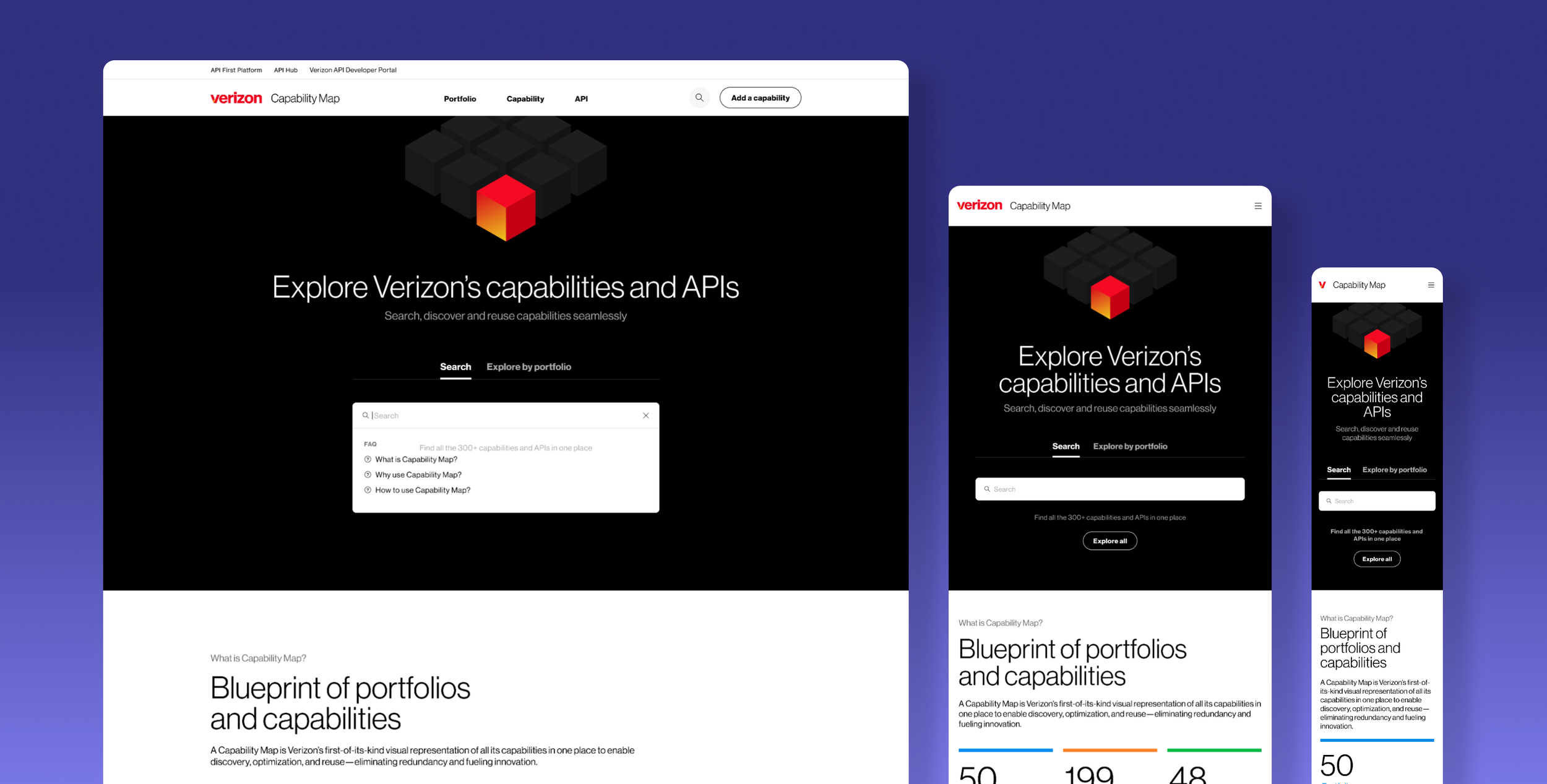
The API First Hub is an all-in-one Consumer Portal designed to simplify how internal teams interact with Verizon’s broad array of APIs. By unifying the discovery, documentation, and management phases, the Hub allows developers to move from "searching" to "ingesting" with minimal friction. Verify functionality, gain secure access, and manage you API lifecycle in one place.
30-second Project summary
Your time is important to me and you look at a million of these every day… So here's a quick summary of the work I did on the API First Hub.
Problem:
Internal developers at Verizon were forced to navigate fragmented technical silos and inefficient "swivel-chair" workflows to discover and integrate APIs, which significantly stalled engineering velocity. This lack of a centralized, secure environment for documentation and testing created friction that prevented teams from moving quickly from discovery to implementation.
Strategy:
The strategy focused on consolidating fragmented technical resources into a centralized "single source of truth" to eliminate redundant development. By integrating self-service access workflows and in-documentation testing tools, the design prioritized reducing "Time to First Call" and ensuring the portal could scale from hundreds to thousands of APIs.
Business Result:
The API First Hub dramatically streamlined engineering workflows, reducing the "Time to First Call" while eliminating redundant R&D costs. This optimization facilitated 250 billion API calls across seven business units in 2025, maintaining a 99.5% uptime while supporting an average of 5,000 calls per second.
My Leadership contributions:
Product Designer: Owned the UI/UX for the comprehensive Consumer Portal ecosystem.
Information Architecture: Defined content hierarchies and navigation structures for internal API consumers.
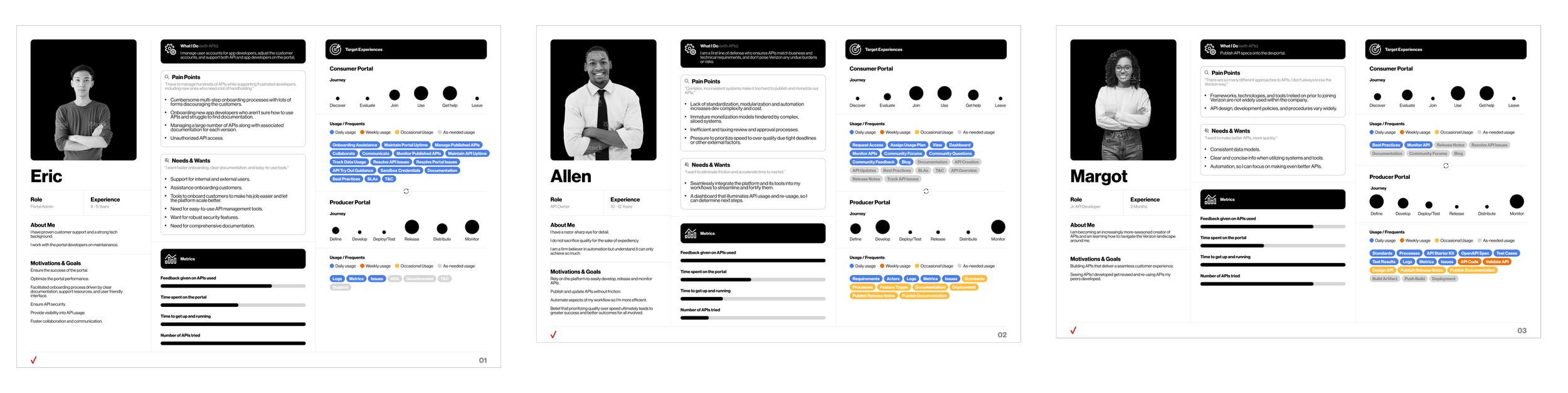
Research & Benchmarking: Conducted internal persona mapping and competitive analysis of API consumer environments to drive feature prioritization.
UX Writing & Editorial: Directed all platform copy and collaborated with technical writers to refine complex documentation.
Brand Integration: Managed the successful migration of the portal during a company-wide rebranding effort.
Cross-Functional Security: Aligned with back-end development teams to integrate secure authentication and data-protection standards into the UI.
Overview:
I led the UX strategy and design for the API First Hub, a centralized portal that transformed how Verizon’s internal developers discover and integrate APIs. By unifying documentation, testing, and secure access into a single self-service experience, we eliminated technical silos and ended the "swivel-chair" effect that stalled engineering velocity.
Impact at a Glance:
TTFC Optimization: Reduced "Time to First Call" from 12 minutes to 3 minutes.
Redundancy Reduction: Saved R&D costs by preventing teams from recreating existing internal tools.
Adoption: Facilitated the integration of APIs across 7 internal business units, with a total of 250B API calls in 2025 - averaging 5,000 API calls per second with a 99.5% uptime.
The problem:
There was a high cost for invisibility.
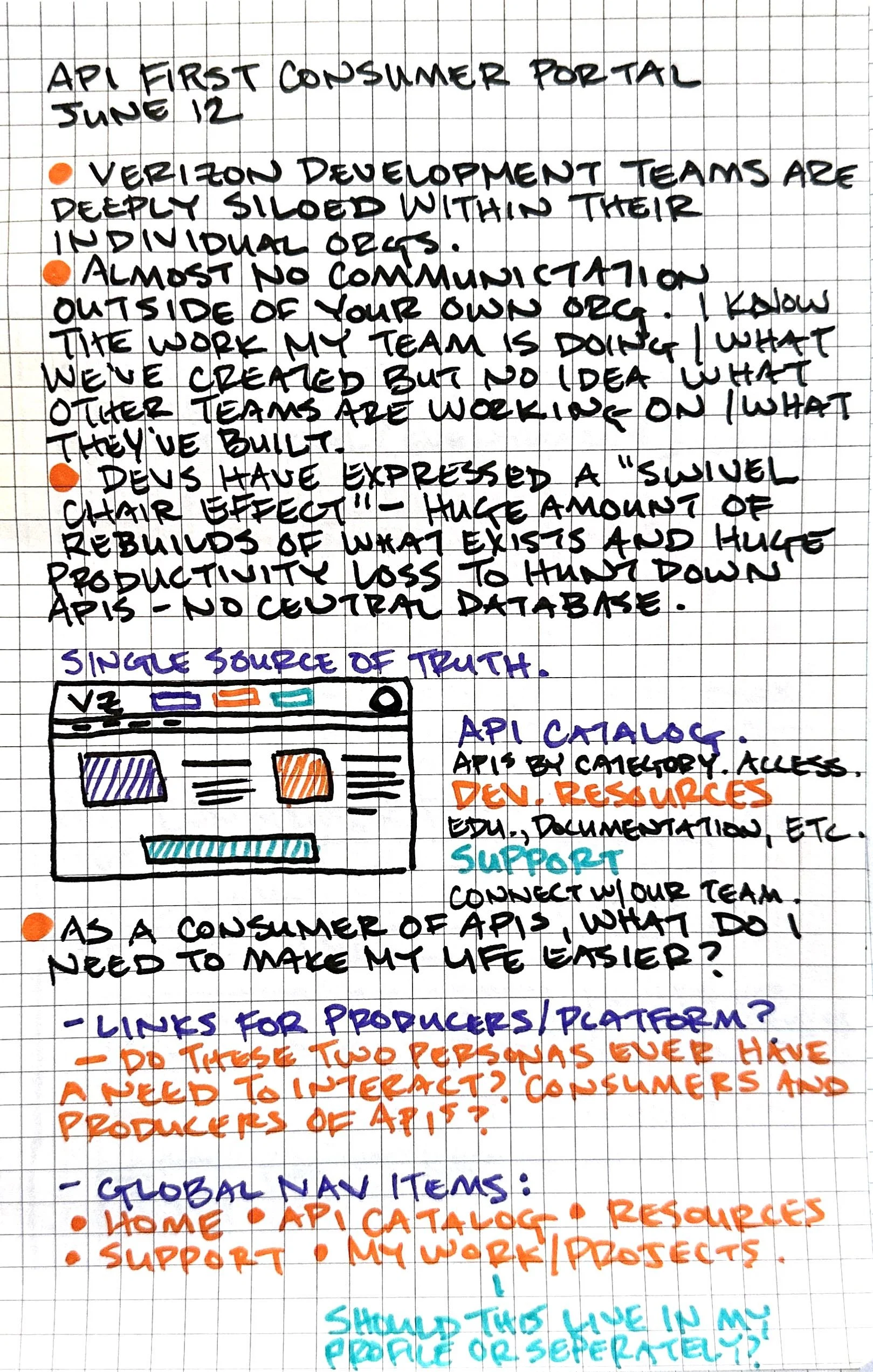
Verizon developers were inadvertently recreating tools their colleagues had already built. This redundancy was a significant drain on resources and budget. The root cause? A lack of a "Single Source of Truth."
The Search Gap: Developers spent hours context-switching between Wikis, GitHub, and Jira just to find an API endpoint.
The Access Black Box: Requesting secure keys was an opaque, manual process with zero status transparency.
The Verification Barrier: High "Time to First Call" meant developers had to build local environments just to see if an API worked.
The mission:
The mission of the API First Hub (Consumer Portal) is to transform Verizon’s fragmented technical landscape into a single source of truth, enabling developers to move seamlessly from discovery to ingestion by eliminating administrative friction, reducing redundant development, and optimizing the "Time to First Call."
“Ryan has this amazing combination of strong design instincts, technical curiosity, and a genuine desire to learn. He wasn’t satisfied with surface-level understanding — he wanted to know how things actually worked so his designs could be practical, scalable, and user-centric. On top of all that, he’s incredibly easy to work with, thoughtful in feedback, and deeply collaborative.
Any team would be lucky to have Ryan. If you’re looking for someone who takes ownership, learns fast, and designs with both users and systems in mind — Ryan is that person, and then some”.
Anamika Rashmi
Technical PM - Verizon
A decline in productivity due to a lack of transparency.
Verizon developer teams were facing a significant drain on resources, budget, and time by inadvertently recreating tools and functions their colleagues had already developed. This redundancy stemmed from the lack of a centralized repository. The API First initiative was established to address this gap, with the objective of building a definitive "single source of truth" where developers could discover existing assets, locate them, and understand how to integrate them into their own projects.
This portal was designed specifically for API consumers, featuring a robust and highly scalable catalog. With a forward-looking approach, we prepared for the future—moving from hundreds of APIs to potentially hundreds of thousands. The goal was to ensure the solution remained intuitive and valuable, providing the immense capacity necessary to grow alongside Verizon.
User research:
The "Swivel Chair" Effect: Developers were constantly context-switching between different wikis, code repositories, and ticketing systems just to piece together how an API worked.
Time to First Call (TTFC) was too high: The lack of integrated testing tools meant developers spent hours setting up local environments before they could even verify if an API met their needs.
Access was a black box: The approval process for gaining secure API access lacked transparency, leaving developers waiting days without status updates.
Prototyping:
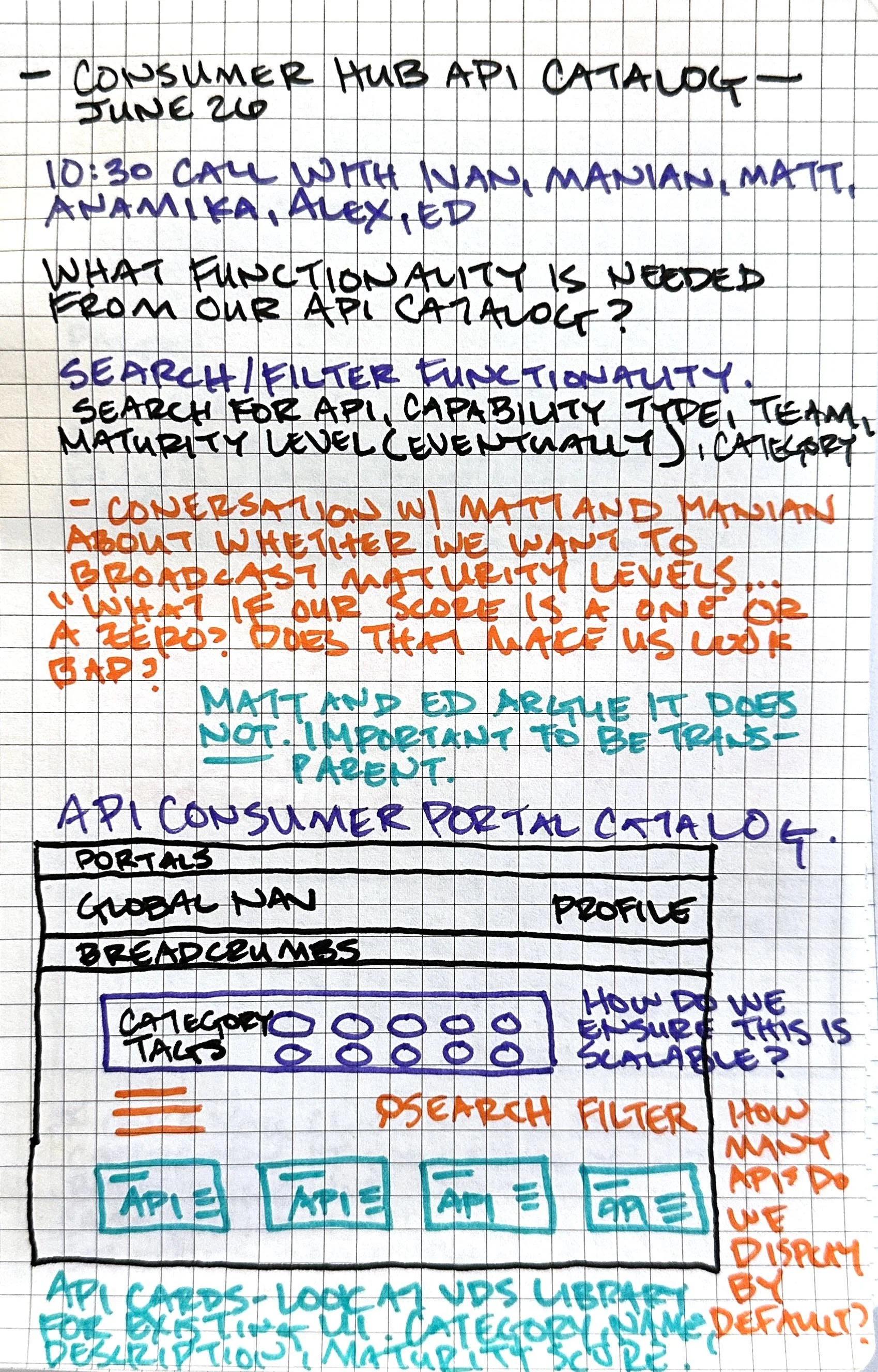
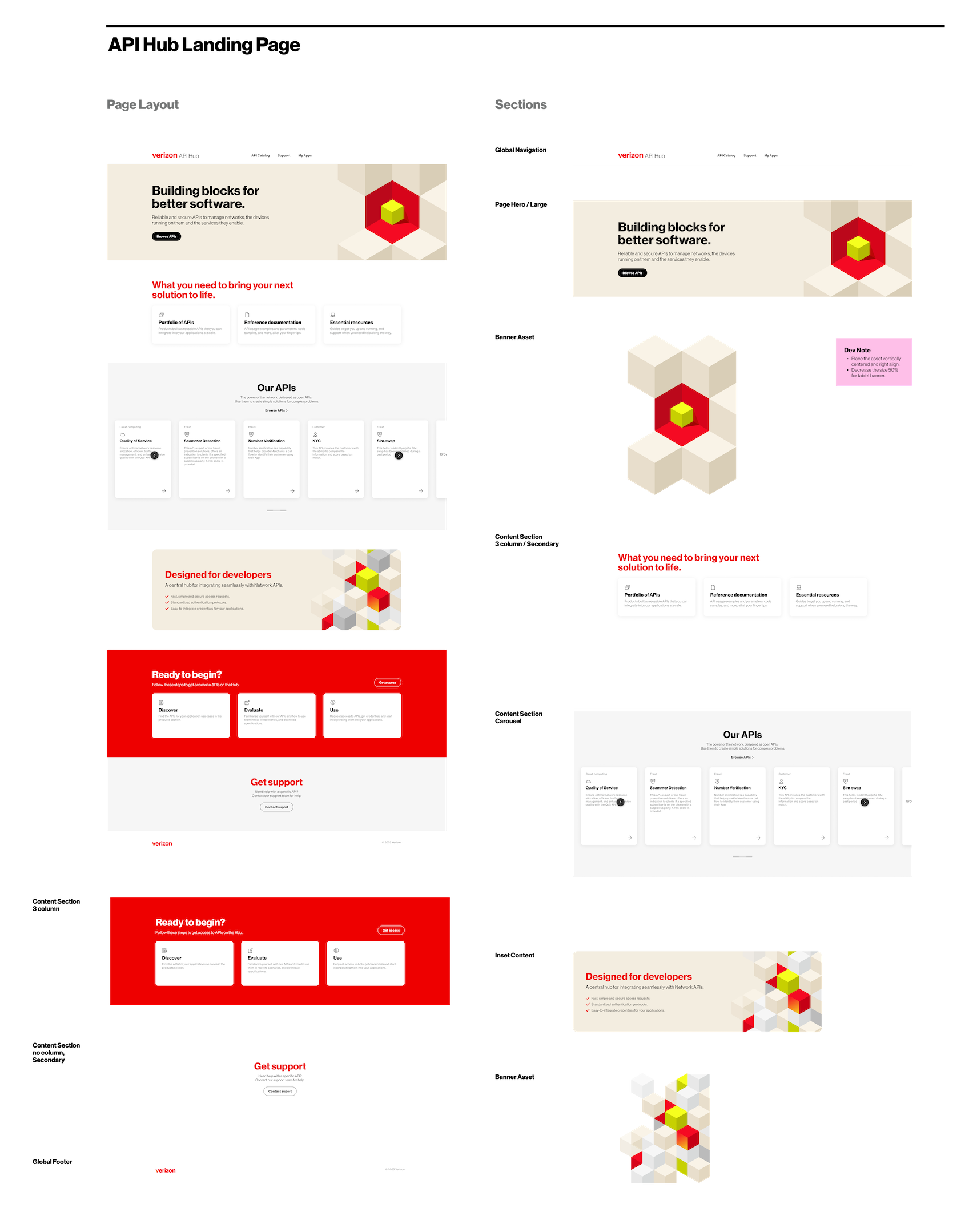
Low-Fidelity Wireframes: We started by sketching out the core architecture of the Hub. This allowed us to quickly align with stakeholders on the taxonomy of the API catalog and the foundational layout of the documentation pages without getting bogged down in visual details.
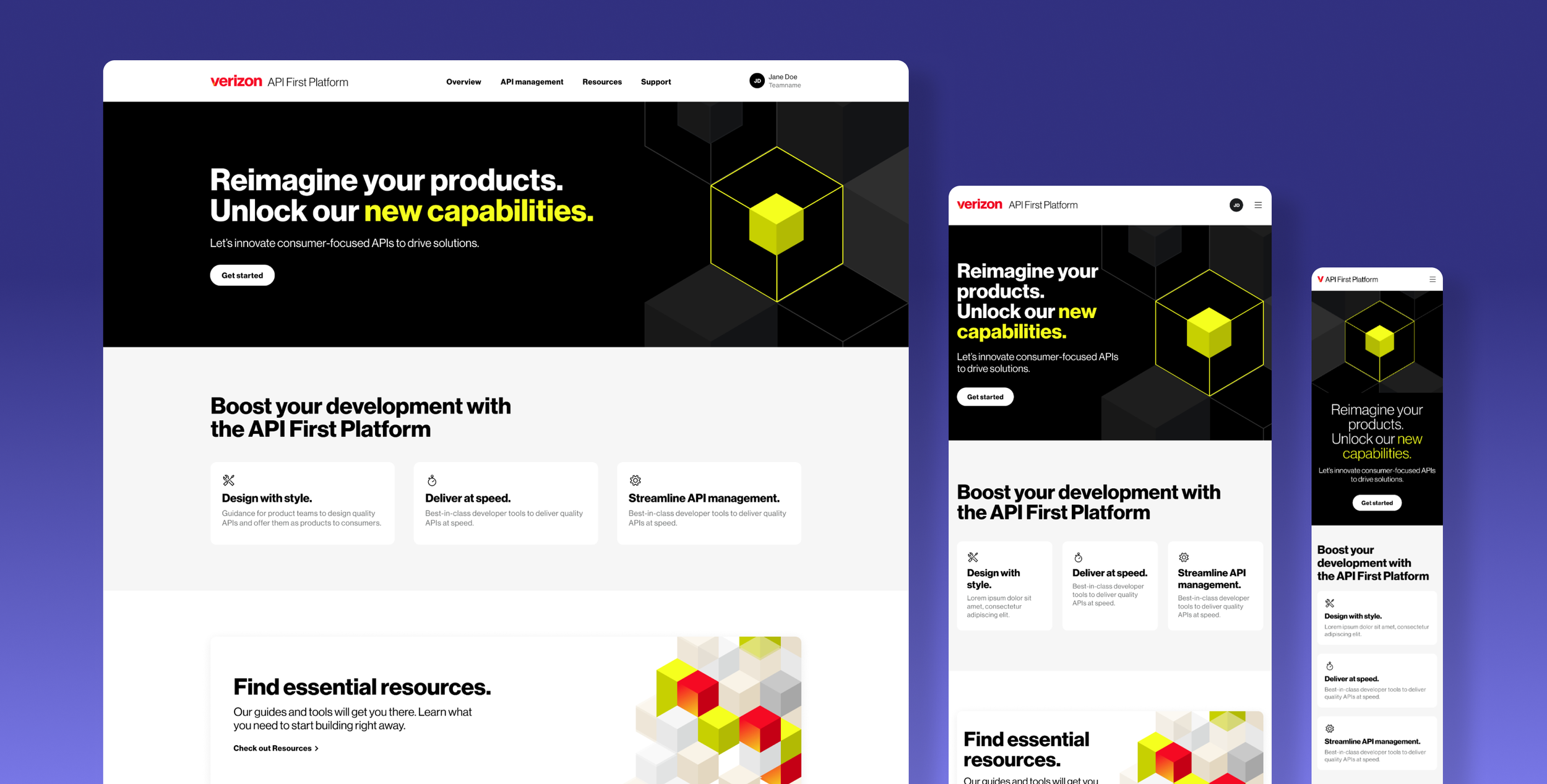
Interactive Prototyping in Figma: Once the structure was validated, I developed high-fidelity, interactive prototypes. We focused heavily on the "Time to First Call" (TTFC) metric, designing a built-in testing console right alongside the API documentation to simulate the "swivel-chair" elimination.
Prototyping Key Flows: We built out specific, clickable paths for the most critical user journeys:
Searching and filtering the API catalog by technical requirements.
Navigating an API’s documentation and endpoints.
The self-service workflow for requesting and receiving secure API keys.
Designing for Discovery & Scalability
Great UX starts with a clear plan.
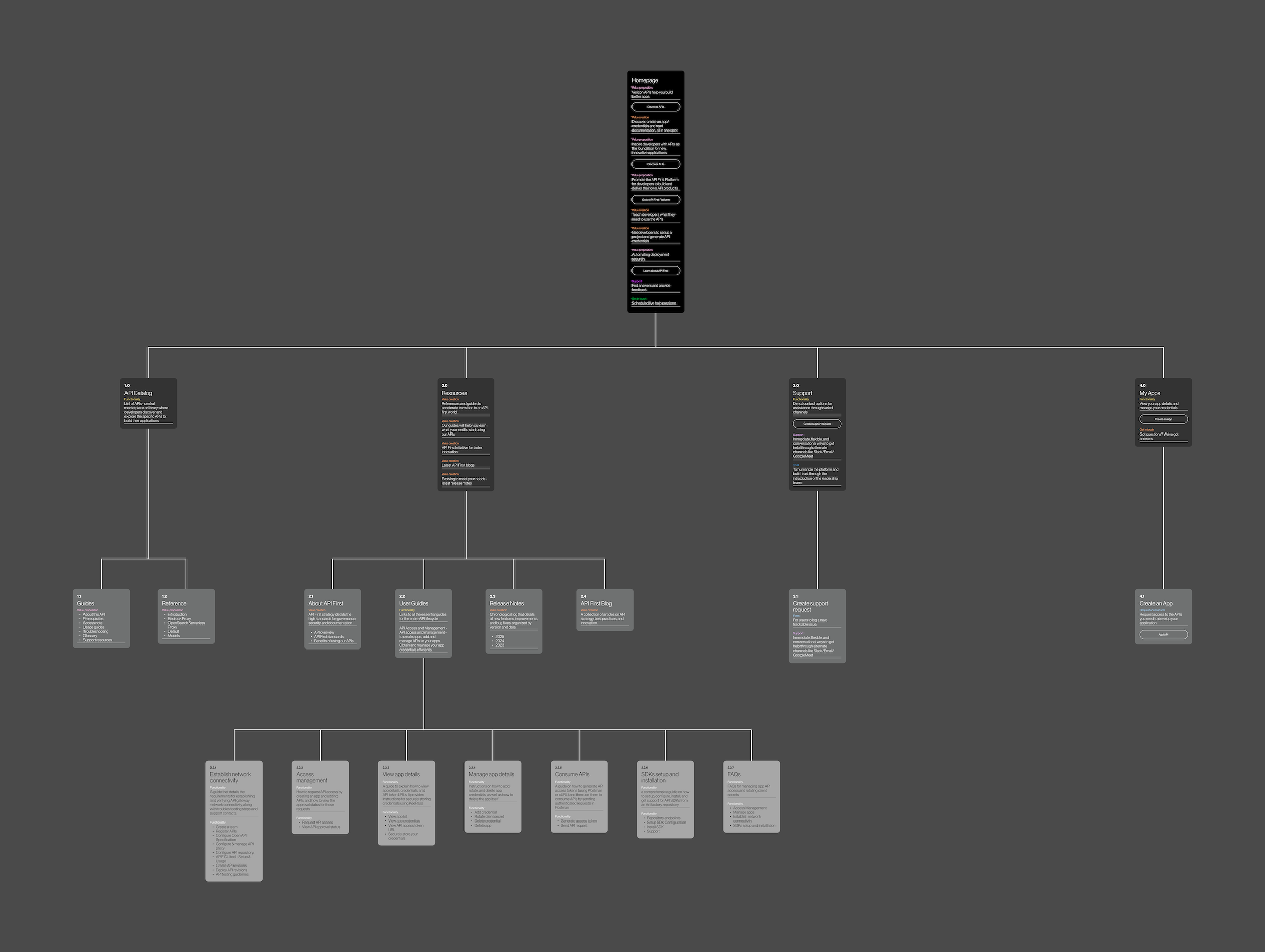
This hierarchical information architecture (IA) diagram for our Consumer Portal was crafted with API Internal developers in mind. Starting from a central Homepage, the structure branches into four primary navigational pillars: API Catalog, Resources, Support, and My Apps.
These main categories further break down into specific sub-pages and tasks, outlining a clear taxonomy for developer documentation, technical resources, support ticketing, and application management, utilizing a top-down tree format with text cards and orthogonal connecting lines to visually map out the site's content hierarchy and user navigation paths prior to building the actual interface.

The Outcome:
A Cultural Shift in Engineering
The API First Hub did more than launch a portal; it changed Verizon’s engineering culture.
From Hurdle to Habit: API integration moved from a "chore" to a seamless, transparent part of the daily workflow.
Self-Service Power: Replaced manual access requests with a transparent, automated workflow.
The Bottom Line: We gave developers their time back. By making assets discoverable, we empowered teams to focus on building new value rather than duplicating existing work.
See More Product Design case studies
Request a prototype demo
Due to the proprietary nature of my work, this portfolio focuses on project outcomes rather than internal methodologies. While I cannot share additional documentation publicly for security reasons, I am happy to provide a live 1:1 demo. I simply ask that no screen captures be taken during our session. In an industry built on trust and security, protecting this content remains my top priority.