Soundcheck
Unifying a Fragmented Music Scene
Senior Product Design Lead | Full-Stack Architect
Overview:
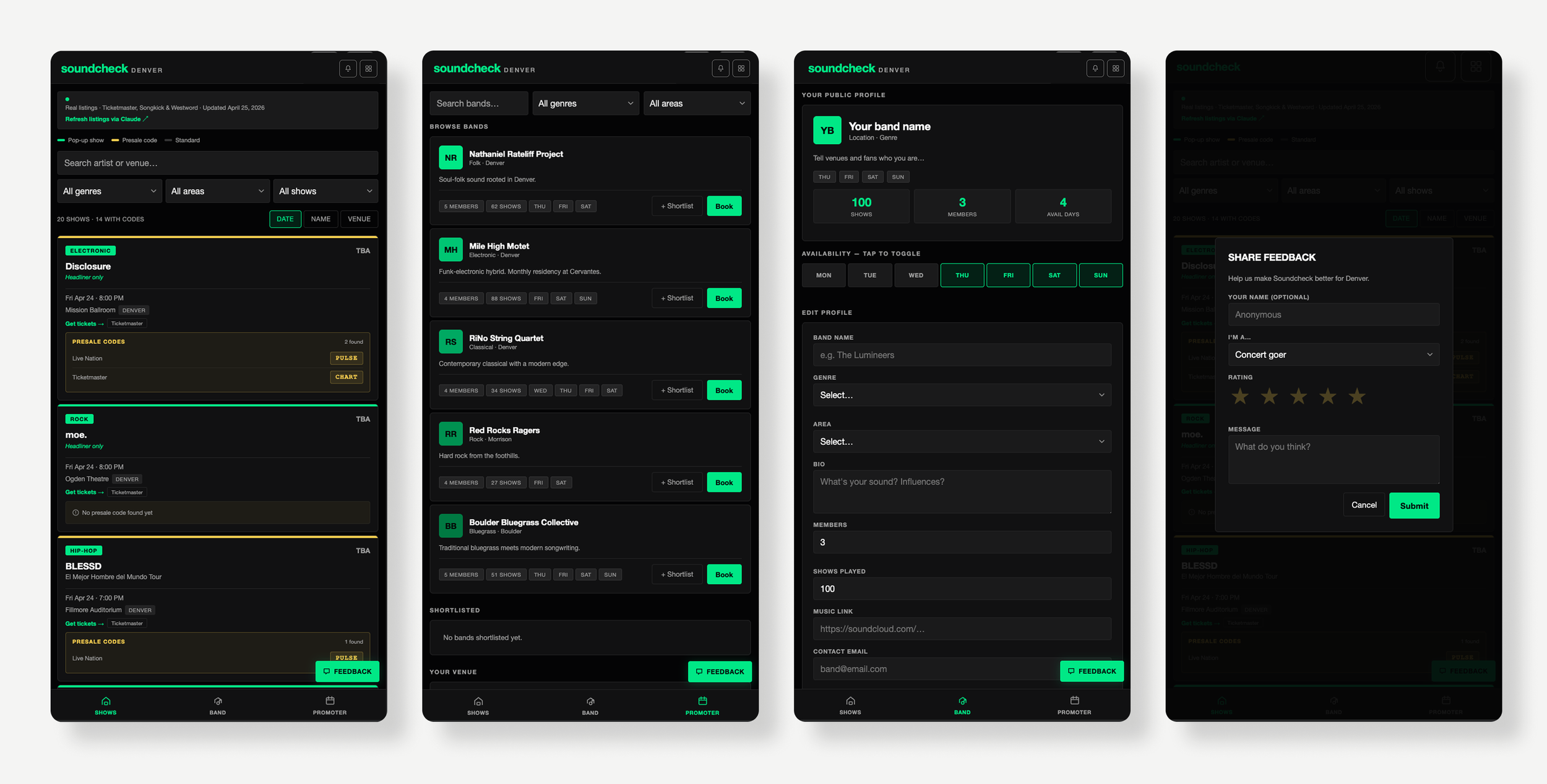
The local music scene in Denver is a vibrant ecosystem that currently lives in the "cracks" of the internet - fragmented across legacy websites, social media threads, and disparate ticketing platforms. Soundcheck Denver is a unified three-sided marketplace and discovery engine designed to connect fans, artists, and promoters within a single, high-fidelity experience.
Problem:
A Symphony of Fragmentation
In major hubs like Denver, the music ecosystem suffers from extreme information asymmetry that prevents growth and engagement:
For the Fan: Finding a show requires a manual, multi-app scavenger hunt across legacy listing sites, social feeds, and ticketing platforms.
For the Artist: Promotion is a black hole. Bands have no centralized way to showcase their professional EPK or live availability to venues.
For the Venue: The booking process is reactive. Promoters lack a vetted, searchable database of local talent categorized by genre, draw size, and region.
Strategy:
A Three-Sided Marketplace
I approached Soundcheck not just as an app, but as a community utility designed to eliminate "search friction" by bringing fragmented data into a single, high-fidelity location.
Marketplace Orchestration: Unified fans, artists, and venues into a single, self-sustaining ecosystem.
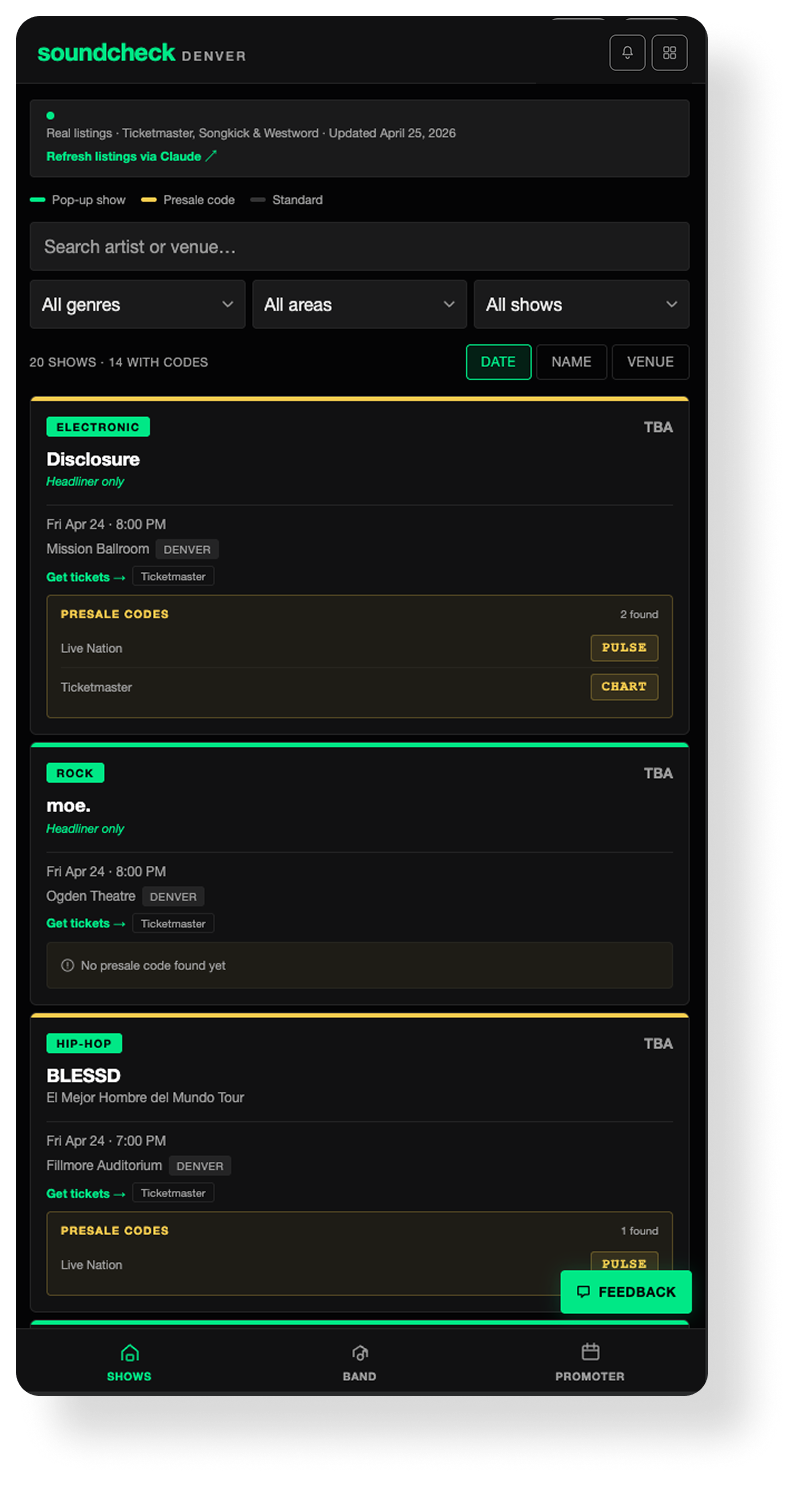
For Fans: Centralized listings from Ticketmaster, Songkick, and Westword with a "Presale-First" feature that surfaces verified codes to shorten time-to-purchase.
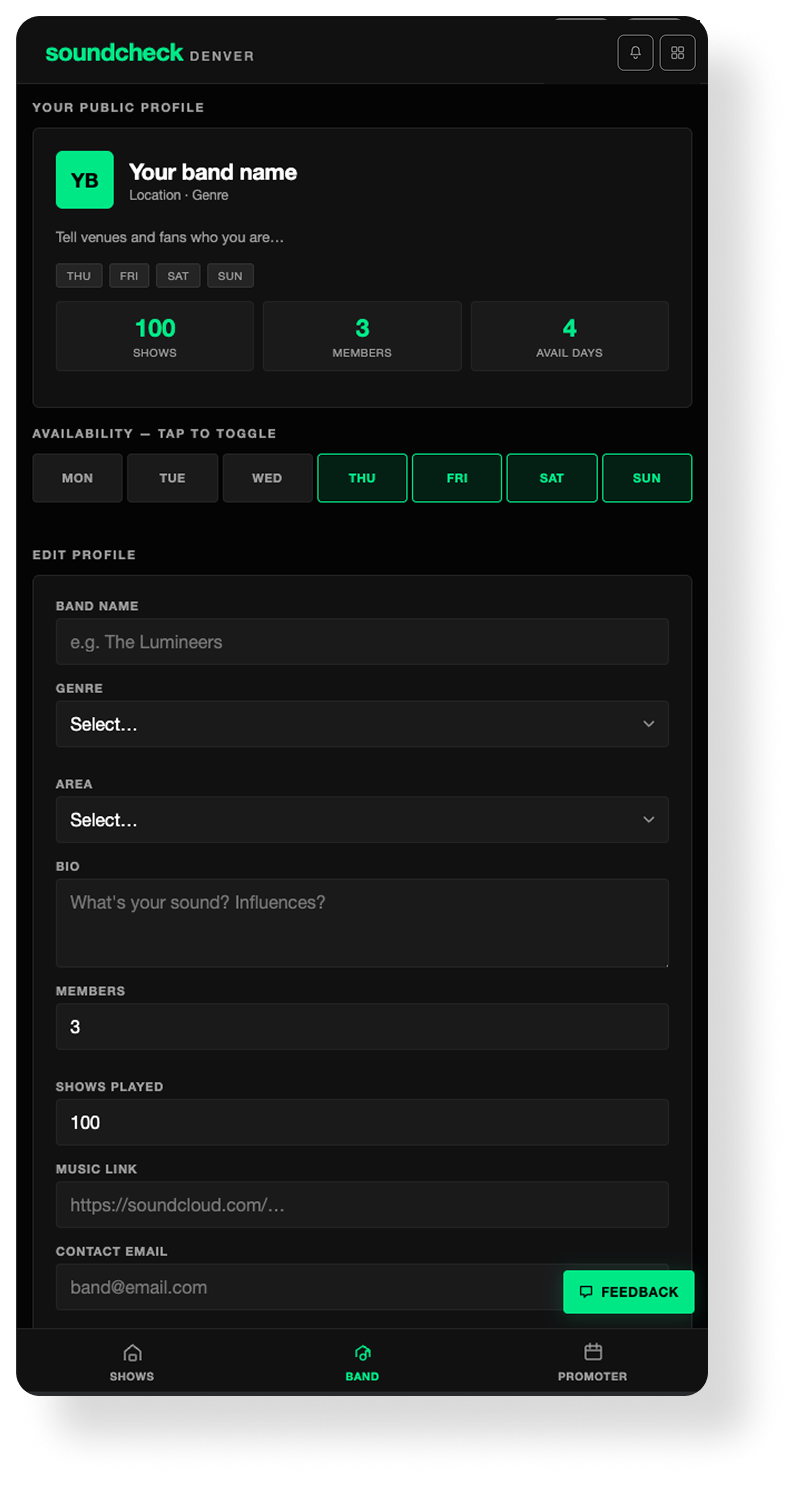
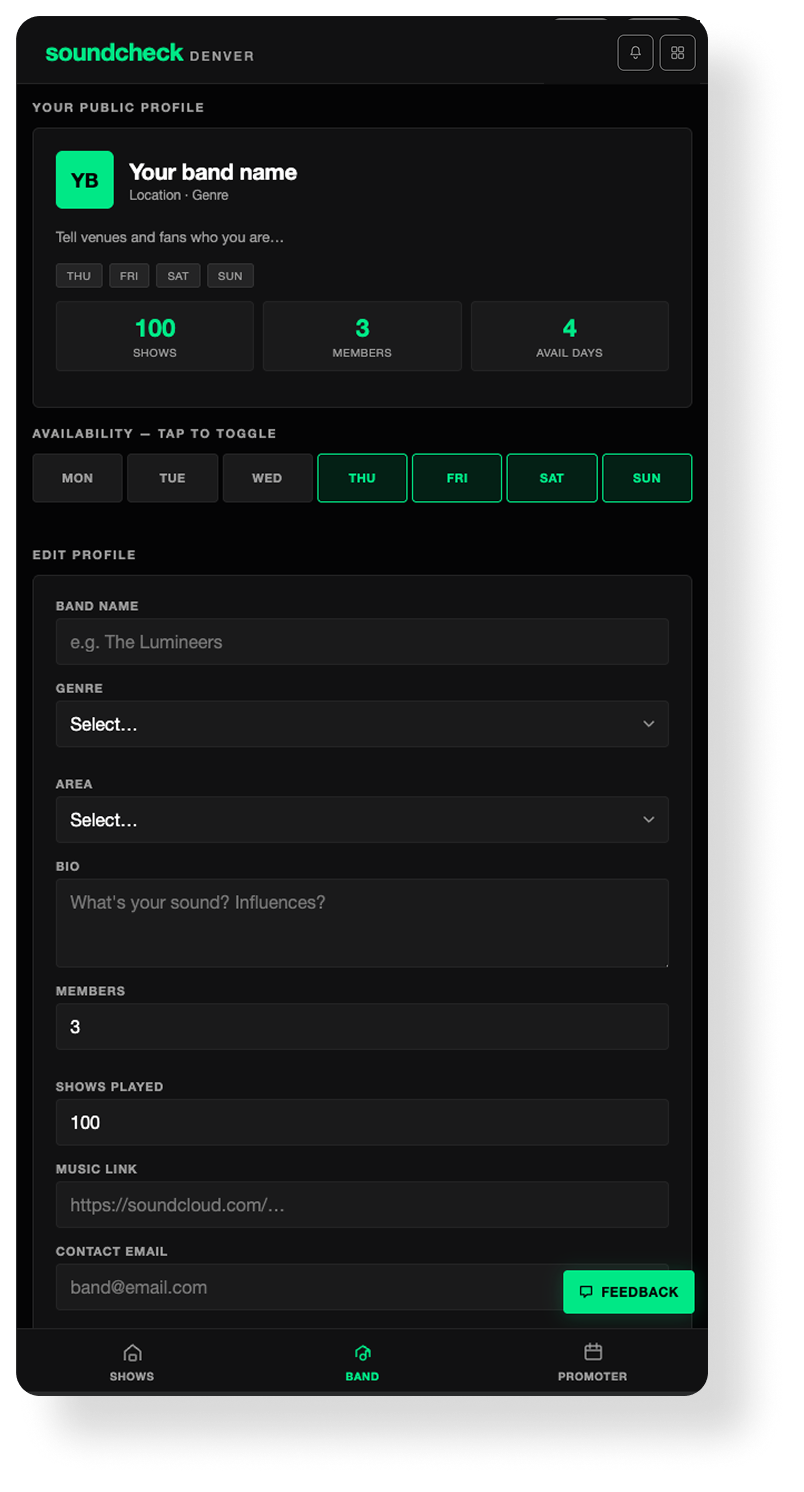
For Artists: Created a digital EPK with a "tap-to-toggle" availability grid to simplify real-time scheduling with promoters.
For Promoters: Built a searchable database of local talent with a "One-Tap Inquiry" system to replace chaotic, manual email chains.
Business Result:
Consolidating the Local Economy
Higher Conversion: By surfacing presale codes directly in the event flow, we reduced friction at the point of purchase.
Operational Efficiency: Replaced multi-platform manual outreach with a streamlined booking pipeline for Denver venues.
Marketplace Scalability: Designed a region-agnostic architecture capable of scaling to new cities via automated, modular data ingestion.
What I Learned:
Iteration is the rhythm of product development.
Building Soundcheck reinforced that a "Senior-level" product is a living dialogue between the designer and the community. By releasing an MVP early, I moved beyond my own assumptions about the local music scene and iterated based on actual user pain points.
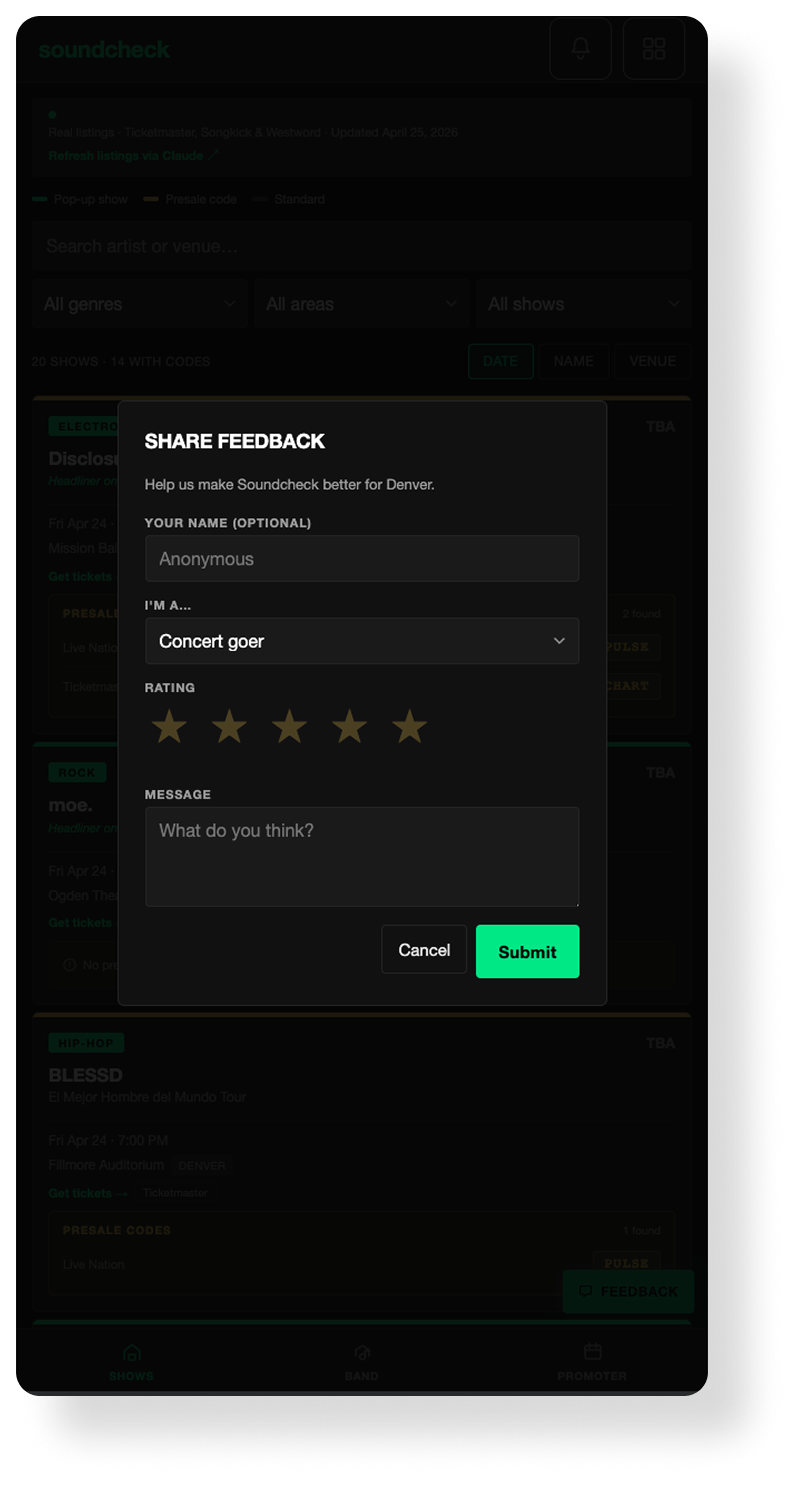
The Feedback Loop: Early feedback from Denver concert-goers shifted the product's focus from a simple calendar to a "Presale-First" strategy.
Platform Adaptability: I learned that while AI can draft a basic UI, it lacks the ergonomic intuition for mobile-first design, requiring manual iteration to move from a desktop-centric "left-hand menu" to a thumb-accessible mobile architecture.
The Power of Venue Partnerships
One of the most significant takeaways was that a digital marketplace is only as strong as its real-world relationships.
Mutual Value Exchange: I discovered that the "Business Case" for venues wasn't just about more ticket sales—it was about operational sanity. By providing promoters with a vetted, searchable database of artists, Soundcheck became a partner in their booking workflow rather than just another listing site.
Systemic Trust: Developing the "One-Tap Inquiry" system taught me that trust is built through data integrity. When venues saw that Soundcheck provided accurate artist availability and verified EPKs, it transformed the app into a trusted extension of their internal booking teams.
AI Shortcomings & Straight-Up Failures:
“AI is absolutely incredible with what it can do, but it can be SO dumb in the dumbest ways."
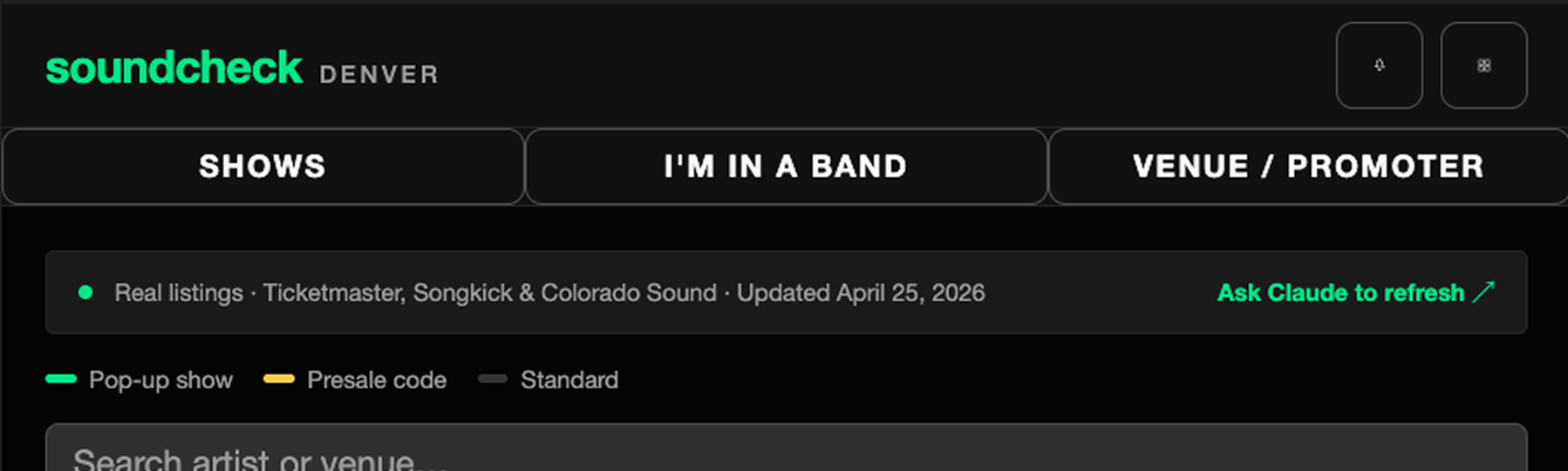
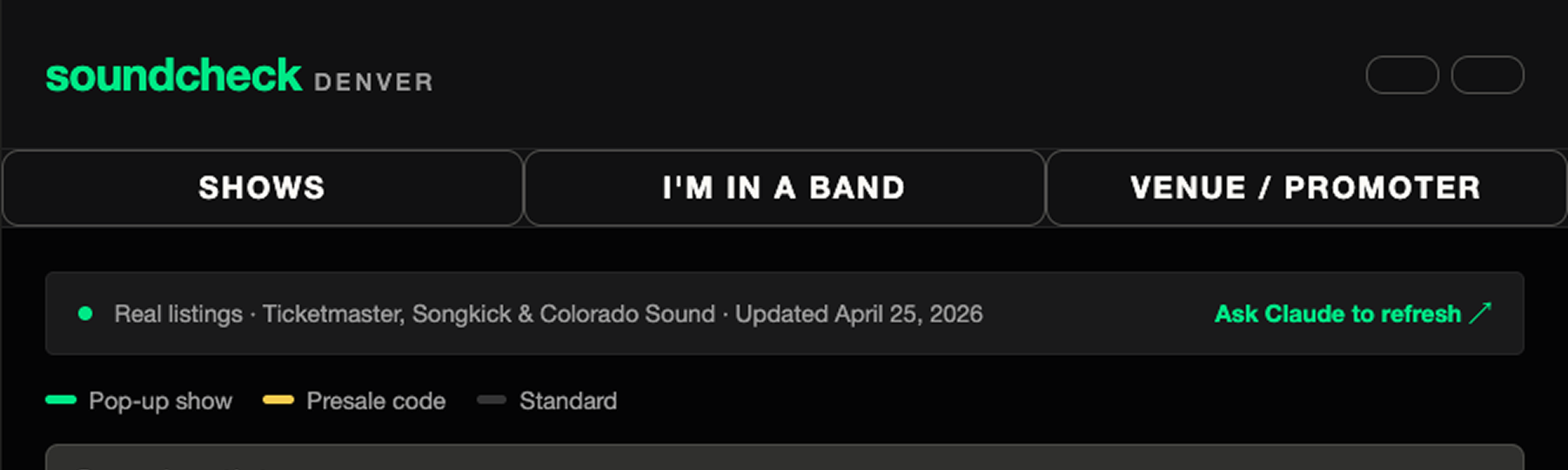
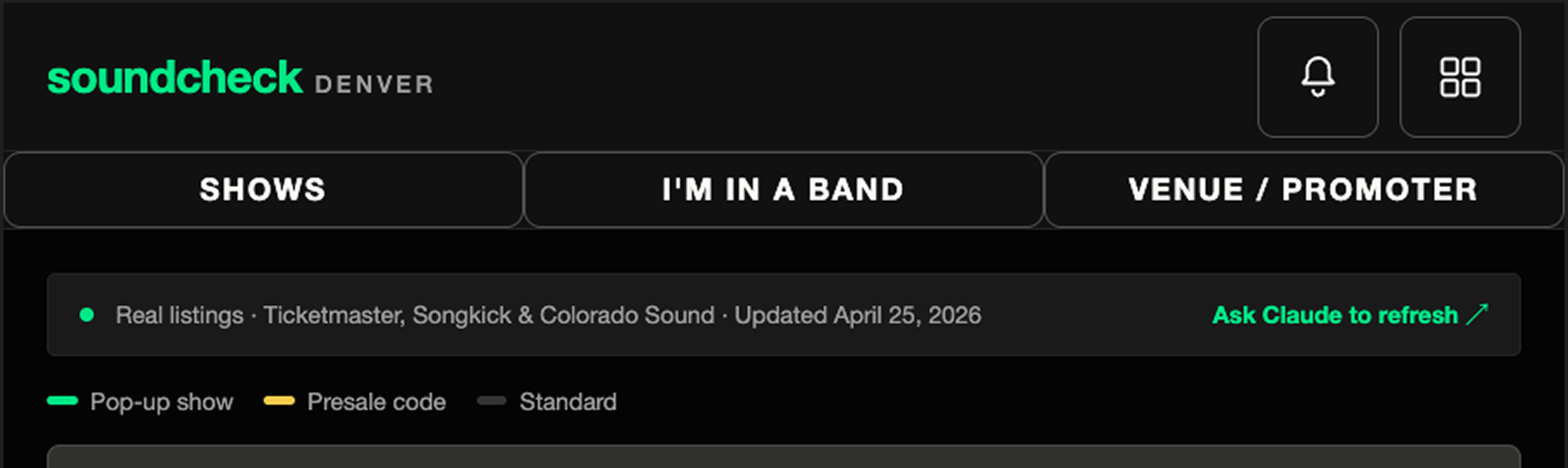
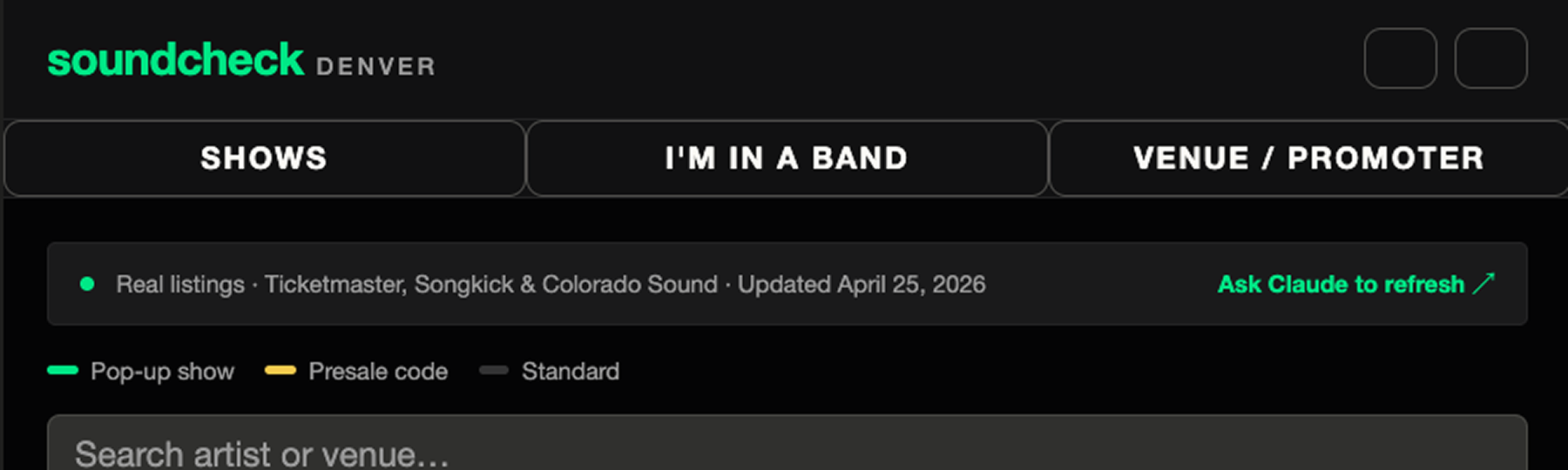
Comical UI Inconsistency: Creating a consistent UI was an exercise in futility. The model frequently veered off-track, failing at basic refinements that a junior-level designer out of college could have executed on the first try.
I mean… look at these Notification and Menu icons… I specified button and icon sizes and after 4 tries, it still got it incredibly wrong every time. No amount of hand-holding seemed to help.
High-Stakes Hallucinations: The AI-driven scraper was often "too eager," hallucinating expired or fake promo codes, which required a manual validation logic layer to protect user trust.
See More AI-Orchestrated APPS